







Trolley
You have no items in your shopping cart
 Budgets
 Dumbers
 Discs
Discs
 Benches
 Racks and Rigs
 Weights Holders
 Isotonic machines
 Calisthenics
 Cardio
 Kettlebells
 Flooring
 Gym Set
 Accessories
 Used Gym Equipment
 Combat
 ARTI MARZIALI
 Tug-Of-War
 CAMPI DA PADEL
 PILATES MACCHINARI
 GINNASTICA ARTISTICA
 Gift Card
 Informazioni
- Donatif
- Training and exercises
- 0 I like it
- 11 Views
- 0 comments
READING TIME: 5 MINUTES ➤➤
Home Workout: 15 Effective Bodyweight Exercises Without Equipment
Want to stay fit but don’t have time or motivation to go to the gym? Working out at home is the simple, accessible, and effective solution. In this article, you’ll discover 15 bodyweight exercises to do comfortably in your living room, with no equipment and zero complications. Whether you're a beginner or already experienced, you'll find routines tailored to your level and practical tips to get started right away — with a focus on flexible timing, privacy, and saving money.
- Why Choose Home Workouts
- Is Bodyweight Training Really Effective?
- The 15 Best Exercises to Do at Home
- How to Build an Effective Bodyweight Routine
- Common Questions About Home Training
- Start Today: Your Workout, Anywhere
Why Choose Home Workouts
Advantages Over Traditional Gyms
Training at home isn’t just a passing trend — it’s an increasingly conscious choice. In recent years, many have embraced the convenience of home fitness: no traffic, no expensive memberships, and no need to plan your entire day around the gym’s schedule. Your home becomes the perfect place to carve out a space for yourself, even for just 20 minutes, without going out or preparing anything special.
Another big plus is accessibility. While the gym can feel intimidating, especially for beginners, your home is a familiar, safe environment. No professional gear is needed to get started — just a bit of space and a mat (or even a towel). This makes working out more inclusive, suitable for any age, fitness level, or budget.
Hidden Benefits: Savings, Flexibility, Privacy
One often-overlooked benefit is economic savings. Home training cuts out fixed costs like monthly fees, gas for commuting, and “proper” gym clothes. Every euro saved can be reinvested in optional tools (like resistance bands or fitness apps) or simply saved, making fitness more sustainable long-term.
Flexible scheduling is another key advantage. You don’t have to squeeze in a workout between appointments or rush after work — you decide when. This is perfect for parents, students, shift workers, or anyone with an unpredictable routine. You can even break up your sedentary day with short sessions.
Is Bodyweight Training Really Effective?
The Power and Potential of Bodyweight Workouts
Bodyweight training uses your own weight as resistance, helping you develop strength, endurance, and mobility. Practiced for centuries across disciplines, it’s proven effective and adaptable. From push-ups and squats to planks and lunges, you can activate multiple muscle groups with no tools — and still see visible results.
One of its greatest strengths is versatility. Each move can be scaled to suit your level: easier variations for beginners, harder ones for pros. And because no equipment is needed, you can train anywhere — at home, in a hotel, or outdoors — making it ideal for travel or spontaneous workouts.
Fundamentals of Bodyweight Training
To get real results, you must follow some basic principles. First is proper form: perform each move slowly, with precision and good posture, to avoid injury and maximize gains. It’s not about how many reps you can do fast, but how well you execute each one.
Then comes progression. You can increase challenge by tweaking angles, upping reps, or shortening rest. This keeps training stimulating and your body improving, even without weights.
The 15 Best Exercises to Do at Home
Upper Body
Push-ups: Classic for chest, shoulders, and triceps. Variants: knee push-ups, diamond, incline.
Chair dips: Great for triceps. Use a sturdy chair, lower arms to 90°.
Plank up & down: Combines core and upper-body work by transitioning between forearms and hands.
Lower Body
Squats: Essential for legs and glutes. Try jump squats, sumo squats, or isometric holds.
Lunges: Excellent for thighs and glutes. Do them static or walking-style.
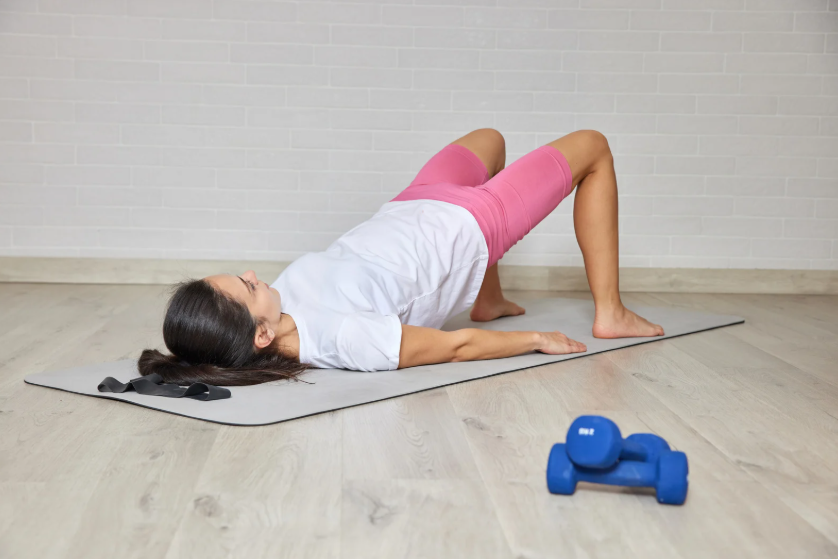
Hip thrusts: Target glutes. Performed lying down with knees bent.
Core and Stability
Plank: Static hold that activates the full core.
Mountain climbers: Dynamic movement that combines cardio with core strength.
Dead bug: Improves coordination and lumbar control.
Full Routines for Every Level
Mix 3 moves per area to create 20–30 minute circuits. Do each exercise for 30 seconds, repeat 3 rounds. Example:
Beginner: squats – knee push-ups – basic plank.
Intermediate: lunges – dips – mountain climbers.
Advanced: jump squats – diamond push-ups – dynamic plank.
How to Build an Effective Bodyweight Routine
Frequency, Duration, and Progress
Start with 2–3 sessions per week. Each can last 20–30 minutes. The key is consistency and tracking your progress. Use an app or notebook to log reps and how you feel after each session.
Adjusting to Your Goals
Want to lose weight? Speed up your pace and shorten rests. Want to tone? Focus on form and add rounds. You can tailor every workout to your goal — just respect rest times and give your body enough challenge to grow.
Common Questions About Home Training
Is It Suitable for Total Beginners?
Absolutely. Training at home is perfect for those just starting. With simpler variations, you can build strength and confidence in total privacy. No pressure, just your own journey.
Do I Really Need Video Tutorials?
Not mandatory, but helpful. Videos can correct form and boost motivation. If you’re comfortable with written guides, that’s fine too — just focus on correct technique.
Start Today: Your Workout, Anywhere
Overcoming Fear and Lack of Time
Improving your health in a safe space is an act of self-care. It doesn’t matter how much you can do — what matters is that you start. Even 10 minutes is better than none.
Where to Find Free, Reliable Resources
Try free apps like FitOn, certified YouTube channels, or personal trainer blogs. Avoid random content. Look for well-structured and progressive programs.
Comments (0)