
Trolley
You have no items in your shopping cart

 Budgets
 Dumbers
 Discs
Discs
 Benches
 Racks and Rigs
 Weights Holders
 Isotonic machines
 Calisthenics
 Cardio
 Kettlebells
 Flooring
 Gym Set
 Accessories
 Combat
 ARTI MARZIALI
 CONTAINER GYM
 Tug-Of-War
 Used Gym Equipment
 PILATES MACCHINARI
 GINNASTICA ARTISTICA
 CAMPI DA PADEL
 Prodotti in Pronta Consegna
 Informazioni
 Gift Card
- Donatif
- Sports products
- 0 I like it
- 15 Views
- 0 comments
- gym flooring, safety flooring, gym safety, shock-absorbing materials
READING TIME: 5 MINUTES ➤➤
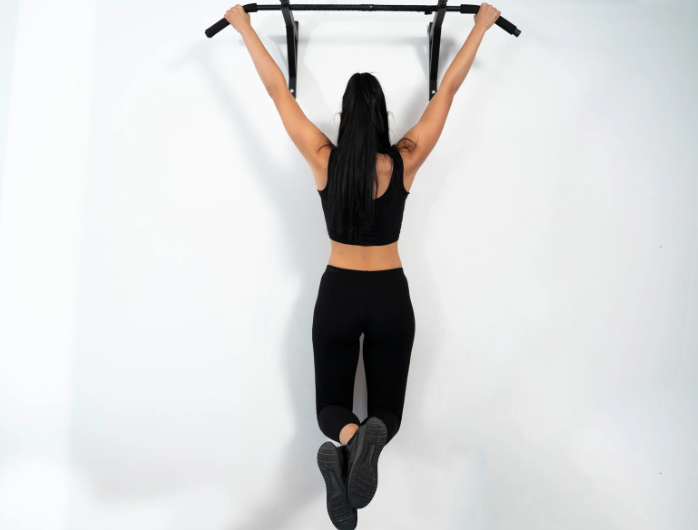
Portable and Travel Pull-Up Bars: What to Really Expect
The search for a portable pull-up bar often begins with a very practical need: training in environments where permanent equipment cannot be installed. Rental apartments, shared living spaces, business trips, and limited room availability lead many people to consider removable solutions that promise convenience and ease of use.
Before purchasing a portable doorway pull-up bar, it is useful to understand both its real advantages and its unavoidable limitations. The comparison with a fixed structure should not be approached in absolute terms, but rather in relation to the intended use. An informed decision comes from realistic expectations and a clear understanding of the product’s technical characteristics.
Why Portable Pull-Up Bars Appeal to People with Limited Space
Training Without Permanent Installation
One of the main benefits of portable pull-up bars is the ability to train without drilling holes or making permanent modifications to your living space. This feature is especially appreciated by people living in rental properties or those who want to keep their home environment flexible and easy to rearrange.
From a practical perspective, a removable solution allows users to begin bodyweight training with a relatively modest investment while maintaining a simple and organized home setup. However, it is important to remember that convenience is the primary strength of this category of equipment rather than the pursuit of maximum performance.
The Needs of Apartment Dwellers and Renters
Many users consider a portable pull-up bar because they do not have a dedicated home gym room. In these situations, the priority is finding equipment that can be installed and removed quickly without affecting the functionality of everyday living spaces.
Housing constraints often encourage people to choose lightweight and easily transportable products. As a result, the market offers numerous models designed to fit doorways, hallways, or temporary structures while minimizing storage requirements when not in use.
How Effective They Are Compared to a Fixed Pull-Up Bar
Exercises You Can Perform Consistently
A portable pull-up bar can support a wide range of bodyweight exercises, including pull-ups, dead hangs, and various upper-body training movements. For beginners and intermediate users, the available exercise options are often more than sufficient to maintain a regular training routine and build functional strength.
The overall experience depends on the quality of the model and the structure on which it is installed. Under proper conditions, many users can complete effective workouts without experiencing significant limitations during everyday use.
Performance Trade-Offs to Consider
It is important not to expect a portable solution to perfectly replicate a professional structure permanently mounted to a wall or floor. Maximum stability and load capacity generally require fixed equipment specifically engineered for intense and demanding use.
Portable models are designed to provide a balance between practicality and functionality. This means they can be entirely suitable for many users while still presenting certain limitations related to structure, minor movement, and reduced suitability for highly dynamic exercises.
Stability and Safety: What Really Matters
Materials, Construction, and Mounting System
One of the most common concerns among people considering a portable or travel pull-up bar is perceived fragility. In reality, safety depends largely on the quality of the materials, engineering design, and correct use according to the manufacturer's specifications.
Strong steel tubing, well-designed support systems, and precise manufacturing tolerances all contribute to improved reliability. Another critical factor is respecting the stated weight capacity. This figure is not simply a marketing specification but an operational guideline intended to ensure safe use under the conditions for which the equipment was designed.
When a Portable Pull-Up Bar May Not Be the Best Choice
There are situations where a removable structure may not be the most appropriate option. Highly advanced athletes, heavily weighted pull-ups, or explosive training methods may require levels of stability beyond what portable models typically provide.
The decision should therefore begin with a realistic assessment of your own needs. Occasional or moderate use requires different characteristics than a highly specialized training program. Understanding this distinction helps avoid disappointment and unrealistic expectations.
Travel Solutions and Training on the Go
Maintaining Your Routine While Traveling
For frequent travelers, maintaining a consistent workout routine can be challenging. Portable solutions make it possible to bring relatively compact equipment and create a temporary training station in different environments, provided suitable installation conditions are available.
This approach is particularly attractive to people who view exercise as a consistent part of their weekly routine. Even shorter training sessions can help preserve habits and fitness levels during business trips or vacations.
Portability and Setup Time
Ease of transport is one of the most important evaluation criteria. Lightweight construction, compact dimensions, and straightforward assembly directly influence the user experience. A product that requires excessive installation time may ultimately be used less frequently.
The best solutions attempt to balance durability and portability. Greater structural strength often means increased weight, while extreme portability can require compromises in robustness. The ideal choice depends on individual priorities.
Who Portable Pull-Up Bars Are Best Suited For
Beginners and Occasional Users
People who are new to pull-up training often find portable bars to be a practical and accessible solution. The initial goal is typically to learn movement patterns and establish a sustainable routine without immediately investing in permanent equipment.
In this context, the combination of ease of use and minimal space requirements offers a significant advantage. The ability to store the equipment conveniently also helps it integrate smoothly into everyday living environments.
Experienced Users with Specific Needs
Advanced users can also benefit from portable solutions as complementary equipment. Individuals who already own a home gym or regularly train at a fitness facility may use a removable pull-up bar to maintain their workouts while traveling or spending time away from their primary training setup.
In these cases, the product does not necessarily replace professional equipment but serves as a practical tool for maintaining training consistency and frequency.
How to Evaluate a Portable Pull-Up Bar Before Buying
Technical Features to Examine
Important factors to consider include weight capacity, weld quality, mounting system design, and compatibility with the intended environment. Evaluating these aspects helps determine the reliability of the product and whether it suits your specific requirements.
Detailed reviews and real-world usage photos can provide additional insight into perceived stability and everyday practicality. Observing a product under realistic conditions is often more informative than focusing solely on technical specifications.
Realistic Expectations Lead to Better Decisions
One of the most common questions is whether a portable pull-up bar can be as effective and safe as a fixed installation. The answer depends largely on the intended use. In absolute terms, permanently mounted structures generally offer superior stability. However, for many users, that advantage is not significant enough to outweigh the loss of convenience and flexibility.
A balanced evaluation considers both strengths and limitations. Portable and travel pull-up bars provide a practical solution for people with limited space or those who travel frequently. When chosen with realistic expectations and used correctly, they can deliver a satisfying training experience aligned with the needs they were designed to meet.
Comments (0)