
Trolley
You have no items in your shopping cart

 Budgets
 Dumbers
 Discs
Discs
 Benches
 Racks and Rigs
 Weights Holders
 Isotonic machines
 Calisthenics
 Cardio
 Kettlebells
 Flooring
 Gym Set
 Accessories
 Combat
 ARTI MARZIALI
 CONTAINER GYM
 Tug-Of-War
 Used Gym Equipment
 PILATES MACCHINARI
 GINNASTICA ARTISTICA
 CAMPI DA PADEL
 Prodotti in Pronta Consegna
 Informazioni
 Gift Card
- Donatif
- Training and exercises
- 0 I like it
- 2 Views
- 0 comments
- gym flooring, safety flooring, gym safety, shock-absorbing materials
READING TIME: 5 MINUTES ➤➤
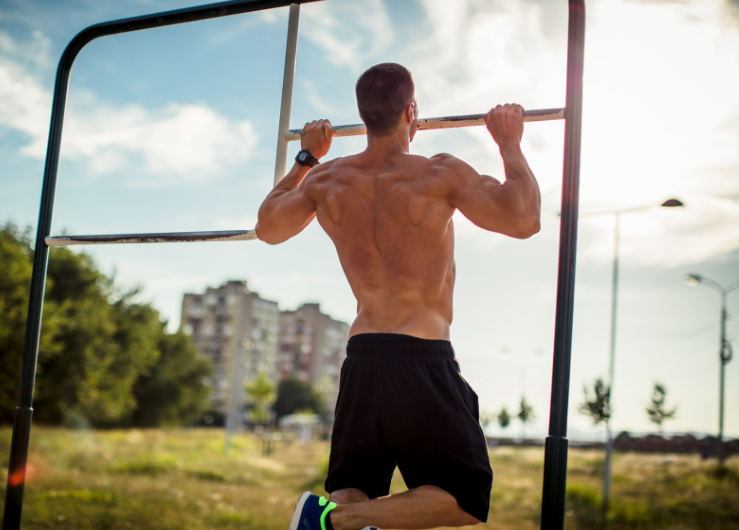
Pull-Ups and Rehabilitation: When and How to Resume
Returning to pull-ups after a shoulder injury is one of the most common concerns among people who want to get back to training without compromising their recovery process. This exercise requires a combination of strength, mobility, scapular stability, and joint control that can place significant demands on structures that may still be adapting and healing.
Important: this article is for informational purposes only and does not replace the advice of a physician, physiatrist, or physiotherapist. Every injury has unique characteristics and requires an individual assessment. If you experience persistent pain, functional limitations, or uncertainty about your recovery status, it is always advisable to consult a qualified healthcare professional.
Why Returning to Pull-Ups Requires Caution
Pull-ups are a complex movement involving the shoulder, scapula, back, and upper limbs. After an injury, even when pain appears to have decreased, the tissues may not yet have fully regained their ability to tolerate higher loads. Feeling better subjectively does not always mean that full functional recovery has been achieved.
For this reason, many professionals recommend a gradual progression rather than an immediate return to previous performance levels. A cautious approach makes it possible to monitor how the shoulder responds to increasing demands and to intervene promptly if signs of overload or joint irritation arise.
When It May Be Appropriate to Consider Returning to the Exercise
Functional Signs to Assess
Before resuming pull-ups, it is generally helpful to evaluate several functional factors. The ability to move the arm without significant pain, the recovery of good joint mobility, and the capacity to perform preparatory exercises with proper control are often considered positive indicators during the rehabilitation process.
Many physiotherapists also assess scapular movement quality and the ability to tolerate low-load pulling exercises. While these factors do not replace a professional diagnosis, they can provide useful insight into whether recovery is progressing in the desired direction.
Warning Signs That Should Not Be Ignored
Sharp pain during movement, sudden loss of strength, feelings of instability, or symptoms that persist for hours after training deserve attention. Ignoring these warning signs under the assumption that you simply need to "push through" can increase the likelihood of another interruption in your activity.
If any of these symptoms occur, it is advisable to stop the exercise and seek professional evaluation. Early intervention is often more effective than attempting to compensate for or modify movement patterns without qualified guidance.
How to Reintroduce Pull-Ups Progressively
Preparing the Shoulder and Scapula
The preparatory phase is often underestimated. Exercises focused on scapular control, rotator cuff stability, and improved coordination can be an important step before attempting a full pull-up.
A gradual increase in training load allows you to assess how the shoulder responds over time. The objective is not to accelerate recovery but rather to build a solid foundation that makes a sustainable return to regular training more achievable.
From Assisted Variations to Full Pull-Ups
Many return-to-training programs include assisted pull-up variations, which reduce the effective load placed on the involved structures. This approach allows the body to become reacquainted with the movement pattern while maintaining a greater margin of safety than immediately performing unassisted pull-ups.
As load tolerance improves and under the guidance of qualified professionals, training demands can be increased progressively until full pull-ups become achievable. The pace of progression should always be individualized and should not be compared with that of other athletes or trainees.
Technical Adaptations That May Support Your Return
Grip Selection and Movement Control
Hand position can influence comfort during the exercise. Some individuals find a neutral grip more comfortable, while others respond better to different grip configurations. There is no universal solution that works for every situation.
Particular attention should also be given to movement control. Slow, deliberate repetitions make it easier to monitor the shoulder's response and reduce the tendency to compensate with inefficient movement patterns.
Using Appropriate Bars and Accessories
Stable and adjustable equipment can help create a more controlled training environment. Solutions such as Donatif adjustable pull-up bars allow users to modify the height and configuration of their setup according to individual needs, supporting a more manageable progression.
Grip-related accessories may also be useful in certain situations, provided they are incorporated into a program tailored to individual characteristics rather than used as a substitute for proper functional assessment.
The Role of Healthcare and Movement Professionals
When recovering from an injury, professional support is often one of the most effective ways to reduce uncertainty. A physiotherapist or sports medicine physician can evaluate your specific situation, identify any remaining limitations, and provide objective criteria for returning to training.
Qualified coaches and movement specialists can also contribute during the post-rehabilitation phase, helping bridge the gap between clinical recovery and a gradual return to the physical activities you enjoy.
Training Consistently Without Increasing the Risk of Setbacks
For many individuals, especially adults over 50 or those who have previously experienced forced interruptions in training, fear of re-injury can become a significant obstacle. A gradual, monitored approach based on realistic goals can help rebuild confidence without exposing the body to unnecessary risks.
Returning to pull-ups should not be viewed as a test that must be passed as quickly as possible, but rather as a period of adaptation. Prioritizing movement quality, consistency, and awareness of the body's signals often leads to more sustainable long-term results. If symptoms persist or concerns arise, the safest course of action remains consulting a qualified healthcare professional before continuing training.
Comments (0)