
Chariot
Vous n’avez aucun article dans votre panier

 Budgets
 Abrutis
 Discs
Discs
 Bancs
Bancs
 Racks et Rigs
 Porte-Poids
 Machines Isotoniques
 Calisthénique
 Cardio
 Kettlebells
 Sols
Sols
 Ensemble Gym
 Accessoires
 Combat
 ARTI MARZIALI
 CONTAINER GYM
 Tug-Of-War
 Matériel de gymnastique d'occasion
 PILATES MACCHINARI
 GINNASTICA ARTISTICA
 CAMPI DA PADEL
 Prodotti in Pronta Consegna
 Informazioni
 IRONMAN
 Gift Card
- Donatif
- Informations générales
- 0 Je l’aime bien
- 2446 Affichage
- 0 Commentaires
- Sols de salle de sport, sols amortissants, sécurité en salle de sport, matériaux antichocs
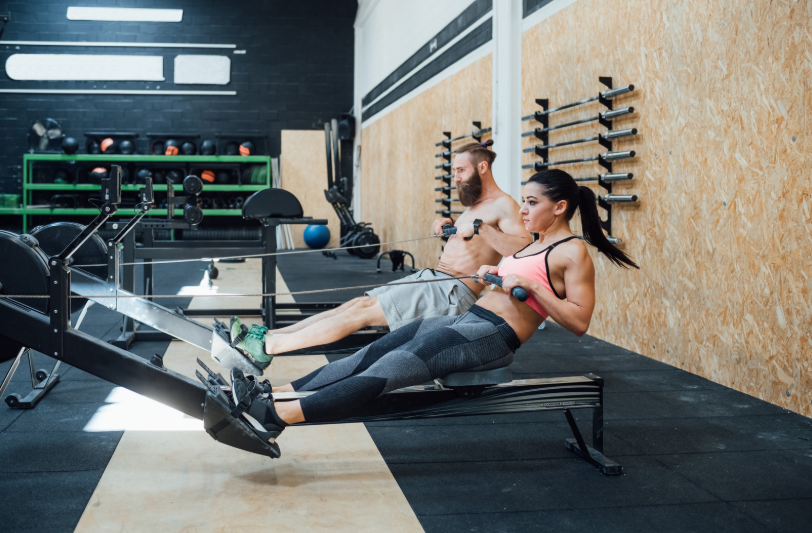
How to Evaluate the Quality/Price Ratio of a Rowing Machine
Buying a rowing machine for home use may seem like a simple decision, at least at first glance. In reality, the key issue is not just the initial price, but the machine’s ability to maintain value over time. Many users focus exclusively on the purchase cost without considering factors such as durability, maintenance, frequency of use, and actual usefulness in their daily routine.
An inexpensive rowing machine can turn into a wasted expense if it is abandoned after a few weeks, while a more expensive model may prove highly convenient if used consistently for years. For this reason, it is useful to think in terms of quality/price ratio, analyzing the machine’s operational value and the real cost of each workout session.
How much does a rowing machine really cost?
The market offers rowing machines across a very wide price range. Entry-level models generally start at a few hundred euros, while professional or semi-professional versions can easily exceed one thousand euros. This difference does not depend solely on the brand, but mainly on the structure, resistance system, movement smoothness, and overall build quality.
When evaluating the cost of a rowing machine, it is important to avoid superficial comparisons. A budget model may seem attractive initially, but it often uses lighter materials, less stable rails, and components more prone to wear. On the other hand, a higher-end rowing machine usually guarantees better silence, comfort, and long-term usability. The initial price difference should therefore be interpreted in relation to expected durability and training frequency.
Why material quality changes the value
One of the most underestimated aspects concerns the machine’s structural quality. A rowing machine designed with sturdy steel, reliable bearings, and precise sliding systems maintains more stable performance over time and reduces the risk of vibrations or annoying noises. This directly affects the user experience and the likelihood that the machine will be used consistently.
The resistance system also influences the quality/price ratio. Magnetic models generally require less maintenance and are quieter, while water rowing machines provide a more realistic sensation but require greater attention over time. Evaluating the seat material, maximum supported weight, and frame stability helps determine whether the product is truly suitable for frequent use or only occasional workouts.
Maintenance costs and long-term durability
Many users only consider the initial price and completely ignore future costs. In reality, rowing machine maintenance can significantly affect the overall value of the investment. Some models require minimal intervention, while others need periodic lubrication, component replacement, or more frequent inspections.
A higher-quality machine generally maintains stable performance for longer and requires fewer extraordinary repairs. In addition, the availability of spare parts and customer support represents a decisive factor. A cheap rowing machine without technical assistance may become unusable even because of minor issues. For this reason, the quality/price ratio should never be calculated solely on the initial cost, but also on the machine’s ability to remain efficient over the years.
Calculate your real ROI
To understand whether a rowing machine is truly worth it, it is useful to think in terms of home fitness ROI. In practice, this means comparing the cost of the machine with the actual number of uses expected over time. A model purchased for 700 euros and used four times a week for three years will have a very low cost per session compared to a cheaper machine used only occasionally.
You should also consider the potential savings compared to gym memberships, commuting, and the time spent training outside the home. For some people, the value of a rowing machine depends not only on fitness results, but also on everyday practicality. Training at home reduces organizational barriers and can encourage greater consistency. In this sense, the initial investment becomes easier to amortize.
Three practical usage scenarios
Occasional use
Those who use a rowing machine once or twice a week may not need a professional model. In this case, a mid-range solution that is stable and sufficiently quiet can represent the best economic compromise. Spending too much could lead to an underused investment.
For this type of user, it is important to avoid both extremely cheap models and oversized professional products. The ideal choice is a reliable machine, easy to maintain, and compatible with smaller home spaces.
Shared family use
When the rowing machine is used by multiple people, build quality becomes essential. A sturdier structure reduces wear and improves stability during workouts that differ in intensity and body type. In this scenario, the quality/price ratio tends to improve because the number of uses increases significantly.
Ease of adjustment also becomes important. A versatile and intuitive machine encourages more frequent use by the entire family, increasing the operational value of the purchase.
Frequent and continuous training
Those planning near-daily workouts should consider the rowing machine as a long-term investment. In these cases, it is worth focusing on more solid models designed to withstand high workloads and maintain smooth performance over time.
A mid-to-high-end product generally offers greater comfort, less noise, and lower maintenance requirements. The higher initial price is often compensated by superior durability and a more satisfying training experience.
When is buying a rowing machine truly worth it?
A rowing machine is worth buying when it is chosen according to realistic criteria that align with personal habits. The most common mistake is being guided exclusively by price or, conversely, purchasing a professional model without having a real operational need. The most rational choice always comes from balancing usage frequency, build quality, and expected durability.
Evaluating the quality/price ratio of a rowing machine therefore means analyzing the cost over time and not just the initial expense. A well-built machine, used consistently and properly maintained, can become a convenient investment both economically and practically. On the contrary, an impulsive purchase or one poorly aligned with personal needs may quickly turn into a useless expense.
Commentaires (0)