
Trolley
You have no items in your shopping cart

 Budgets
 Dumbers
 Discs
Discs
 Benches
 Racks and Rigs
 Weights Holders
 Isotonic machines
 Calisthenics
 Cardio
 Kettlebells
 Flooring
 Gym Set
 Accessories
 Combat
 ARTI MARZIALI
 CONTAINER GYM
 Tug-Of-War
 Used Gym Equipment
 PILATES MACCHINARI
 GINNASTICA ARTISTICA
 CAMPI DA PADEL
 Prodotti in Pronta Consegna
 Informazioni
 IRONMAN
 Gift Card
- Donatif
- General information
- 0 I like it
- 2550 Views
- 0 comments
READING TIME: 9 MINUTES ➤➤
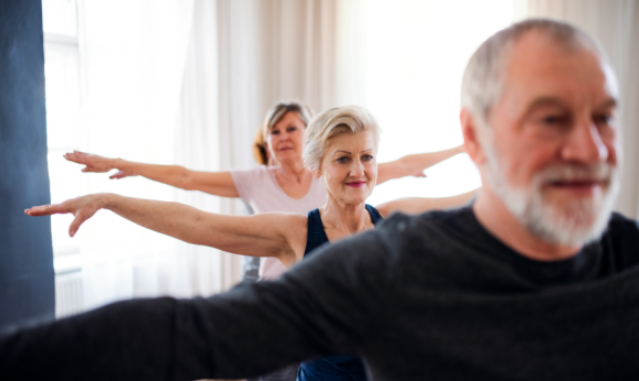
As we age, the body changes: muscles, joints, and coordination may gradually lose efficiency. However, even after the age of 60, it is possible—and essential—to maintain strength and functionality in the arms, especially for the simple movements that make up everyday life. In this article, we explore how to activate the arms in a gentle yet effective way, improve grip strength and forearm function, and preserve independence in later life.
- Why maintaining arm strength is essential after 60
- Simple exercises to strengthen the arms in later life
- Training grip strength and forearms: practical benefits for everyday life
- Strong arms for an independent life: the role of daily activities
- Practical tips for getting started and staying consistent
Why Maintaining Arm Strength Is Essential After 60
The Connection Between Strength and Independence
Arm strength is not just about physical fitness—it is a cornerstone of independence and quality of life. Carrying groceries, turning a faucet, moving a chair, or picking up an object all require adequate muscular function. When this declines, self-confidence and a sense of security in movement can also be affected.
For adults over 60, maintaining strength does not necessarily mean spending time in the gym lifting heavy weights. Instead, it involves regular, targeted, and safe movements that stimulate muscles and joints without placing excessive strain on the body. Consistency and awareness of your starting point are the keys to success.
Muscle Loss and Prevention: What You Should Know
After the age of 50, the body naturally experiences a gradual loss of muscle mass, a condition known as sarcopenia. If left unaddressed, it can negatively affect quality of life. However, it is possible to slow down—and partially reverse—this process through a gentle and functional exercise routine. The important thing is to start, even with just a few minutes a day, to activate those muscle groups that are often overlooked but play a crucial role in daily activities.
Simple Exercises to Strengthen the Arms in Later Life
Gentle Activation for Shoulders, Biceps, and Triceps
You do not need special equipment or a dedicated workout space to activate your arms effectively. Some of the best exercises are also the simplest: seated arm raises, light elbow curls using small weights (even a water bottle), and shoulder rotations. These movements activate the arm and shoulder muscles without creating unnecessary stress on the joints or tendons.
Consistency matters more than intensity. Even 5–10 minutes a day can make a significant difference over time. The goal is to keep the muscular system active and improve circulation without forcing movements or causing pain.
Adapting Movements to Your Abilities
Every body is different, and this becomes even more apparent with age. For this reason, it is important to adapt exercises to your individual abilities and listen to your body. You can begin with assisted movements, using a chair for support and performing repetitions slowly and comfortably. Over time, confidence grows, along with the ability to perform larger and more controlled movements.
A useful approach is to perform exercises in front of a mirror to monitor posture and movement quality. If possible, consulting a physiotherapist or a trainer specialized in older adults can help establish a safe and effective routine.
Training Grip Strength and Forearms: Practical Benefits for Everyday Life
Why Grip Strength Is Often Overlooked but Essential
Grip strength is one of the most important indicators of functionality and overall health in older adults, yet it is often neglected. A strong grip makes it easier to hold objects, open bottles, write, and prepare food. When strength in the hands and forearms decreases, even simple daily tasks can become difficult and frustrating.
Training grip strength does not require lifting heavy weights. Instead, it involves regularly stimulating the muscles of the fingers, wrists, and forearms—and it is much easier than many people think.
Practical Exercises to Do at Home Without Equipment
One of the most effective grip-strength exercises is squeezing a soft ball, such as a stress ball, and maintaining pressure for a few seconds. Repeatedly opening and closing the fingers or squeezing a rolled-up towel can also be beneficial. These movements strengthen the muscles without requiring specialized equipment.
Performing these exercises for just 1–2 minutes a day can significantly improve functionality. The goal is to gently and consistently stimulate the muscles responsible for maintaining a strong and secure grip over time.
Strong Arms for an Independent Life: The Role of Daily Activities
From Cooking to Gardening: How Everything Becomes Easier
Making coffee, chopping vegetables, and caring for plants are everyday activities that rely on arm strength and functional fitness. When these movements can be performed easily, people tend to feel more autonomous, independent, and satisfied. Conversely, when even simple tasks become difficult, frustration can quickly increase.
This is why it is important to connect physical activity with real-life tasks. Every daily action can become a natural form of physical activation when approached with awareness and proper movement.
Turning Every Day into an Opportunity for Functional Movement
The key is to integrate movement into your routine: lifting light objects several times, opening and closing containers, and bending and extending the arms during simple tasks. Even making the bed or hanging laundry can become a useful form of muscle activation.
The more naturally you use your arms, the stronger they become. Every small movement is an opportunity to keep the body active, capable, and full of vitality.
Practical Tips for Getting Started and Staying Consistent
When and How Much to Exercise Safely
The ideal frequency for this type of exercise is 3–5 times per week, even if only for a few minutes at a time. It is best to exercise during periods of the day when you feel most energetic, such as in the morning or after a walk. Never perform movements if you experience pain or excessive stiffness.
Keeping an exercise journal can help track progress and maintain motivation. Exercise should always be an enjoyable and positive experience, not a source of stress or pressure.
Motivation and Small Improvements: The Key to Success
Results do not appear overnight, but every small improvement matters: a firmer grip, a movement performed with less effort, or opening a jar independently. Motivation grows as these changes become noticeable, even when they seem minor.
With consistency, attention, and targeted movements, it is possible to maintain—and sometimes regain—good arm function even after the age of 60. Daily well-being starts here.
Comments (0)