
Trolley
You have no items in your shopping cart
 Budgets
 Dumbers
 Discs
Discs
 Benches
 Racks and Rigs
 Weights Holders
 Isotonic machines
 Calisthenics
 Cardio
 Kettlebells
 Flooring
 Gym Set
 Accessories
 Used Gym Equipment
 Combat
 ARTI MARZIALI
 Tug-Of-War
 CAMPI DA PADEL
 PILATES MACCHINARI
 GINNASTICA ARTISTICA
 CONTAINER GYM
 Gift Card
 Informazioni
 Prodotti in Pronta Consegna
- Donatif
- General information
- 0 I like it
- 5 Views
- 0 comments
- stress reduction, improved self-esteem, physical and mental well-being, gym training
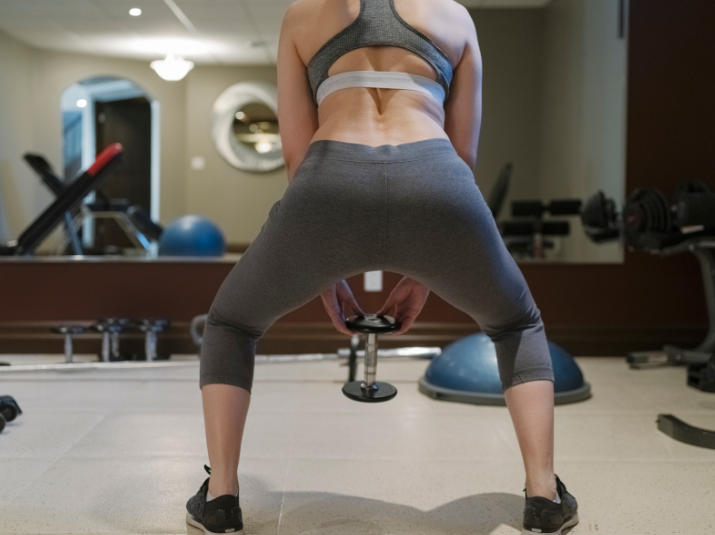
Entry-level vs premium: is top-tier equipment really necessary for a credible PT studio?
When designing a compact PT studio or an advanced home gym, one of the most common doubts concerns the choice between entry-level and premium equipment. The question that arises is not only technical, but deeply tied to perception: to appear professional in the eyes of a client, is it really necessary to invest in top-tier equipment from the start?
This doubt often stems from an automatic association between price and perceived quality, leading many professionals to overinvest out of fear of appearing unprepared. In reality, building a credible space relies on more subtle dynamics, where consistency, order, and strategic choices often matter more than the equipment tier itself.
- What a client really perceives when entering a PT studio
- Premium and credibility: an automatic association to reconsider
- Well-chosen entry-level: when it really works
- Where premium truly makes a difference
- Building a consistent space: the real driver of authority
What a client really perceives when entering a PT studio
The initial impact of a training space is not determined by the equipment tier, but by the overall reading of the environment. A client entering a PT studio does not analyze the brand of a barbell or the finish of a bench, but rather picks up on more immediate signals such as order, cleanliness, and layout.
The perception of professionalism therefore arises from a combination of visual and functional factors. A well-organized space, even with basic equipment, conveys control and competence. On the contrary, a cluttered or inconsistent environment can appear unprofessional even if filled with premium equipment.
The initial visual impact and spatial reading
The human brain uses cognitive shortcuts to quickly evaluate an environment. Within seconds, the client forms an impression based on symmetry, open space, and logical layout. This means perceived quality is more closely tied to space design than to individual objects.
A well-positioned compact rack, uniform flooring, and neatly arranged dumbbells immediately communicate structure and intention. It is this consistency that builds trust, not necessarily the level of material finishing.
Order, consistency, and cleanliness as signals of professionalism
Among all perceived elements, order and cleanliness have the strongest impact on credibility. A clean and well-maintained space suggests attention to detail and respect for the client—two fundamental aspects for a personal trainer.
Consistency among elements further reinforces this perception. Equipment from different tiers can coexist effectively, as long as the space maintains a clear visual logic and does not feel random.
Premium and credibility: an automatic association to reconsider
The idea that premium is necessary to appear professional comes from a cognitive bias known as prestige bias. We tend to automatically associate higher price with higher quality, extending this perception to environments as well.
However, this association does not always translate into a real perceived advantage for the client. In many cases, premium features are only recognizable to trained eyes, while most people overlook them entirely.
The role of cognitive biases in equipment choices
When setting up a PT studio, it is easy to fall into the trap of loss aversion, fearing that a lower-cost choice might damage your image. This leads to decisions driven more by anxiety than by actual functional or perceptual needs.
Being aware of these mechanisms allows for more rational decisions. It is not about avoiding premium altogether, but understanding when it is truly useful and when it represents an inefficient investment.
When premium is perceived and when it goes unnoticed
Not all equipment has the same visual impact. Some elements, such as flooring and racks, strongly influence perception, while others—like mechanical tolerances or internal finishes—are hardly noticeable.
This means premium only makes sense when it is visible and aligned with the user experience. Otherwise, it becomes a cost that does not meaningfully contribute to the studio’s credibility.
Well-chosen entry-level: when it really works
An entry-level setup can appear fully professional if built with intention. The key is not the tier itself, but the selection of the right elements and their integration within the space.
Many credible PT studios use basic equipment in specific categories, balancing it with thoughtful design and strong visual consistency. This approach allows budget optimization without compromising perception.
Basic equipment that does not compromise image
Elements such as adjustable dumbbells, simple benches, and compact racks can be used effectively, as long as they are solid and well maintained. In these cases, tier matters less than functionality and integration within the environment.
The client perceives the effectiveness of the training and the competence of the trainer, not the level of equipment finishing. This makes it possible to build a credible space even with a limited budget.
The value of selection over tier
Choosing fewer pieces of equipment but ensuring they are consistent with each other is often more effective than filling a space with high-end but mismatched items. Strategic selection becomes the real differentiating factor.
A minimal yet well-designed studio communicates more professionalism than a cluttered and visually confusing one, regardless of the investment level.
Where premium truly makes a difference
There are categories where premium can have a real impact, both in perception and usage. In these cases, the investment becomes more justified and strategic.
The key is identifying elements that act as visual anchors within the space—those that naturally draw the client’s attention.
High-impact perceptual categories
Racks, flooring, and certain main machines are among the most visible elements. Investing in these categories can elevate the overall perception of the space, even if the rest of the equipment is more basic.
These elements define the “tone” of the studio and help create a more solid and structured image.
Targeted investments to increase trust
An effective approach is to combine selective premium with functional entry-level. This creates a balance between perception and economic sustainability.
The result is a space that appears curated and professional without falling into excess or indiscriminate spending, maintaining full control over the budget.
Building a consistent space: the real driver of authority
At the core of everything is consistency. A credible PT studio is not the one with the most expensive equipment, but the one where every element has a purpose and contributes to a clear vision.
The alignment between function, aesthetics, and layout is what transforms a space into a professional environment, regardless of the equipment tier.
Visual and functional consistency
Uniformity in materials, colors, and layout creates a sense of order that is immediately perceived by the client. This type of consistency is often more powerful than any high-end investment.
The space becomes clear, intuitive, and reassuring—key elements for building trust from the very first interaction.
From equipment choices to spatial storytelling
Every studio tells a story. The choice of equipment, its arrangement, and the use of space create an implicit narrative that the client perceives without needing explanation.
Moving from an anxiety-driven approach to a structured and conscious decision-making process allows you to create spaces that are more effective, credible, and sustainable over time.
Comments (0)