
Trolley
You have no items in your shopping cart

 Budgets
 Dumbers
 Discs
Discs
 Benches
 Racks and Rigs
 Weights Holders
 Isotonic machines
 Calisthenics
 Cardio
 Kettlebells
 Flooring
 Gym Set
 Accessories
 Combat
 ARTI MARZIALI
 CONTAINER GYM
 Tug-Of-War
 Used Gym Equipment
 PILATES MACCHINARI
 GINNASTICA ARTISTICA
 CAMPI DA PADEL
 Prodotti in Pronta Consegna
 Informazioni
 IRONMAN
 Gift Card
- Donatif
- General information
- 0 I like it
- 1983 Views
- 0 comments
- gym flooring, safety flooring, gym safety, shock-absorbing materials
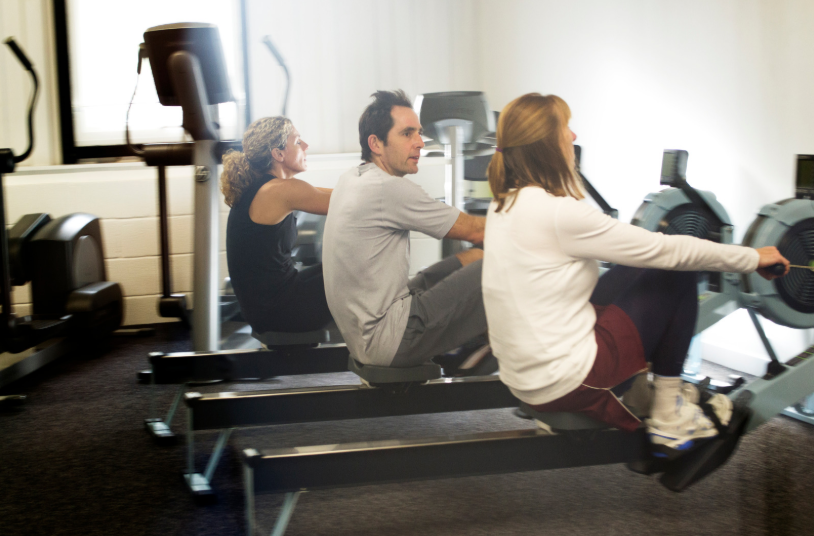
Complementary Exercises for the Rowing Machine: Strengthen Core and Back in 15 Minutes
Training with a rowing machine is one of the most effective ways to improve endurance, coordination, and cardiovascular fitness. Despite this, many people start experiencing lower back discomfort, reduced fluidity in the rowing stroke, or early fatigue after a few weeks of use. In most cases, the issue is not the rowing machine itself, but the lack of complementary work focused on core strength, back muscles, and postural stability.
Adding a short support routine can make rowing more efficient and less physically demanding. Just a few minutes using resistance bands, light kettlebells, and a mat can improve movement control, reduce tension, and increase workout quality. The main advantage is that these exercises can also be performed by beginners without making the session overly technical or complicated.
Why the rowing machine alone is not always enough
The rowing machine engages most of the body’s muscles, but it also repeats the same movement pattern hundreds of times during a session. If the trunk cannot properly stabilize the movement, the lower back starts compensating and the rowing technique becomes less effective. This often leads to pain, stiffness, or a feeling of weakness during the final phase of the stroke.
Another underestimated aspect is the role of the core for rowing. Many users believe that rowing power only comes from pulling with the arms or pushing with the legs, while in reality the connection between the upper and lower body is what makes the rowing motion smooth and efficient. Training the deep abdominal muscles, lats, and stabilizers improves force transfer and reduces energy waste.
Common muscle imbalances in rowing
People who use the rowing machine without complementary exercises often develop tight hip flexors and weakness in the middle back area. This creates a rounded posture, forward shoulders, and poor scapular control during movement.
Over time, compensations may appear and reduce the efficiency of the rowing technique. This is why targeted work on back strength and lumbar stability becomes useful even for recreational users.
Benefits of complementary exercises for rowing users
Adding support exercises helps create a more balanced training system. The advantage is not limited to preventing discomfort, but also improves overall performance quality. A stable trunk enhances rowing rhythm and makes it easier to sustain higher intensity levels.
Even the perception of fatigue changes. When the body distributes the workload more effectively between abs, lats, and glutes, the lower back compensates less. This helps maintain longer sessions without excessive stiffness.
Reducing lower back tension and fatigue
Many discomforts come from insufficient pelvic control. Stability exercises teach the body to maintain a more neutral position during the rowing stroke and reduce unnecessary stress on the spine.
Over time, movements become smoother and more controlled. Even people training in a home gym quickly notice improvements in posture quality.
Useful tools for an effective mini routine
You do not need complex machines to improve your rowing performance. An effective routine can be built using simple tools that are easy to manage even in small spaces. Resistance bands help improve scapular control, while a light kettlebell strengthens the posterior chain and stability.
The exercise mat remains essential for floor-based core work. Combining these tools allows you to create a quick but highly effective support workout for rowing.
How to choose the right load without overcomplicating things
A common mistake is using weights that are too heavy in an attempt to speed up results. In reality, technical control matters much more in complementary rowing exercises.
It is better to start with slow and manageable movements, gradually increasing time under tension. This approach reduces the risk of mistakes and improves motor learning.
15-minute core and back routine
This mini routine is designed to be performed before or after rowing. The goal is not to exhaust the body, but to improve stability, coordination, and rowing quality.
Each exercise can be performed for 40 seconds followed by 20 seconds of rest. Once all exercises are completed, repeat the circuit twice.
Bird Dog with pelvic control
The Bird Dog is one of the most effective exercises for improving lumbar stability and coordination between upper and lower limbs. During the movement, avoid rotating the pelvis and keep the trunk stable.
This exercise teaches the body how to transfer force without losing control, a key quality for efficient rowing.
Resistance Band Row for lats and scapulae
The resistance band row helps strengthen the lats, rhomboids, and scapular stabilizers. It is important to focus on shoulder movement instead of pulling only with the arms.
Better back activation allows for a stronger and more efficient rowing stroke.
Dead Bug for abdominal stability
The Dead Bug develops deep abdominal control and breathing coordination. The goal is to keep the lower back stable while the arms and legs move.
This exercise is especially useful for people who tend to arch their back during intense rowing phases.
Light Kettlebell Romanian Deadlift
The Romanian Deadlift with a light kettlebell strengthens the glutes, hamstrings, and posterior chain. The movement should remain controlled, with a neutral spine and the load close to the body.
Training this muscle chain improves the ability to generate force during the initial rowing drive.
3 exercises to do today to immediately improve rowing
If you want to start immediately without creating a complicated workout plan, focus on three simple yet highly effective movements. The first is the Bird Dog, excellent for stability and coordination. The second is the resistance band row, perfect for improving scapular control and back strength.
The third exercise is the Dead Bug, ideal for building a strong and stable core. Even performing just these three movements for a few minutes after rowing can help you notice smoother strokes and less back tension.
How to progress without increasing the load too much
Progression should not be aggressive. To achieve real benefits, it is better to gradually improve precision and control before adding more weight or difficulty.
A good strategy is increasing time under tension or reducing rest periods between exercises. This allows the body to build endurance and stability without excessive stress.
When to increase intensity or difficulty
If you can maintain clean technique and controlled breathing throughout the entire routine, you can introduce stronger resistance bands or slightly heavier kettlebells.
The key is avoiding compensations. When movement quality decreases, the load is too high for the purpose of the workout.
Common mistakes in complementary rowing exercises
One of the most common mistakes is performing the movements too quickly. Rushing reduces muscular control and turns useful exercises into mechanical repetitions with little real benefit.
Many people also focus only on the arms while neglecting the trunk. In reality, the core is what determines stability, force transfer, and posture quality during rowing.
Training only the arms while neglecting the trunk
Effective rowing comes from full-body coordination. If the trunk cannot support the movement, the arms end up working too hard and fatigue much faster.
For this reason, complementary exercises should not be considered optional additions, but rather an essential part of smart and sustainable rowing training.
Comments (0)