
Trolley
You have no items in your shopping cart

 Budgets
 Dumbers
 Discs
Discs
 Benches
 Racks and Rigs
 Weights Holders
 Isotonic machines
 Calisthenics
 Cardio
 Kettlebells
 Flooring
 Gym Set
 Accessories
 Combat
 ARTI MARZIALI
 CONTAINER GYM
 Tug-Of-War
 Used Gym Equipment
 PILATES MACCHINARI
 GINNASTICA ARTISTICA
 CAMPI DA PADEL
 Prodotti in Pronta Consegna
 Informazioni
 IRONMAN
 Gift Card
- Donatif
- General information
- 0 I like it
- 1596 Views
- 0 comments
- gym flooring, safety flooring, gym safety, shock-absorbing materials
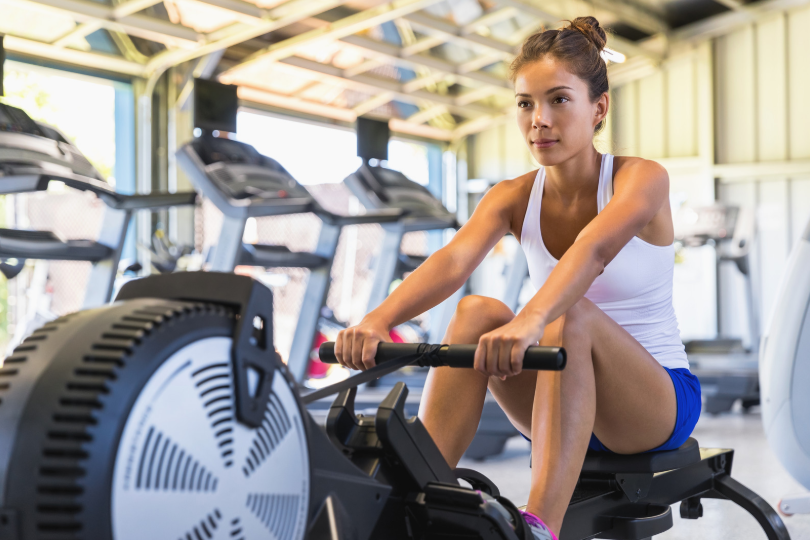
Complementary Exercises Outside the Rowing Machine to Improve Your Stroke
The rowing machine is one of the most complete pieces of equipment for training endurance, coordination, and overall strength, but rowing quality does not depend only on the time spent on the machine. Many users experience arm fatigue, back stiffness, or difficulty maintaining a steady rhythm because some physical prerequisites are missing: hip mobility, trunk control, shoulder stability, and the ability to transfer force from the legs to the handle. This is why complementary rowing exercises are not just an extra addition, but concrete support for technique.
Integrating bodyweight exercises, resistance bands, light kettlebells, and foam rollers helps build a cleaner rowing stroke without turning training into a complicated routine. The goal is not to do more exercises, but to choose targeted movements that help the body work better once back on the rowing machine. Proper integration improves movement awareness, reduces compensations, and makes it easier to measure real progress in terms of fluidity, rhythm, and postural stability.
Why train away from the rowing machine
Strength, control, and technique working together
An effective rowing stroke comes from a precise sequence: leg drive, trunk stability, arm pull, and controlled recovery. When one of these phases is weak, movement becomes less efficient and fatigue builds up where it should not. A good rowing exercise supplement works exactly on these details, developing useful rather than generic strength. Bodyweight squats, hip hinges, planks, and band rows help improve awareness of each phase of the movement, making force transfer feel more natural.
When complementary work prevents unnecessary compensations
Training only on the rowing machine can lead to repeating the same mistake over many sessions, especially for beginners or amateur athletes seeking performance without a stable technical foundation. If the hips are stiff, the back tends to round; if the core lacks support, the arms pull too early; if the shoulders are not controlled, the final part of the stroke loses precision. Complementary exercises make it possible to isolate these issues and correct them gradually before reintegrating them into the full movement.
Mobility and activation before rowing
Freer hips and ankles for a more effective drive
Rowing mobility often starts from areas that are underestimated: hips, ankles, and the posterior chain. A starting position that is too compressed or stiff limits leg drive and forces the trunk to compensate in inefficient ways. Before training, it is useful to spend a few minutes on controlled squats, dynamic lunges, and ankle mobility drills while maintaining a slow and precise rhythm. The main benefit is not simply “warming up,” but approaching the rowing machine with joints that move more freely and with a more stable setup.
Upper back and shoulders ready to support the pull
The thoracic spine and scapulae strongly influence the quality of the final phase of the rowing stroke. If the upper back is stiff or the shoulders rise toward the ears, the pull becomes shorter, less fluid, and overly dependent on the biceps. Light band exercises, controlled shoulder openings, and scapular retraction drills help prepare the upper body without creating fatigue. At this stage, intensity should remain low: the goal is to improve control and awareness, not to pre-fatigue the muscles.
Light strength exercises for a more stable stroke
Core and posterior chain as the foundation of movement
A stable rowing stroke requires a trunk capable of transferring force without collapsing. This is why planks, dead bugs, glute bridges, and hip hinges are simple but highly effective exercises. The core does not work to stiffen the body, but to maintain continuity between the legs, pelvis, and upper body. The posterior chain also plays a key role because it supports hip extension and controls the recovery phase. Including these movements two or three times a week can improve the feeling of stability during longer rowing sessions.
Resistance bands and light kettlebells for control and progression
Resistance bands are practical tools for simulating the pulling direction, training scapular control, and strengthening the back without heavy loads. A light kettlebell, on the other hand, can be used for exercises such as technical deadlifts, farmer carries, and controlled swings once the basic technique is solid. Using light weights allows gradual progression without turning complementary work into a heavy strength session. For people training at home, a few carefully chosen accessories are often more effective than a long and difficult routine.
How to build a pre- and post-rowing routine
Short sequence before training
A pre-rowing routine can last less than ten minutes as long as it is coherent with the movement that follows. It can begin with hip and ankle mobility work, continue with core activation, and finish with light band pulls. This sequence prepares the areas most involved in rowing and reduces the feeling of starting cold or uncoordinated. The practical rule is simple: first free the movement, then activate control, and finally start rowing with progressive intensity.
Recovery work after the session
After training, complementary work should change its purpose. There is no need to add more fatigue; instead, the focus should be on recovery and returning the body to a more neutral condition. Foam rolling the lats, glutes, and quadriceps, controlled breathing, and gentle mobility exercises help release accumulated tension. Even a few minutes can make a difference, especially for those who use the rowing machine several times a week. At this stage, intense exercises should be avoided: recovery works best when it remains simple, repeatable, and proportional to the session performed.
The advantage of a more mindful rowing stroke
Measuring improvements without overcomplicating training
Improvement should not be measured only by calories, watts, or distance. A more efficient rowing stroke can also be recognized through practical sensations: steadier rhythm, less early arm fatigue, more stable posture, and better-controlled recovery. Tracking these signals helps determine whether complementary exercises outside the rowing machine are producing real benefits. For beginners, the first goal may simply be feeling more coordinated; for amateur athletes, it may be maintaining technical quality even as intensity increases.
Useful accessories for consistency and precision
Resistance bands, light kettlebells, and foam rollers are simple accessories, yet perfectly aligned with functional preparation for rowing. They do not replace the rowing machine; they complement it. The choice should depend on the user’s level, available space, and training frequency. Those building a home gym can easily integrate them alongside the rower, creating a small area for warm-up, mobility, and recovery. In this way, training becomes more structured, progressive, and sustainable over time, with concrete benefits for movement quality and perceived effectiveness.
Comments (0)