
Trolley
You have no items in your shopping cart

 Budgets
 Dumbers
 Discs
Discs
 Benches
 Racks and Rigs
 Weights Holders
 Isotonic machines
 Calisthenics
 Cardio
 Kettlebells
 Flooring
 Gym Set
 Accessories
 Combat
 ARTI MARZIALI
 CONTAINER GYM
 Tug-Of-War
 Used Gym Equipment
 PILATES MACCHINARI
 GINNASTICA ARTISTICA
 CAMPI DA PADEL
 Prodotti in Pronta Consegna
 Informazioni
 IRONMAN
 Gift Card
- Donatif
- General information
- 0 I like it
- 5370 Views
- 0 comments
READING TIME: 3 MINUTES ➤➤
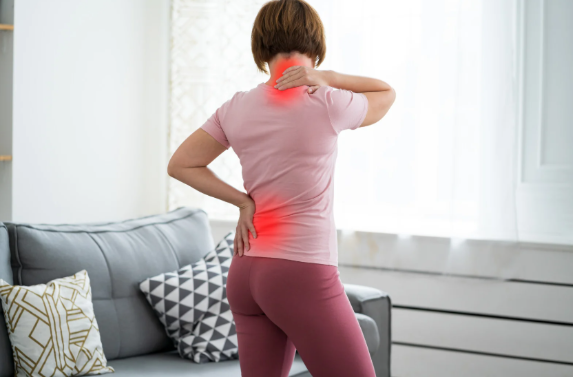
Functional scoliosis is a condition that is often overlooked, yet it can significantly affect daily comfort and the quality of movement. Unlike structural scoliosis, it is not linked to permanent bone deformities but rather to muscle asymmetries, poor posture, and compensatory movement patterns. It is a condition in which the body communicates, sends signals, and asks for attention. Pilates, with its approach based on micro-movements, body awareness, and the search for balance, represents a practical tool for learning to listen to oneself and take care of the spine. This article is aimed at adolescents and adults living with mild asymmetries who wish to develop conscious movement autonomy.
- What functional scoliosis is and how it differs from structural scoliosis
- Why Pilates makes a difference: awareness and micro-movements
- Listening to your body: self-assessment and signs of asymmetry
- A daily routine: Pilates as self-care
- Possible symmetry: realism, progress, and comfort
What functional scoliosis is and how it differs from structural scoliosis
Functional scoliosis does not arise from a permanent vertebral deformity but is often the result of muscular tension, postural misalignments, and incorrect daily habits. It is a deviation of the spine that can be corrected or reduced by working on muscles, fascia, and movement patterns. In contrast, structural scoliosis is characterized by fixed vertebral rotations and deformities and, in most cases, is not completely reversible.
Recognizing the difference between these two conditions is essential to choosing the most appropriate intervention strategies. Those who experience functional scoliosis can achieve significant improvements through mindful exercise, guided breathing, and proprioceptive work. It is precisely in this context that Pilates shows its greatest effectiveness.
Why Pilates makes a difference: awareness and micro-movements
Pilates is not just a strengthening discipline but a true form of movement education. Through attention to breathing, the body’s center (core), and the precision of each movement, the method gradually reorganizes the neuromuscular system. In cases of mild and functional scoliosis, this approach helps break dysfunctional movement habits and promotes new postural awareness.
The micro-movements proposed in Pilates sessions are particularly effective for working on trunk asymmetries, improving awareness of the two sides of the body, pelvic alignment, and scapular stability. The goal is not to “straighten” the back, but to offer the body a daily opportunity for centering and adaptation.
Listening to your body: self-assessment and signs of asymmetry
The first form of self-care is the ability to observe and listen to the body’s signals. In the presence of mild scoliosis, small details can reveal a lot: one hip appearing more prominent, one shoulder blade more visible, or a different perception of weight distribution on the feet. Self-assessment is not a substitute for medical diagnosis but a way to develop an active relationship with your own body.
Pilates helps refine this ability through exercises focused on movement perception, the use of mirrors, and tactile feedback. This is how practitioners begin to recognize functional asymmetries and consciously choose more balanced movements each day—less automatic and more centered. It is a slow but transformative process that requires attention, consistency, and trust.
A daily routine: Pilates as self-care
Integrating Pilates into daily life means creating a routine that is not just exercise but a true form of body care. Even just 15 minutes a day can make a difference: spinal mobilization exercises, posterior chain stretching, pelvic stabilization, and diaphragmatic breathing are key elements that support better posture and movement.
The advantage of Pilates is that it can be adapted to every level, and in cases of functional scoliosis, each exercise can be adjusted to respect asymmetry without forcing artificial symmetry. The quality of movement always comes before quantity, and the goal is not perfection but everyday well-being. A body that moves more freely experiences less pain, less stiffness, and less fatigue in daily life.
Possible symmetry: realism, progress, and comfort
People who turn to Pilates to address scoliosis often hope to “straighten” their spine, but the real goal is to feel centered, stable, and confident in movement. Symmetry is not an absolute endpoint but a dynamic balance built day after day. In this sense, Pilates becomes a powerful tool for personal evolution and acceptance of the body as it is, with its limits and its strengths.
Through the Pilates journey, one learns that even mild scoliosis can become an opportunity to improve the relationship with oneself, strengthen autonomy, and educate the body toward comfort and resilience. Each day of practice becomes a step toward a freer posture, deeper breathing, and a body that is more carefully listened to. And that, indeed, is true self-care.
Comments (0)