
Trolley
You have no items in your shopping cart

 Budgets
 Dumbers
 Discs
Discs
 Benches
 Racks and Rigs
 Weights Holders
 Isotonic machines
 Calisthenics
 Cardio
 Kettlebells
 Flooring
 Gym Set
 Accessories
 Combat
 ARTI MARZIALI
 CONTAINER GYM
 Tug-Of-War
 Used Gym Equipment
 PILATES MACCHINARI
 GINNASTICA ARTISTICA
 CAMPI DA PADEL
 Prodotti in Pronta Consegna
 Informazioni
 IRONMAN
 Gift Card
- Donatif
- General information
- 0 I like it
- 2207 Views
- 0 comments
- stress reduction, improved self-esteem, physical and mental well-being, gym training
READING TIME: 9 MINUTES ➤➤
If you’re wondering whether functional training or a traditional gym is the better choice, you’re probably not looking for the most popular answer, but the one that’s right for you. In recent years, functional training has gained enormous visibility, while the weight room continues to represent a long-standing reference point for those who want to improve their physique. The truth is that both methods work, but in different ways.
The doubt often stems from the fear of making the wrong choice. Investing time, energy, and motivation in a path that doesn’t reflect your goals can lead to frustration. That’s why it’s essential to objectively analyze the pros and cons of each approach, understand the real differences, and determine which method best fits your lifestyle and expectations.
- What functional training really means
- How the traditional gym works
- Concrete differences between functional training and weights
- Which method is better for your goals
- The right choice isn’t universal, it’s personal
What functional training really means
Functional training was created to improve global body movements rather than isolate a single muscle. Functional exercises involve multiple muscle groups at the same time and replicate natural movement patterns such as pushing, pulling, jumping, rotating, or stabilizing. This approach aims to develop coordination, balance, mobility, and integrated strength.
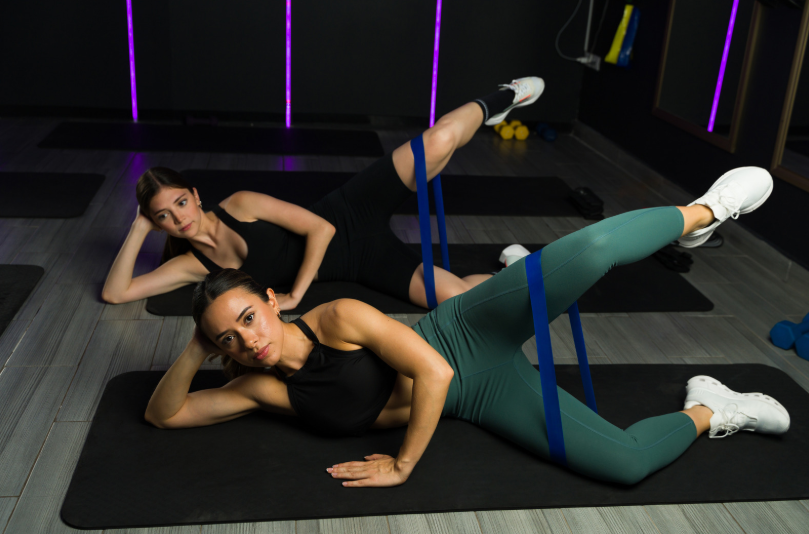
In functional fitness, the focus isn’t purely aesthetic but also performance-based. Workouts often include kettlebells, free barbells, resistance bands, medicine balls, or simply bodyweight movements, as seen in calisthenics and urban fitness. Intensity can be high, and cardiovascular work is frequently integrated into the session, making training dynamic and engaging, especially for those who get bored with repetitive routines.
How the traditional gym works
The traditional gym is primarily based on resistance training, using guided machines and free weights. The most common goal is increasing muscle mass or improving body definition through structured and progressive programs. Workouts are often divided by muscle groups, with specific exercises for chest, back, legs, or shoulders.
This approach allows for greater precision in load control and weight progression. For those seeking visible aesthetic results, the weight room offers highly effective tools. In addition, guided machines can be reassuring for beginners, as they reduce technical complexity and help maintain a controlled movement path.
Concrete differences between functional training and weights
The main difference between functional training and traditional gym workouts lies in the goal of the movement. In functional training, the body is trained as an integrated system, whereas in the weight room, muscles are often isolated for targeted stimulation. This results in different sensations during training: more global and metabolic in the first case, more localized and muscle-focused in the second.
Another key aspect is calorie expenditure and cardiovascular involvement. Functional fitness frequently incorporates high-intensity components that elevate heart rate, while traditional gym workouts may be more segmented, with rest periods between sets and a focus on mechanical tension. Neither approach is inherently superior; they simply lead to different physical adaptations over time.
Which method is better for your goals
If your main objective is to visibly increase muscle mass in a structured way, the traditional gym provides more specific tools for hypertrophy. The ability to accurately track loads, repetitions, and progression makes this method particularly effective for those seeking clear aesthetic transformations.
If, on the other hand, you aim to improve mobility, coordination, and overall performance, functional training may offer a more comprehensive solution. It’s often chosen by those who want to feel more agile, improve posture, or prevent injuries. For those who are undecided, a balanced solution may be to combine both approaches, leveraging the structural strength of weights and the dynamism of functional training.
The right choice isn’t universal, it’s personal
The truth that few people mention is that there is no single method that works for everyone. The choice between functional training or a traditional gym depends on your starting point, the time you can dedicate to training, and the type of motivation that drives you. A program that looks perfect on paper but doesn’t align with your lifestyle is unlikely to succeed in the long run.
Before deciding, ask yourself which environment makes you feel more engaged and what kind of progress motivates you the most. If you enjoy variety and dynamic movement, functional fitness may stimulate you more. If you prefer clear structures, measurable progress, and tangible muscle results, the weight room may provide greater satisfaction. The right choice is the one you can sustain over time, because consistency remains the only real factor that determines results.
Comments (0)