
Trolley
You have no items in your shopping cart

 Budgets
 Dumbers
 Discs
Discs
 Benches
 Racks and Rigs
 Weights Holders
 Isotonic machines
 Calisthenics
 Cardio
 Kettlebells
 Flooring
 Gym Set
 Accessories
 Combat
 ARTI MARZIALI
 CONTAINER GYM
 Tug-Of-War
 Used Gym Equipment
 PILATES MACCHINARI
 GINNASTICA ARTISTICA
 CAMPI DA PADEL
 Prodotti in Pronta Consegna
 Informazioni
 IRONMAN
 Gift Card
- Donatif
- General information
- 0 I like it
- 824 Views
- 0 comments
- gym flooring, safety flooring, gym safety, shock-absorbing materials
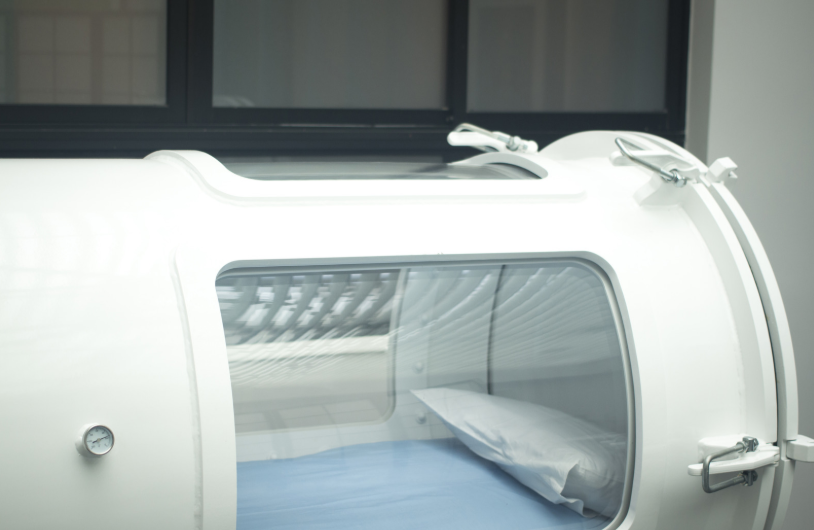
Aerospace Materials and Welds: The Science Behind Donatif's Airtight Integrity
When evaluating a hyperbaric chamber, attention is often focused on its therapeutic performance, design, or ease of use. However, the real factor that determines reliability, safety, and long-term durability is the quality of its construction. Every structural component—from material selection to machining and welding—plays a crucial role in ensuring that the chamber operates safely even after thousands of pressurization cycles.
A hyperbaric chamber designed to operate at 1.5 ATA or 2.0 ATA is subjected to continuous mechanical stress. For this reason, engineering design cannot leave room for compromise: safety stems from technical expertise, careful selection of raw materials, and rigorous quality controls carried out throughout every stage of production. It is precisely this attention to detail that distinguishes a product built to last from one manufactured solely to reduce production costs.
- Why construction quality is essential
- The aerospace-grade materials used
- Certified welds
- Pressure testing and inspections
- Italian manufacturing and long-term value
Why Construction Quality Is Essential in a Hyperbaric Chamber
A hyperbaric chamber is a pressure vessel designed to maintain controlled operating conditions with maximum safety. During every treatment, the structure must withstand significant and repeated loads without permanent deformation, microcracks, or pressure loss. Construction quality therefore represents the first level of protection for both the user and the investment made.
The difference between a structure engineered according to rigorous standards and one built with lower-quality manufacturing practices becomes particularly evident over time. Careful engineering, combined with the use of carefully selected hyperbaric chamber materials and controlled production processes, ensures consistent performance even after years of intensive use while minimizing extraordinary maintenance and maximizing overall system reliability.
Aerospace-Grade Materials Used in Hyperbaric Chambers
Material selection is one of the most important decisions in the design of a hyperbaric chamber. Not all steels possess the same mechanical properties: pressure resistance, elasticity, fatigue behavior, and the ability to maintain structural integrity over time are all essential factors in ensuring safe operation.
For this reason, manufacturers prioritize steel for hyperbaric chambers and high-performance alloys characterized by exceptional metallurgical quality, many of which are also used in highly specialized sectors such as aerospace and advanced manufacturing. These materials provide an excellent balance of strength, dimensional accuracy, and durability, ensuring consistent performance despite continuous pressurization cycles.
High-Performance Steels and Alloys
Metal alloys used in high-pressure applications are selected according to strict certification and traceability requirements. Every batch of material must comply with precise mechanical specifications to ensure that the structure delivers maximum safety throughout the product's entire service life.
Using premium-quality materials also enables highly precise machining processes. Accurate geometry facilitates component assembly while ensuring an even distribution of mechanical stress, reducing the risk of stress concentration points that could compromise structural stability.
Corrosion Resistance and Long-Term Stability
A hyperbaric chamber is designed to remain operational for many years. For this reason, corrosion resistance is a key requirement, particularly in environments characterized by high humidity or frequent sanitation procedures. Properly selected materials maintain their structural properties even after prolonged use.
Long-term dimensional stability also helps preserve the efficiency of sealing surfaces, gaskets, and closure systems. This translates into consistent performance, increased reliability, and lower maintenance costs throughout the equipment's lifespan.
Certified Welds That Ensure Airtight Integrity
High-quality metal alone is not enough to guarantee structural safety. Certified welds are among the most critical elements in the construction of any pressure vessel. Every joint must be completed according to qualified procedures while complying with strict parameters that ensure both structural continuity and perfect airtightness.
A properly executed weld allows the entire structure to behave as a single unit, distributing internal pressure evenly across the vessel. Conversely, imperfections or defects may become weak points over time, which is why welding operations must be carried out exclusively by highly skilled professionals.
Welding Technologies and Quality Control
Modern manufacturing processes rely on highly precise welding technologies combined with systematic quality inspections throughout every production stage. Every weld bead is carefully examined to verify continuity, surface quality, and compliance with engineering specifications.
These inspections go far beyond visual appearance, focusing primarily on the weld's ability to maintain airtight integrity under pressure. The objective is to eliminate any potential defects before the product undergoes final testing, ensuring outstanding quality standards and long operational life.
The Importance of Manufacturing Certifications
Certifications play a fundamental role in demonstrating that manufacturing processes comply with recognized and controlled procedures. Every stage of production—from material selection to final machining—is documented to ensure complete product traceability.
For customers, this represents a tangible guarantee of reliability. Knowing that every component has been manufactured according to certified procedures provides confidence in a hyperbaric chamber built to the highest standards, with safety and long-term performance as top priorities.
Pressure Testing That Verifies Safety
Once manufacturing is complete, every hyperbaric chamber undergoes a series of rigorous hyperbaric pressure tests. These tests verify that the structure can safely withstand the intended operating conditions without deformation, leaks, or other anomalies.
Testing represents the final stage of an extensive engineering and manufacturing process. Only after successfully passing every inspection can the chamber be considered ready for operation, providing both operators and end users with confidence in its safety and reliability.
Testing at 1.5 ATA and 2.0 ATA
Operating at 1.5 ATA and 2.0 ATA requires every structural component to perform predictably throughout repeated pressurization and depressurization cycles. Testing verifies precisely this capability by simulating real operating conditions.
Specific inspections evaluate structural behavior, welded joint stability, and the system's ability to maintain pressure without leakage. These tests are essential to ensuring long-term operational reliability.
Airtightness Verification and Final Inspections
In addition to structural testing, dedicated inspections are carried out to verify the complete sealing performance of the system. Gaskets, locking mechanisms, fittings, and pressurization components must work together flawlessly to maintain a fully controlled internal environment during every treatment.
These final inspections complete a manufacturing process built on precision, engineering expertise, and meticulous attention to detail. Every verification adds another level of safety, contributing to a product designed to deliver exceptional performance for many years.
Italian Manufacturing, Reliability, and Long-Term Return on Investment
Italian hyperbaric manufacturing represents significant added value when supported by engineering expertise, certified production processes, and continuous quality control. Managing every stage of manufacturing directly allows consistently high standards to be maintained while ensuring close attention to every construction detail.
For healthcare professionals, medical centers, and business owners, purchasing a hyperbaric chamber is a long-term investment. A structure manufactured with premium materials, certified welds, and rigorous testing helps reduce downtime, minimize maintenance costs, and preserve the equipment's value over time.
Why High-Quality Construction Lasts Longer
Every engineering decision focused on quality delivers measurable benefits throughout the machine's lifecycle. Reliable materials, precision manufacturing, and rigorous inspections enable consistent performance even after thousands of operating hours while reducing wear and improving overall reliability.
Durability is never the result of chance but rather the outcome of careful engineering and uncompromising manufacturing. This philosophy makes it possible to produce equipment capable of maintaining the highest safety standards required for hyperbaric applications over the long term.
How Construction Quality Protects Your Investment
For those evaluating a hyperbaric chamber from a return-on-investment perspective, construction quality is one of the most important considerations. A product engineered according to rigorous standards delivers greater operational continuity, lower maintenance costs, and superior long-term reliability.
Safety is never optional—it is the result of expertise, stringent quality control, and carefully selected materials. It is precisely through the quality of the metal, certified welds, and rigorous hyperbaric pressure testing that confidence is built in a hyperbaric chamber designed to deliver reliable, precise, and long-lasting performance.
Comments (0)