
Trolley
You have no items in your shopping cart

 Budgets
 Dumbers
 Discs
Discs
 Benches
 Racks and Rigs
 Weights Holders
 Isotonic machines
 Calisthenics
 Cardio
 Kettlebells
 Flooring
 Gym Set
 Accessories
 Combat
 ARTI MARZIALI
 CONTAINER GYM
 Tug-Of-War
 Used Gym Equipment
 PILATES MACCHINARI
 GINNASTICA ARTISTICA
 CAMPI DA PADEL
 Prodotti in Pronta Consegna
 Informazioni
 IRONMAN
 Gift Card
- Donatif
- General information
- 0 I like it
- 1580 Views
- 0 comments
- gym flooring, safety flooring, gym safety, shock-absorbing materials
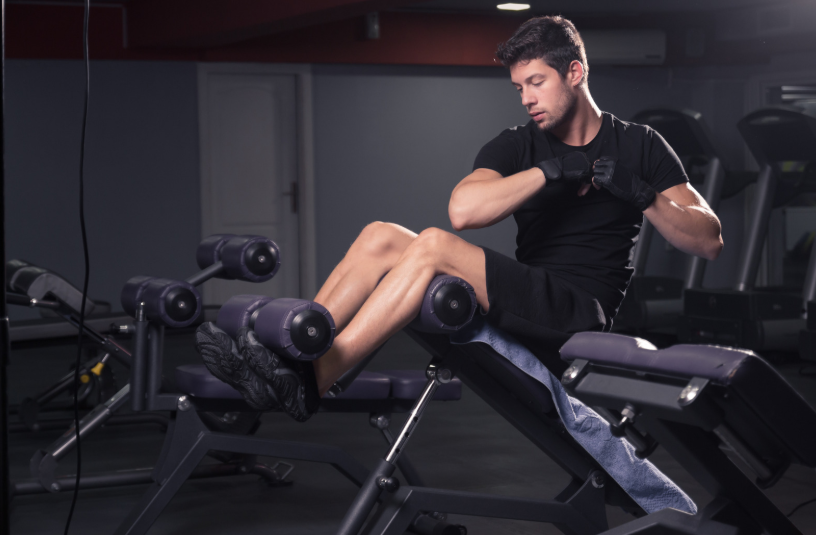
Minimal Clean Setup or Already Scalable Base: Which Option Helps You Avoid More Regrets in an Apartment?
Training in an apartment means finding a very precise balance between available space, everyday practicality, and future growth potential. Many users starting an entry-level home gym face a concrete question: is it better to begin with a minimal and lightweight setup, or build a more scalable foundation right away? The difference is not only about the initial budget, but also about the risk of having to buy equipment again after only a few months. In a real domestic environment, the right choice is often the one that reduces second thoughts and makes it easier to evolve your training without disrupting your living space.
- Why the doubt between a minimal setup and a scalable setup is so common
- When a minimal setup truly makes sense
- Why a scalable base can reduce regrets
- Direct comparison between a minimal and scalable setup
- Which products truly change scalability
- How to choose without regretting it after a few months
Why the doubt between a minimal setup and a scalable setup is so common
People living in apartments naturally tend to look for a cautious solution. Space is limited, noise management matters, and the idea of filling a room with bulky equipment often creates initial resistance. For this reason, a minimal home gym setup appears to be the safest choice: fewer items, lower costs, and less impact on the home environment.
At the same time, however, many people quickly discover that an overly essential setup limits progression. After a few months, new needs begin to emerge: more exercise variety, heavier loads, better space organization, or greater comfort during workouts. This is exactly when the fear of double spending appears, because a setup created only to “get started” can soon become insufficient.
The real context of training in an apartment
A home gym is not used in a separate environment like a professional fitness facility. It often shares space with a living room, bedroom, or office. This completely changes how clutter, organization, and practicality are perceived. A setup that seems compact on paper can become frustrating in everyday life if it is not designed carefully.
For this reason, the initial choice must also consider long-term management. Equipment that constantly forces you to move weights, dismantle accessories, or search for new storage space can turn home training into something difficult to sustain over time.
The fear of spending poorly on early purchases
Many entry-level users try to avoid financial mistakes by choosing inexpensive and minimal products. In reality, however, the issue is not spending less or more, but understanding whether the purchase will remain useful after training evolves. Some setups that initially seem cautious quickly become technical limitations.
The most common fear concerns having to replace everything after only a few months. Buying equipment that is not compatible with future upgrades can create additional costs that are far higher than choosing a slightly more structured setup already designed for growth.
When a minimal setup truly makes sense
A clean minimal setup can be a smart choice in several scenarios. People who train only a few times a week, have general maintenance goals, or simply want to get back into physical activity without major ambitions can benefit from an essential configuration.
In these cases, just a few well-chosen elements are often enough: adjustable dumbbells, a foldable bench, and EVA mats can create a highly practical base without completely taking over domestic spaces. Simplicity also reduces the risk of unnecessary impulse purchases.
The advantages of an essential configuration
The main advantage of a minimal setup is ease of management. Less equipment means less maintenance, less clutter, and greater flexibility when organizing the home. This aspect is especially important in small apartments.
Another strong point is the lower initial budget. For those who are not yet sure how consistent they will be over time, starting lightly allows them to test habits and motivation without major investments.
The most common mistakes of starting too light
The problem begins when the minimal setup is built without considering future evolution. Equipment that is too cheap or not modular enough often becomes unusable as soon as training level increases.
Many users end up completely replacing their initial configuration. In practice, the initial savings turn into double spending, made even worse by the need to reorganize the entire home setup from scratch.
Why a scalable base can reduce regrets
A scalable home gym does not necessarily mean building a complete gym immediately. It means choosing elements that are compatible with gradual growth, avoiding products that force you to start over from zero.
This approach is especially useful in apartments because it helps maintain organization and consistency even as the setup evolves. A well-designed base allows you to add components without compromising the livability of the environment.
The difference between spending more and spending smarter
Many people associate scalable setups with excessive spending, but this is not always true. In many cases, it simply means selecting products that are more intelligently designed. A quality adjustable bench or a properly sized compact rack can last for years without needing replacement.
The real difference lies in continuity. An evolvable setup avoids interruptions, incompatibilities, and redundant purchases. This makes the home training experience much more stable and sustainable.
The elements that make a home setup evolvable
The most interesting products are those that allow multiple configurations without significantly increasing space requirements. Adjustable dumbbells, for example, replace entire traditional weight sets and make it easier to adapt loads over time.
Even a compact rack can represent a strategic choice. If designed properly, it occupies relatively little space while allowing significant growth in exercise variety.
Direct comparison between a minimal and scalable setup in an apartment
In a real home environment, the comparison is not only about the initial cost. Much more practical aspects come into play, such as organization, growth freedom, and daily space management.
A minimal setup is generally simpler at the beginning, but it can become limiting much faster. A scalable base requires slightly more planning, yet it tends to provide better long-term continuity.
Minimal setup: less immediate clutter, lower budget, easier management, but limited growth possibilities.
Scalable setup: greater future flexibility, lower revision costs, better technical continuity, but a more thoughtful initial investment.
Occupied space and home organization
Contrary to popular belief, some modern scalable configurations occupy less space than poorly designed minimal setups. Modular and foldable products significantly improve home organization.
Organization becomes essential especially when the home gym shares multifunctional spaces. A messy setup quickly creates visual discomfort and reduces everyday practicality.
Growth freedom and upgrade possibilities
The real difference emerges after a few months of use. A purely essential setup may require frequent replacements as soon as training level increases.
A growth-oriented base, on the other hand, allows components to be added progressively without disrupting the entire domestic system already created.
Initial costs versus revision costs
Looking only at the initial price can be misleading. Many inexpensive configurations become expensive when they require complete revisions.
The most cost-effective long-term solution is often the one that maintains compatibility and continuity, reducing the number of replacement purchases.
Which products truly change home gym scalability
Some products directly affect the possibility of evolving the setup without excessively increasing clutter. These are the elements that make the difference between a temporary configuration and one that is genuinely sustainable over time.
The choice of initial components should therefore focus not only on immediate function, but also on their ability to adapt to future needs.
Adjustable dumbbells and intelligent space management
Adjustable dumbbells are one of the most effective solutions for apartment living. They allow users to train with different loads without occupying the space required by a full dumbbell rack.
From a scalability perspective, they make it possible to progressively increase workout intensity while maintaining organization and practicality.
Adjustable bench and compact rack as an evolvable base
An adjustable bench dramatically expands training possibilities without requiring much additional space. If chosen carefully, it can support the user’s progress for many years.
A well-designed compact rack can also transform an entry-level home gym into a far more complete structure without compromising the balance of the apartment.
EVA mats and accessories that improve livability and organization
Details that may seem secondary often have a huge impact on the quality of the home experience. EVA mats improve comfort, protect the floor, and help manage noise.
Likewise, weight holders and compact organization solutions help keep the environment tidy and easier to live in every day.
How to choose the right path without regretting it after a few months
The best choice mainly depends on goals, consistency, and long-term perspective. People who see home training as a temporary solution may benefit from a purely essential setup.
Those who plan to train consistently over time tend to benefit more from a base already designed for growth. In an apartment, avoiding constant changes often means improving both the workout experience and the management of living spaces.
Who should stick to a purely minimal setup
A minimal setup is suitable for very occasional users, people with extremely limited space, or those who simply want to resume physical activity without advanced technical goals.
In these situations, simplicity becomes a real advantage and reduces the risk of creating a home gym that is too invasive compared to actual needs.
Who benefits from a base already designed for growth
People who train consistently or plan to progressively increase workout intensity and frequency should consider a more evolvable structure from the beginning.
A well-designed scalable base protects the investment, reduces the risk of repurchasing equipment, and makes it much easier to build a truly sustainable home gym over time, even in an apartment.
Comments (0)