
Trolley
You have no items in your shopping cart

 Budgets
 Dumbers
 Discs
Discs
 Benches
 Racks and Rigs
 Weights Holders
 Isotonic machines
 Calisthenics
 Cardio
 Kettlebells
 Flooring
 Gym Set
 Accessories
 Combat
 ARTI MARZIALI
 CONTAINER GYM
 Tug-Of-War
 Used Gym Equipment
 PILATES MACCHINARI
 GINNASTICA ARTISTICA
 CAMPI DA PADEL
 Prodotti in Pronta Consegna
 Informazioni
 IRONMAN
 Gift Card
- Donatif
- General information
- 0 I like it
- 975 Views
- 0 comments
- gym flooring, safety flooring, gym safety, shock-absorbing materials
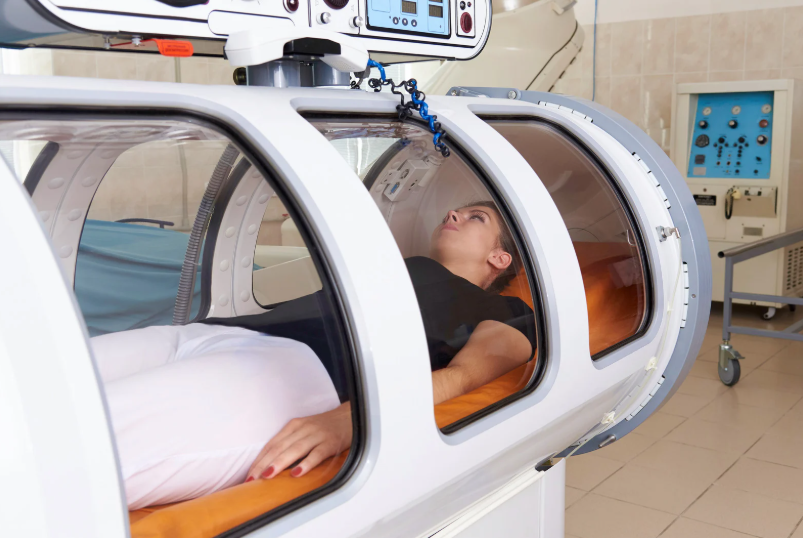
Hypoxic Chamber: What It Is and Why It Is Used in Sports
In recent years, the topic of hypoxic training has increasingly become part of discussions surrounding athletic preparation, recovery, and performance optimization. Many athletes have heard about hypoxic chambers through endurance sports, while coaches and sports facility managers view them as one of the most discussed technologies in advanced training.
Despite the growing popularity of the term, there is still considerable confusion. Hypoxic chambers are often associated with high-altitude training, IHHT, or even hyperbaric chambers, leading to misunderstandings about their actual purpose. Understanding what this system truly is represents the first step toward navigating technical concepts that may initially seem complex.
What Is a Hypoxic Chamber?
The Definition of a Controlled Hypoxic Environment
A hypoxic chamber is a technologically controlled environment in which the amount of oxygen available in the air is reduced compared to the levels normally found at sea level. The goal is not to alter atmospheric pressure but to recreate conditions similar to those experienced in mountainous or high-altitude environments. Through dedicated systems, the air is processed to lower the percentage of oxygen inhaled by users.
In the sports context, this type of environment is used to expose the body to a physiological stimulus that differs from normal conditions. The underlying concept is that the body responds to reduced oxygen availability by activating a series of adaptations that have been studied for decades in exercise physiology and athletic performance research.
How Altitude Is Simulated Without Going to the Mountains
The most interesting feature of a hypoxic chamber is its ability to simulate high-altitude conditions without requiring physical travel to mountainous regions. Virtual altitude is achieved through systems that reduce oxygen concentration in the environment while maintaining controlled and monitored conditions. This makes it possible to reproduce a scenario similar to traditional altitude training.
For athletes and coaches, the ability to precisely manage hypoxia levels offers significant logistical advantages. Training sessions can be scheduled within sports centers, laboratories, or dedicated facilities without the need for extended stays at high-altitude locations.
How a Hypoxic Chamber Works in Sports
The Controlled Reduction of Oxygen Concentration
The operating principle of a hypoxic chamber is based on creating an atmosphere in which oxygen concentration is lower than what is normally breathed. In this environment, the body perceives reduced oxygen availability and must temporarily adapt to conditions that differ from everyday circumstances.
During sessions, parameters are generally monitored to ensure exposure occurs under controlled conditions. The intensity of the stimulus may vary depending on the objectives of the program, the athlete's level, and the characteristics of the training or preparation plan.
The Body's Physiological Responses
When oxygen availability decreases, the body activates several physiological responses. Breathing rate may increase, and the body attempts to use available oxygen more efficiently. These mechanisms represent a normal adaptive response to controlled hypoxic conditions.
In the sports world, interest in these adaptations stems from their potential relationship with aerobic capacity, endurance, and the management of prolonged effort. It is important to note that responses can vary significantly from one individual to another and that exposure programming requires specialized expertise.
Why Athletes Use Hypoxic Training
Goals of Athletic Preparation in a Hypoxic Environment
The use of a hypoxic chamber in sports is generally linked to the pursuit of adaptations that may support physical preparation. The objective is not simply to make training more difficult but to provide a stimulus that differs from ordinary environmental conditions.
Strength and conditioning coaches and sports professionals consider hypoxia as a tool to be integrated into broader programs that include training, recovery, nutrition, and performance monitoring. For this reason, a hypoxic chamber is viewed as a complementary technology rather than a replacement for traditional athletic preparation.
The Sports That Use It Most Frequently
Endurance sports have historically shown the greatest interest in real or simulated altitude training. Cycling, running, triathlon, and mountain sports are among the disciplines in which oxygen management plays a particularly important role.
In recent years, interest has expanded to other disciplines as well. Some programs are developed for team sports or for athletes seeking to incorporate different stimuli into their annual training plans. The methods of use can vary significantly depending on performance goals and the characteristics of the sport involved.
Where a Hypoxic Chamber Can Be Used
Sports Centers and Specialized Facilities
Hypoxic chambers are generally installed within specialized facilities, athletic performance centers, physiology laboratories, or environments dedicated to sports performance. The presence of qualified personnel allows sessions to be planned and operating conditions to be monitored throughout their use.
For sports facility owners, this technology represents a way to expand the range of services related to advanced athletic preparation. Interest in these systems has grown alongside the increasing adoption of highly personalized training methodologies.
Individual Sessions and Supervised Programs
Exposure to hypoxia can take place through different protocols. Some involve physical activity performed directly within the hypoxic environment, while others are based on scheduled periods of exposure without intense exercise. The choice depends on the objectives and the training model being implemented.
In all cases, the central concept remains the controlled management of the stimulus. Professional supervision helps integrate the technology into a program that aligns with the athlete's needs and performance goals.
Differences Compared to Other Technologies
Hypoxic Chamber vs. Hyperbaric Chamber
One of the most common misconceptions involves the comparison between a hypoxic chamber and a hyperbaric chamber. These are different technologies based on distinct principles. In a hypoxic chamber, oxygen availability is reduced to simulate altitude conditions. A hyperbaric chamber, on the other hand, operates by increasing pressure and follows an entirely different approach.
Although both are associated with sports performance and physiology, their objectives, operating methods, and areas of application are not the same. Confusing the two systems can lead to misunderstandings regarding their respective functions.
Hypoxic Chambers and IHHT Systems
The term IHHT is also frequently associated with hypoxic chambers. The acronym stands for protocols that alternate periods of hypoxic and hyperoxic exposure through specific breathing systems. While both approaches involve the management of oxygen availability, their operation differs from that of an environmental hypoxic chamber.
This distinction is important because the exposure methods, equipment used, and overall user experience are different. Understanding these nuances helps clarify the various technologies that fall under the broader concept of hypoxia.
A Starting Point for Understanding Hypoxic Training
When to Explore the Topic Further
Those approaching the topic of hypoxic chambers for the first time do not necessarily need to understand every technical detail immediately. It is often more useful to grasp the general concept: a controlled environment that reduces oxygen availability to simulate altitude conditions and generate specific physiological stimuli.
From this foundation, it becomes possible to explore more advanced topics such as training protocols, altitude simulation levels, physiological monitoring, and strategies for integrating hypoxia into athletic preparation.
Key Concepts to Remember
A hypoxic chamber is a technology primarily used in sports to recreate altitude-like conditions without geographical relocation. Its operation is based on the controlled reduction of oxygen availability within an environment and is mainly applied in athletic preparation and exercise physiology research.
For athletes, coaches, and sports facility owners, understanding the true meaning of this system is the first step toward evaluating the opportunities offered by hypoxic training and distinguishing this technology from other solutions often mentioned in the same context.
Comments (0)