
Trolley
You have no items in your shopping cart

 Budgets
 Dumbers
 Discs
Discs
 Benches
 Racks and Rigs
 Weights Holders
 Isotonic machines
 Calisthenics
 Cardio
 Kettlebells
 Flooring
 Gym Set
 Accessories
 Combat
 ARTI MARZIALI
 CONTAINER GYM
 Tug-Of-War
 Used Gym Equipment
 PILATES MACCHINARI
 GINNASTICA ARTISTICA
 CAMPI DA PADEL
 Prodotti in Pronta Consegna
 Informazioni
 IRONMAN
 Gift Card
- Donatif
- General information
- 0 I like it
- 2180 Views
- 0 comments
- gym flooring, safety flooring, gym safety, shock-absorbing materials
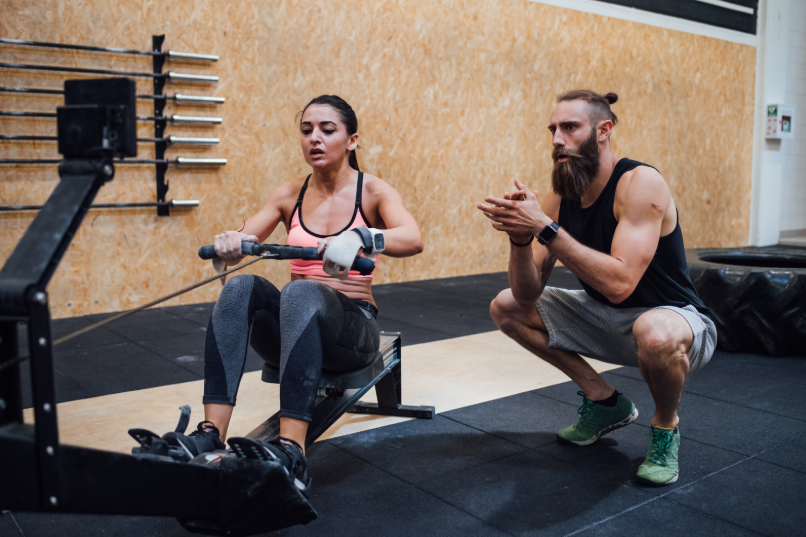
Water vs Air vs Magnetic Rowing Machine: Understanding the Technical Differences
When comparing different types of rowing machines, the most common mistake is focusing only on design or price without truly understanding how the machine behaves during training. In reality, the main difference between a water, air, or magnetic rowing machine lies in the resistance system and how it reacts to the user’s pulling force. This aspect directly affects smoothness, noise level, perceived intensity, and the realism of the rowing motion.
Many people approaching indoor rowing for the first time are faced with technical specifications that can be difficult to interpret without practical context. Understanding how the different technologies work makes it easier to evaluate a machine more rationally, avoiding the risk of choosing equipment that does not suit the training environment or workout style. The differences are not only about overall performance, but also about effort continuity, noise management, and the dynamic response during every phase of the rowing stroke.
How resistance changes across rowing machines
How an air rowing machine works
In an air rowing machine, resistance is generated by a fan connected to the handle pull. The faster the rowing stroke, the greater the air friction against the internal blades. This means resistance is not fixed but progressive and directly proportional to the user’s effort. The machine therefore feels highly dynamic and close to the demands of high-intensity athletic movements.
From a technical perspective, air systems are particularly suited for explosive workouts, interval sessions, and cardiovascular performance training. The immediate response of the fan allows resistance to increase rapidly without requiring complex electronic adjustments. On the other hand, the airflow creates higher noise levels than other systems, which can become a factor in home use or shared environments.
How a water rowing machine operates
In a water rowing machine, resistance comes from paddles rotating inside a partially filled water tank. Here too, resistance increases progressively as rowing speed rises, but the overall sensation is usually smoother and more continuous compared to air models. The presence of water changes the inertia of the movement and creates a softer recovery phase.
One of the most appreciated aspects of this technology is the natural rowing feel. The sound produced by moving water is also generally softer and more consistent than the fan noise of air systems. Technically, however, water rowing machines require slightly more attention in terms of maintenance, including tank cleaning, water level monitoring, and periodic care of internal components.
The logic behind magnetic resistance
A magnetic rowing machine uses magnets to regulate resistance on an internal flywheel without direct physical contact. In this case, resistance is set through predefined manual or electronic levels and does not depend solely on rowing speed. As a result, the rowing sensation tends to feel more stable and controlled.
From a practical point of view, this solution is often preferred by users looking for quieter operation and consistent performance in a home environment. The lack of significant mechanical friction reduces both noise and maintenance requirements. However, compared to air or water systems, some users perceive the response as less natural and less progressive during intense acceleration phases.
Differences in training feel
Resistance progression and rowing smoothness
One of the most important aspects when choosing a rowing machine is how it reacts to the user’s intensity. In air and water systems, resistance increases naturally with the force applied, creating a more organic perception of effort. This behavior allows many users to adjust their pace intuitively without constantly changing machine settings.
In magnetic systems, resistance remains more stable and predictable. This feature can be beneficial for steady workouts, long-duration sessions, or users who prefer more controlled load management. The difference is not necessarily about overall quality, but rather about how the body perceives acceleration, inertia, and movement continuity.
Noise levels and environmental comfort
Noise is often underestimated during the initial decision-making process. Air rowing machines generally produce the highest sound levels, especially during intense workouts. This is not a technical flaw but a direct consequence of how the internal fan system works.
Water models create a different type of sound, usually softer and more constant, generated by the movement of water inside the tank. Magnetic systems are typically the quietest option in most home settings. For people living in apartments or training late in the evening, this difference can significantly influence the final decision.
Which technology fits different environments
Home training and space management
In a home gym environment, practical conditions often reshape technical priorities. Users training in shared spaces or apartments with thin walls may prefer a magnetic system to reduce noise and maintain greater discretion during workouts. Lower maintenance requirements are also an advantage for those who use the rowing machine regularly without competitive goals.
Water models are often chosen by users seeking a more immersive experience and a more natural rowing sensation. In many cases, they also become visually integrated into the home thanks to wooden frames or more refined designs. Air systems, on the other hand, are more commonly associated with settings where workout intensity takes priority over acoustic comfort.
Sports training and high-intensity workouts
In athletic or functional training environments, the dynamic behavior of resistance becomes a key factor. Air rowing machines are frequently used in high-intensity circuits, athletic conditioning, and interval training because of their ability to react instantly to the force applied. The quick response supports explosive work and rapid pace changes.
Water systems still offer good progressive resistance, but with a smoother and less aggressive feel. Magnetic models, meanwhile, are generally more suited to steady sessions, controlled training, and long-term continuous use. This does not mean one technology is objectively better than another, but rather that each emphasizes different aspects of the training experience.
Pros and cons of the three technologies
Operational advantages and practical limitations
Every technology inevitably involves trade-offs. The air rowing machine offers high responsiveness and highly dynamic resistance but requires accepting higher noise levels. The water rowing machine provides a more natural and progressive feel, although it requires greater attention to tank maintenance. The magnetic rowing machine prioritizes quietness and controlled resistance but may feel less organic during explosive accelerations.
The most suitable technical choice therefore depends on the actual usage context rather than on marketing claims alone. In many situations, the mistake comes from trying to identify a universally superior solution when, in reality, each system is designed to meet different needs related to comfort, intensity, training continuity, and day-to-day equipment management.
How to read technical specifications without confusion
Product sheets often include terms such as “fluid resistance,” “progressive resistance,” or “electronically controlled magnetic resistance” without clearly explaining their real impact on the workout experience. Understanding the mechanical principle behind the machine makes it easier to interpret these descriptions in a practical and meaningful way.
When evaluating a rowing machine, it is useful to observe factors such as flywheel type, resistance management, noise level, required maintenance, and intended use. These aspects help determine whether the product is more suitable for light home fitness, intense sports training, or mixed-use situations balancing comfort and performance.
How to make a more informed decision
Why resistance type truly changes the experience
The difference between a water, air, or magnetic rowing machine is not only about internal technology but also about how the body perceives every phase of the movement. Smoothness, inertia, responsiveness, and noise all contribute to creating very different training experiences, even at similar intensity levels.
Understanding these elements helps reduce the uncertainty many users experience when comparing models. A clearer technical evaluation allows buyers to focus on the trade-offs that genuinely matter for their daily use instead of relying only on marketing messages or brand preferences.
Choosing based on your training style
Users who prioritize intense and dynamic workouts often appreciate the immediate responsiveness of air systems. Those looking for a smoother and more realistic rowing sensation may prefer water models. People focused on acoustic comfort, regular use, and easy management frequently find magnetic systems more practical for home environments.
Analyzing the available space, workout frequency, and desired training sensations makes it easier to interpret the technical differences concretely. This approach helps simplify the decision-making process and align the choice more closely with long-term training habits and expectations.
Comments (0)