
Trolley
You have no items in your shopping cart

 Budgets
 Dumbers
 Discs
Discs
 Benches
 Racks and Rigs
 Weights Holders
 Isotonic machines
 Calisthenics
 Cardio
 Kettlebells
 Flooring
 Gym Set
 Accessories
 Combat
 ARTI MARZIALI
 CONTAINER GYM
 Tug-Of-War
 Used Gym Equipment
 PILATES MACCHINARI
 GINNASTICA ARTISTICA
 CAMPI DA PADEL
 Prodotti in Pronta Consegna
 Informazioni
 IRONMAN
 Gift Card
- Donatif
- General information
- 0 I like it
- 994 Views
- 0 comments
- gym flooring, safety flooring, gym safety, shock-absorbing materials
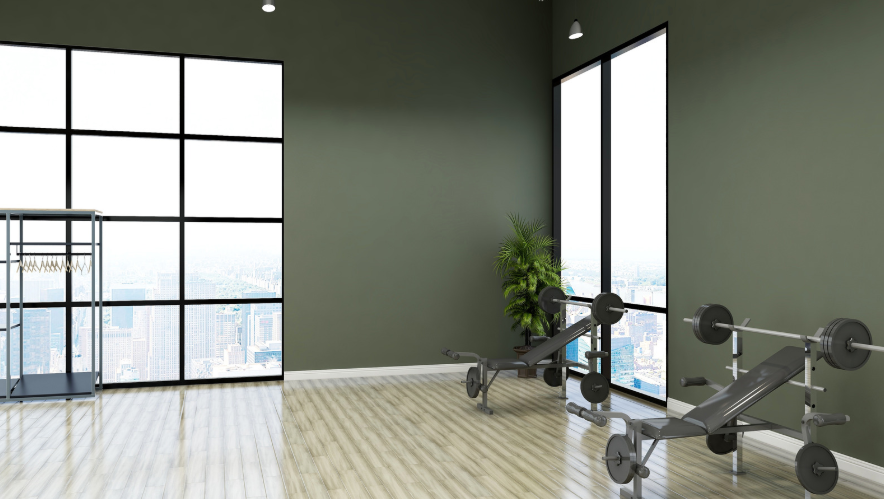
How to Configure a PT Space If You Want to Avoid the Doubt Between Multifunction and Modular Equipment
When setting up a PT studio or a micro gym, the comparison between multifunction and modular equipment often remains purely theoretical. Many personal trainers evaluate catalogs, dimensions, and technical specifications without being able to turn that information into a practical space configuration. The result is common: environments that feel unclear, disorganized workflows, or equipment that seems right on paper but becomes limiting during everyday operations.
The most effective choice instead comes from an operational perspective. A professional PT space does not depend only on the amount of equipment available, but on the consistency between layout, working method, customer type, and movement management. Understanding when a multifunction station can simplify organization and when a modular system offers greater control helps avoid inconsistent investments and allows you to create a studio that is more organized, reliable, and functional.
Read also:
- Essential Equipment for a Professional Micro Gym
- Rack or Multifunction: Operational Differences in a PT Studio
Relationship Between Space and Service
A PT Studio Works When the Layout Follows the Working Method
A common mistake in designing a micro gym is starting from the equipment instead of the service itself. In a PT studio, the space must support the way the professional conducts sessions, organizes progressions, and manages the client during training. An environment designed only around available dimensions risks becoming either too scattered or too rigid, especially when the number of stations increases without a clear operational logic.
A truly coherent setup instead comes from defining operational priorities. A personal trainer focused on technical one-to-one training may prioritize racks, adjustable benches, and dumbbells, leaving more freedom of movement. On the other hand, a service focused on fast circuits and simplified management may find a more compact and immediate solution in a multifunction machine. The difference is not only about equipment, but also about the type of experience perceived by the client.
The Client Perceives Order Even Before Technical Quality
In a limited space, the clarity of the environment directly affects the perception of professionalism. A chaotic configuration, with overlapping equipment or areas without a clear function, communicates uncertainty and reduces the sense of control. This issue often emerges when separate modules are purchased without an overall vision or when a multifunction machine is inserted that is too large for the operational context.
Design should therefore consider not only the exercises that can be performed, but also how the client moves throughout the space. A single organized area promotes immediacy and simplicity. A more articulated modular structure, on the other hand, can enhance technical pathways and premium services, provided that it maintains a clear logic of use. In both cases, order and visual consistency become an integral part of the service.
When to Choose Multifunction or Modular Equipment
Multifunction Equipment Reduces Complexity and Operational Time
A multifunction station tends to work well when the PT studio handles high training volumes, optimized timing, and simplified session management. In small spaces, it allows multiple movements to be concentrated in a single area, reducing unnecessary movement and dispersion. This approach can be especially useful for general fitness services, reconditioning, or assisted training with clients who require an immediate and intuitive structure.
From an organizational perspective, multifunction equipment also helps maintain a visually cleaner environment. Fewer separate pieces of equipment mean fewer obstacles and fewer critical points in daily management. However, a configuration entirely centered around a single machine may limit training variety and reduce personalization, especially in contexts focused on performance or technical progression.
Modular Equipment Encourages Adaptability and Progressive Growth
A modular system instead allows the studio to be built around the service over time. Racks, benches, storage solutions, and dumbbells can be distributed according to specific operational needs, maintaining greater freedom in session management. This approach is often more coherent for personal trainers working with individualized programming, strength training, functional training, or small groups.
Modularity also offers a strategic long-term advantage. The space can evolve without having to completely replace the original setup. Adding a station or modifying the layout becomes easier compared to a configuration entirely centered around a multifunction machine. For this reason, many PT studios choose a hybrid solution, where a compact machine coexists with modular elements capable of expanding operational possibilities.
Operational Layout and Workflow Management
Single Area or Structured Space
The choice between a single-area setup and separated zones depends on the type of service offered and the number of people present at the same time. In a very compact PT studio, a single environment with essential equipment can improve immediacy and control. The client perceives operational clarity, while the trainer maintains constant supervision of the entire session.
When the service instead includes differentiated work, small groups, or more advanced technical pathways, a more articulated configuration becomes more effective. Separating the rack area, dumbbell zone, and free space helps distribute workflows better and avoid overlap. In this scenario, a modular setup generally adapts better than a centralized multifunction structure.
Storage and Space Management
One of the most underestimated aspects in designing a micro gym concerns storage. Even a technically correct setup loses effectiveness if plates, accessories, and dumbbells do not have a precise place. The perception of free space directly affects the quality of the experience and the ease of everyday use.
To maintain order and visual continuity, it is useful to integrate vertical storage, compact racks, and dedicated supports. This approach helps reduce clutter without sacrificing functionality. In a professional PT studio, the layout must facilitate quick and intuitive movements, avoiding unnecessarily complex paths between stations.
Priority Equipment in a PT Studio
The Equipment That Truly Impacts Daily Operations
When budget or available space is limited, priority should go to equipment that genuinely expands operational possibilities. A compact rack, a stable adjustable bench, a set of dumbbells, and well-organized storage already allow for complete and professional sessions. This type of configuration maintains high flexibility without overcrowding the environment.
The multifunction machine can later become an additional integration element, especially if the service requires more immediacy or guided training paths. Introducing it too early, without having clearly defined workflows and priorities, instead risks limiting the evolution of the space. In many cases, the issue is not the quality of the machine itself, but the lack of coherence between equipment and operational method.
Coherent Configurations for Different Services
Example of a Setup Focused on Individual Coaching
A studio focused on individual coaching tends to work better with an organized modular structure. A compact rack, a professional bench, adjustable dumbbells, and a central free space make it possible to adapt training easily to the client’s needs. This configuration communicates technical expertise while leaving room for progressive growth without compromising clarity and organization.
In this scenario, the multifunction machine can play a complementary rather than dominant role. Inserting a large all-in-one machine risks reducing freedom of movement and operational flexibility. The priority remains creating an environment that is clear, professional, and easily adaptable.
Example of a Setup Focused on Fast and General Services
If the PT studio instead works with quick sessions, less experienced clients, or standardized formats, a well-chosen multifunction station can become the operational center of the space. Reducing movement and concentrating multiple exercises in a single area allows smoother rhythms and simpler session management.
In this case, it is advisable to avoid an excessive number of separate modules. Integrating a few strategic elements, such as a dumbbell rack and an adjustable bench, keeps the environment organized and easy to understand. The goal is not to fill the gym, but to create a configuration consistent with the actual service delivered and with the type of experience clients expect to find.
Comments (0)