
Trolley
You have no items in your shopping cart

 Budgets
 Dumbers
 Discs
Discs
 Benches
 Racks and Rigs
 Weights Holders
 Isotonic machines
 Calisthenics
 Cardio
 Kettlebells
 Flooring
 Gym Set
 Accessories
 Combat
 ARTI MARZIALI
 CONTAINER GYM
 Tug-Of-War
 Used Gym Equipment
 PILATES MACCHINARI
 GINNASTICA ARTISTICA
 CAMPI DA PADEL
 Prodotti in Pronta Consegna
 Informazioni
 IRONMAN
 Gift Card
- Donatif
- General information
- 0 I like it
- 3875 Views
- 0 comments
- gym, glutes, glute exercises, anatomy
READING TIME: 9 MINUTES ➤➤
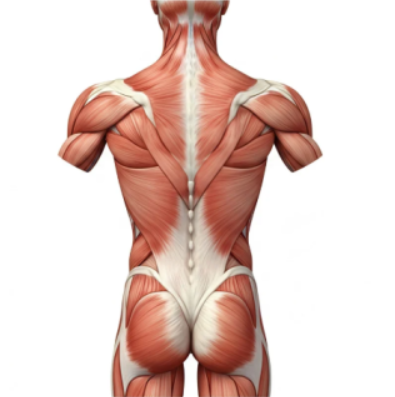
The glutes are not just an aesthetic muscle group, but one of the most powerful and functional structures in the human body. Understanding the anatomical structure of the glutes—gluteus maximus, medius, and minimus—allows you to create more targeted training programs, prevent injuries, and optimize athletic performance. In this article, you will discover everything you need to train consciously and achieve guaranteed results through a scientific and detailed approach.
- Glute structure: anatomical overview
- Gluteus maximus: power and stability
- Gluteus medius: balance and posture
- Gluteus minimus: the hidden muscle
- Glutes, core, and stabilizing muscles: an integrated system
- Training the glutes based on anatomy
Glute structure: anatomical overview
The gluteal muscle group consists of three main muscles: the gluteus maximus, medius, and minimus. These muscles work synergistically to support fundamental movements such as walking, running, jumping, and lifting loads. Beyond their primary role in hip extension and rotation, the glutes play a crucial role in pelvic stabilization and maintaining proper posture during daily activities and sports performance.
A detailed understanding of glute anatomy allows you to precisely identify which exercises target each muscle and how to intervene to correct weaknesses or dysfunctions. Moreover, knowing the position and anatomical connections of the glutes helps in designing personalized, effective, and above all safe training programs.
The role of the glutes in body biomechanics
The glutes directly influence the mechanics of the entire lower limb. Proper function ensures optimal force transmission between the torso and the legs, contributing to dynamic stability and injury prevention. When the glutes are weak or inactive, the risk of overload on the knees, lower back, and hips increases, often leading to chronic pain or performance limitations.
From a biomechanical perspective, the glutes act as a true engine during explosive movements, providing drive and control. Effective activation of these muscles is fundamental to any athletic performance requiring strength, power, and stability.
Gluteus maximus: power and stability
The gluteus maximus is the largest and most superficial of the three muscles. It is responsible for hip extension, external rotation, and, to a lesser extent, abduction. It is involved in all movements that require force and upward or forward propulsion, such as jumps, sprints, and deep squats. This muscle is also one of the primary stabilizers of the trunk during complex movements.
Targeted training of the gluteus maximus not only improves aesthetic appearance but, more importantly, enhances functional performance such as vertical jump and sprint speed. It is a key muscle for athletes aiming to develop powerful and reactive lower-body musculature.
Origin, insertion, and specific function
The gluteus maximus originates from the iliac crest, sacrum, and coccyx, inserting into the iliotibial tract and the femur. This configuration allows it to act decisively on the hip joint, contributing to both movement and pelvic stability. Its action is particularly important during acceleration phases and high-load movements.
Understanding its anatomical origin and insertion makes it possible to select the most effective exercises to stimulate the gluteus maximus in all its functions. Movements such as hip thrusts, deadlifts, and deep squats are particularly effective for developing maximum strength and power.
Gluteus medius: balance and posture
The gluteus medius is located laterally on the pelvis and plays an essential role in hip abduction and pelvic stabilization during walking. It is active with every step and plays a central role in dynamic balance, preventing abnormal pelvic tilt.
A weak gluteus medius is often responsible for postural instability, knee pain, and overuse syndromes. Conversely, a strong gluteus medius improves coordination and gait efficiency, making it indispensable for runners, cyclists, and athletes involved in sports requiring rapid direction changes.
Why the gluteus medius is crucial for pelvic stability
The gluteus medius originates from the ilium and inserts on the greater trochanter of the femur. Bilateral activation helps maintain pelvic stability during movement. In single-leg support conditions, such as running or unilateral squats, the gluteus medius prevents lateral pelvic collapse.
Effective strengthening involves specific exercises such as hip abductions, side planks with leg raises, and lateral miniband walks, which deeply activate its muscle fibers.
Gluteus minimus: the hidden muscle
Often overlooked in training, the gluteus minimus lies deep beneath the gluteus medius and contributes to hip stabilization and internal rotation of the thigh. Despite its small size, it is crucial for fine motor control and precision in complex movements.
Training the gluteus minimus improves joint stability, reduces injury risk, and enhances neuromuscular control. It is particularly important in rehabilitation programs to correct imbalances and prevent recurrences.
An underrated role in performance
The gluteus minimus originates from the ilium and also inserts on the greater trochanter of the femur, but in a more anterior position than the gluteus medius. This orientation gives it a more prominent role in internal rotation and anterior stabilization of the hip joint.
To activate it effectively, exercises such as side-lying hip abduction and single-leg isometric control are commonly used. Although less visible, its contribution to dynamic stability is essential, especially in complex athletic activities.
Glutes, core, and stabilizing muscles: an integrated system
The glutes never work in isolation. They are part of a complex muscular system that includes the core and the spinal stabilizing muscles. This system works synergistically to ensure balance, strength, and protection during every movement. A deficit in any one of these components can compromise the effectiveness of the entire system, negatively affecting performance and joint health.
During multi-joint movements such as squats or deadlifts, coordination between the glutes and the core determines lumbar spine stability. Training the glutes without considering this integrated context can lead to muscular imbalances, harmful compensations, and injuries. For this reason, every effective program should include exercises focused on functional integration between glutes and core.
How glutes and core protect the back
Glute strength directly contributes to back health, particularly in the lumbar region. Optimal activation of the gluteus maximus reduces stress on the lower back during lifting or daily activities by distributing forces more efficiently through the pelvis and trunk. The core acts as a transmitter and central stabilizer, while the glutes provide propulsion and control in peripheral movements.
In trained individuals, strengthening this connection also improves overall performance. The combination of dynamic planks, glute bridges, and anti-rotation variations creates a solid foundation for developing efficient and protective musculature. From both a preventive and performance perspective, strong glutes and an active core are a guarantee of athletic longevity.
Training the glutes based on anatomy
Understanding the structure and function of each glute muscle is the first step in building a truly effective training program. Each muscle has a specific role and requires exercises designed to best stimulate its primary function. This means going beyond basic squats or lunges and focusing on anatomy-based training that considers force vectors, working angles, and time under tension.
For the gluteus maximus, progressive loading and hip extension movements such as hip thrusts, deadlifts, and forward lunges are ideal. The gluteus medius requires lateral and isometric stimuli, while the gluteus minimus must be trained through precise, controlled movements. The use of minibands, unstable surfaces, and unilateral work allows every muscle fiber to be engaged in a specific and productive way.
Targeted exercises for each glute muscle
A successful strategy involves dividing exercises based on anatomical function. The gluteus maximus responds well to heavy loads and explosive movements, while the gluteus medius and minimus require control and attention to movement quality. Including isolation exercises such as glute kickbacks or quadruped hip abductions alongside multi-joint movements creates a complete and balanced stimulus.
Exercise progression must respect the principle of anatomical specificity, moving from neuromuscular activation to functional loading. Only through precise knowledge of glute anatomy is it possible to achieve harmonious development, maximum strength, and tangible improvements in athletic performance and injury prevention.
Comments (0)