
Trolley
You have no items in your shopping cart

 Budgets
 Dumbers
 Discs
Discs
 Benches
 Racks and Rigs
 Weights Holders
 Isotonic machines
 Calisthenics
 Cardio
 Kettlebells
 Flooring
 Gym Set
 Accessories
 Combat
 ARTI MARZIALI
 CONTAINER GYM
 Tug-Of-War
 Used Gym Equipment
 PILATES MACCHINARI
 GINNASTICA ARTISTICA
 CAMPI DA PADEL
 Prodotti in Pronta Consegna
 Informazioni
 IRONMAN
 Gift Card
- Donatif
- General information
- 0 I like it
- 969 Views
- 0 comments
- gym flooring, safety flooring, gym safety, shock-absorbing materials
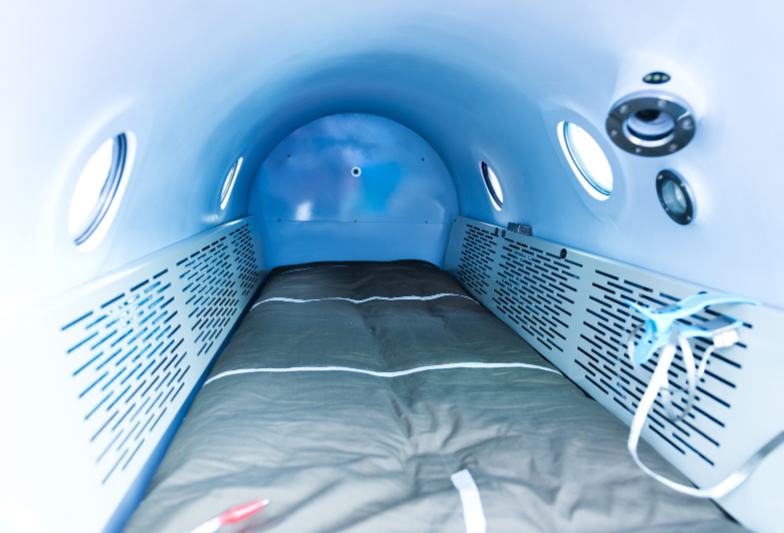
Single-Occupancy vs. Multi-Occupancy Hyperbaric Chambers: A Guide to Choosing the Right Solution for Professional Centers
Choosing between a single-occupancy hyperbaric chamber and a multi-occupancy hyperbaric chamber is one of the most important strategic decisions for anyone planning to establish or expand a hyperbaric oxygen therapy center. It is not simply a matter of evaluating how many patients can be treated simultaneously, but rather understanding how the selected model affects productivity, operating costs, staff organization, and, above all, the overall return on investment.
A results-driven entrepreneur must carefully consider every factor that impacts monthly revenue and the long-term sustainability of the business. The configuration of the hyperbaric chamber directly influences daily workflow, patient capacity, and the quality of the treatment experience. Thoroughly assessing the technical features of different models enables a more informed investment aligned with the center's growth objectives.
- Differences Between Single-Occupancy and Multi-Occupancy Chambers
- Investment Cost Analysis
- Operational Impact on the Center
- Facility Requirements and Installation
- Choosing the Best Solution
Key Differences Between Single-Occupancy and Multi-Occupancy Hyperbaric Chambers
Single-occupancy hyperbaric chambers are designed to accommodate one patient per treatment session. This configuration simplifies session management, reduces operational complexity, and provides greater flexibility when scheduling appointments. Each treatment can be customized independently, allowing for a highly adaptable and responsive service.
Multi-occupancy hyperbaric chambers, on the other hand, allow multiple patients to undergo treatment simultaneously within the same session. This significantly increases the facility's treatment capacity but requires more sophisticated scheduling, staffing, and operational procedures. Therefore, the ideal choice depends on the expected patient volume and the center's business strategy.
Operational Capacity and Patient Management
A single-occupancy chamber provides exceptional scheduling flexibility, minimizing waiting times and allowing appointments to be adjusted with ease. This makes it an excellent solution for newly established centers or facilities serving a relatively limited number of patients each day.
Multi-occupancy chambers deliver maximum efficiency when patient demand is consistent and high enough to maintain excellent utilization rates. Under these conditions, the operating cost per treatment generally decreases, improving the overall profitability of the facility.
Patient Comfort, Supervision, and Flexibility
Single-occupancy chambers offer a more personalized treatment experience by allowing individualized patient management and simpler day-to-day scheduling. This approach is particularly advantageous for facilities that differentiate themselves through customized patient care.
Multi-occupancy chambers enable centralized supervision of several patients during the same treatment session. Although they require more complex organization, they optimize staff utilization when treatment volumes justify this type of investment.
Investment Cost Analysis
One of the primary considerations is the cost of professional hyperbaric chambers. Single-occupancy systems generally require a lower initial investment than multi-occupancy models, making them an attractive option for businesses seeking to enter the market while limiting financial exposure.
Multi-occupancy chambers involve a higher upfront investment but can generate substantially greater revenue when patient demand is sufficient to fully utilize their capacity. Consequently, the most important evaluation criterion is not simply the purchase price but the relationship between investment costs, operating expenses, and projected revenue.
Purchase Price and Operating Costs
Beyond the equipment cost itself, it is essential to evaluate installation expenses, scheduled maintenance, energy consumption, and staffing requirements. Overlooking these factors may significantly distort financial projections and overall profitability.
Facilities planning gradual growth often benefit from the lower financial commitment associated with a single-occupancy chamber, whereas established centers with high treatment volumes can capitalize on the economies of scale offered by multi-occupancy systems.
ROI, Payback Period, and Profitability
Return on investment (ROI) depends primarily on the facility's ability to maintain a high utilization rate. An underused chamber—regardless of its configuration—can significantly extend the payback period and reduce overall profitability.
For this reason, developing a realistic business plan that considers the local patient base, market demand, commercial strategy, and future growth potential is essential before making any investment decision.
Operational Impact on the Center
The chamber configuration directly affects the workflow of the entire facility. Appointment scheduling, staff allocation, and treatment planning must all be organized according to the selected technology.
Efficient operational planning reduces downtime, increases productivity, and enhances the patient experience—all of which contribute directly to improved financial performance.
Maximizing Operational Efficiency
When demand is high, a multi-occupancy chamber allows numerous treatments to be delivered within the same time slot, significantly increasing potential revenue. However, this level of efficiency can only be achieved through accurate scheduling and well-structured operational management.
Conversely, a single-occupancy chamber provides greater operational flexibility, making it particularly suitable for start-up facilities or centers that prioritize highly personalized patient care.
Facility Requirements and Installation
Infrastructure requirements are another critical factor in the decision-making process. Multi-occupancy chambers generally require larger installation spaces, dedicated technical systems, and more complex engineering compared to single-occupancy units.
Maintenance schedules, operational safety, and regulatory compliance also influence the total cost of ownership. Assessing these requirements in advance helps prevent unexpected expenses and delays during the implementation phase.
Which Solution Delivers the Best Return on Investment?
There is no universal answer. The ideal choice depends on business objectives, projected patient volume, available investment capital, and the center's long-term growth strategy. A single-occupancy hyperbaric chamber is often the preferred solution for facilities seeking to minimize initial investment while maintaining operational flexibility.
Multi-occupancy hyperbaric chambers, by contrast, become a strategic investment when the facility already serves a stable patient base or anticipates rapid business growth. In these situations, their higher treatment capacity improves profitability by optimizing the balance between operating costs and revenue. Ultimately, the real difference lies not in the number of available seats, but in how each system impacts workflow efficiency, operational performance, and the facility's monthly revenue.
Comments (0)