
Trolley
You have no items in your shopping cart

 Budgets
 Dumbers
 Discs
Discs
 Benches
 Racks and Rigs
 Weights Holders
 Isotonic machines
 Calisthenics
 Cardio
 Kettlebells
 Flooring
 Gym Set
 Accessories
 Combat
 ARTI MARZIALI
 CONTAINER GYM
 Tug-Of-War
 Used Gym Equipment
 PILATES MACCHINARI
 GINNASTICA ARTISTICA
 CAMPI DA PADEL
 Prodotti in Pronta Consegna
 Informazioni
 IRONMAN
 Gift Card
- Donatif
- General information
- 0 I like it
- 2164 Views
- 0 comments
- fitness, Workout, total body circuit, crossfit
READING TIME: 4 MINUTES ➤➤
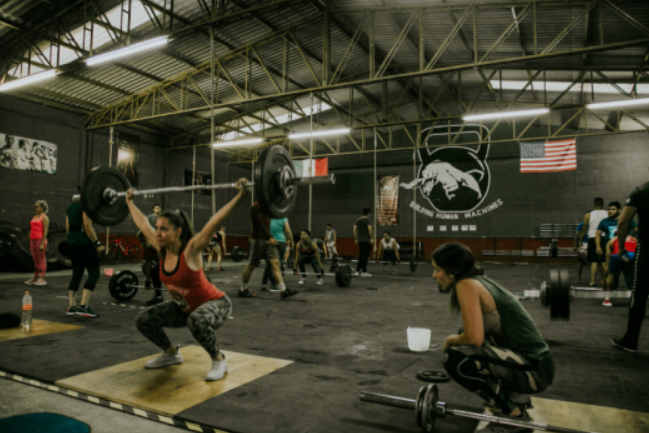
CrossFit is captivating thanks to its energy, intensity, and variety. But for beginners, it can seem intimidating, complicated, or even dangerous. In reality, starting CrossFit safely and progressively is entirely possible—as long as you understand its structure and adopt the right precautions. This guide is designed to help you take your first steps with confidence, without fear of mistakes or injury.
You’ll discover what makes CrossFit unique, which fundamental movements to focus on, how to adapt training to your current level, and how to build a solid base to progress over time. The goal is clear: make you feel prepared and safe, while avoiding common beginner mistakes that can discourage progress.
- What is CrossFit and why is it so popular?
- Fundamental movements for beginners
- How to structure a safe and effective first workout
- Practical tips to start your CrossFit journey
- Fearless CrossFit: building confidence and consistency
What is CrossFit and why is it so popular?
CrossFit basics: definition and philosophy
CrossFit is a training methodology that combines functional movements, performed at high intensity and varied formats. Its goal is to improve overall fitness, enhancing strength, endurance, coordination, agility, and flexibility. Unlike other disciplines, it doesn’t focus on a single performance aspect but aims to create "generalist" athletes capable of facing any physical challenge.
This philosophy makes it suitable for everyone, regardless of age or fitness level. The key is to understand that every movement can (and should) be scaled. CrossFit isn’t just for elite athletes—it's also a powerful tool for those just starting out.
Functional training and total body: the key principles
At the heart of CrossFit is functional training. This approach focuses on natural movements also used in daily life: lifting, pushing, pulling, running, jumping. It's not about training one muscle at a time, but about enhancing the efficiency of the whole body through compound, synergistic exercises.
The result is a “total body” workout that engages all major muscle groups in each session. This holistic approach is what makes it so effective—and also demanding. That’s why starting gradually is essential.
Fundamental movements for beginners
Step-by-step breakdown of basic exercises
Beginner CrossFit workouts focus on a limited set of fundamental movements. These include squats, deadlifts, push presses, and kettlebell swings. These exercises demand proper technique but provide significant benefits in strength and coordination.
For beginners, it’s crucial to learn correct execution under a coach’s supervision. Don’t rush to lift heavy weights—the priority is to build solid technical habits to prevent injury and support future progress.
Scaling: adapting exercises to your level
One of the most important concepts for beginners is scaling, which means modifying exercises based on your ability. Not everyone can do a pull-up or a clean in their first session—and that’s perfectly fine. Scaling lets you replace or adjust movements to make them doable yet effective.
A good CrossFit box will always offer scaled options—like knee push-ups instead of standard ones, or resistance bands for pull-up assistance. This progressive approach makes workouts accessible and rewarding.
How to structure a safe and effective first workout
The role of circuit training
The heart of a CrossFit session is often a high-intensity circuit, also called the WOD (Workout of the Day). It’s a sequence of exercises performed one after the other, with or without rest, either for time or a set number of rounds.
For beginners, these circuits should be short, simple, and manageable. The coach should clearly explain each movement beforehand and provide an appropriately scaled version of the circuit. The goal isn’t to go all out immediately, but to learn how to manage effort and recovery.
Progressive intensity: how to avoid overload
A common mistake is trying to imitate more advanced athletes and increasing intensity too quickly. This can lead to overload and injury. The principle to follow is progression—each week you can slightly raise the difficulty by increasing time, load, or movement complexity.
It’s much more effective to focus on consistency and movement quality than on quantity or speed. Listening to your body and respecting signs of fatigue is the best way to grow safely.
Practical tips to start your CrossFit journey
Choosing the right box and what to expect
Selecting the right CrossFit box is one of the most important steps when starting out. A good box is defined not just by quality equipment but above all by the expertise and care of the coaching team. Feeling welcomed, supported, and not judged—especially early on—is essential.
Many boxes offer free trial classes or "on-ramp" programs for beginners. These sessions introduce core techniques and the training environment. The atmosphere should be positive, motivating, and respectful of everyone’s pace. Avoid overly competitive settings or ones that lack proper scaling options.
Common mistakes to avoid to prevent injuries
One of the biggest challenges for beginners is the rush to see results. Driven by enthusiasm, many increase weights or intensity too soon, neglecting proper form. This is one of the top causes of injury.
Other frequent mistakes include poor warm-ups, ignoring recovery, and overlooking nutrition. Starting with the right mindset—focusing on learning rather than performance—is key to a safe, long-lasting CrossFit journey.
Fearless CrossFit: building confidence and consistency
Overcoming performance anxiety
Walking into a box can trigger performance anxiety, especially when surrounded by experienced athletes. It’s important to remember that everyone starts from a different point—and your only real competition is yourself. Every completed workout, every new skill learned, every small step forward is meaningful progress.
Facing your fears, embracing the learning phase, and celebrating small wins will help you build confidence and motivation. Over time, what once felt intimidating will become part of your routine.
Tracking progress and staying motivated
One of the most rewarding aspects of CrossFit is the ability to track your own progress. Whether it’s finishing a WOD faster, doing more reps, or mastering a new movement, improvements are clear and measurable. Keeping track of these milestones helps maintain high motivation.
Moreover, the social aspect of CrossFit is a powerful driver: working out alongside others who share your journey can make all the difference. Consistency stems not just from discipline, but also from feeling part of a community that supports and encourages you.
Comments (0)