
Trolley
You have no items in your shopping cart

 Budgets
 Dumbers
 Discs
Discs
 Benches
 Racks and Rigs
 Weights Holders
 Isotonic machines
 Calisthenics
 Cardio
 Kettlebells
 Flooring
 Gym Set
 Accessories
 Combat
 ARTI MARZIALI
 CONTAINER GYM
 Tug-Of-War
 Used Gym Equipment
 PILATES MACCHINARI
 GINNASTICA ARTISTICA
 CAMPI DA PADEL
 Prodotti in Pronta Consegna
 Informazioni
 IRONMAN
 Gift Card
- Donatif
- General information
- 0 I like it
- 1222 Views
- 0 comments
- gym flooring, safety flooring, gym safety, shock-absorbing materials
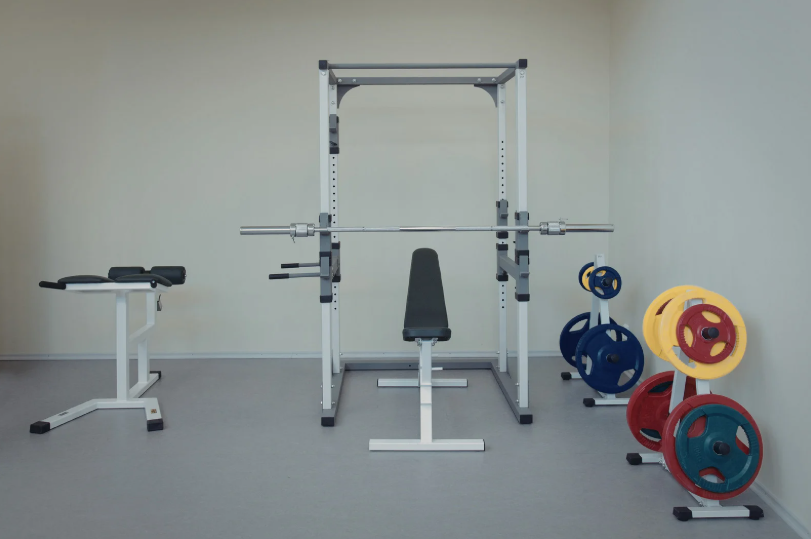
When an Apparently Standard Gym Space Actually Requires Custom Solutions
Many gym projects begin with a reassuring impression: the space appears regular, free of obvious constraints, and seemingly suitable for a standard configuration. This is a common perception, especially in the early stages, when analysis is based on a quick assessment and general parameters.
However, it is precisely at this stage that a critical part of design quality is determined. Weak signals indicating a potential need to move beyond standard solutions are often present from the start, but they require selective attention. Ignoring them leads to choices that work in theory but reveal concrete operational limits over time.
Read also:
Early signs that indicate hidden critical issues
Layout and distribution: when geometry is not neutral
The layout represents the actual distribution of functions within the space, not just its geometric shape. A space may appear regular on a plan but still present operational discontinuities: poorly positioned columns, forced pathways, dead zones, or areas that are difficult to access. These elements do not immediately appear as problems, but they directly affect equipment configuration.
When distribution is not truly neutral, standard solutions tend to force adaptation. This leads to compromises: suboptimal distances, interfering movement flows, and inefficient use of space. The first critical signal is exactly this: a space that “works on paper” but fails under realistic operational simulation.
Invisible structural and system constraints
Structural constraints are not always evident during an initial visit. Actual usable height, floor load capacity, the presence of technical systems, or acoustic limitations may only emerge through more detailed analysis. Even a seemingly standard floor can hide issues related to vibrations or concentrated loads.
These elements become decisive when moving from theory to installation. Ignoring them means facing later modifications, often more costly and less efficient. The key signal is the presence of variables that are not immediately visible but may significantly impact solution choices.
Why standard solutions may be insufficient
Limits of standard configurations in real contexts
Standard solutions are designed to fit average contexts, not specific conditions. They perform well when the space falls within predictable parameters, but lose effectiveness as soon as even minor deviations occur. This is often the case in existing gyms or repurposed spaces.
The main limitation is not the quality of standard solutions, but their rigidity. When the context requires adjustments, standard configurations lack sufficient flexibility. The result is a setup that is formally correct but operationally inefficient.
Forced adaptation vs coherent design
Forced adaptation means modifying the space to make a standard solution work. Coherent design, on the other hand, starts from the actual characteristics of the context. The difference is not theoretical: it directly impacts flow, safety, durability, and maintenance.
When early signals emerge, ignoring them implicitly leads to forced adaptation. An informed choice requires recognizing when standard solutions are no longer the most efficient option.
How to recognize the need for customization early
Technical indicators during site inspection
The technical site inspection is when signals become readable. It is not just about measuring, but interpreting. Level differences, interference between functional zones, access limitations, or load distribution issues are indicators that suggest a deviation from standard solutions.
A significant signal is the need to mentally “adjust” a standard configuration to make it fit the space. When this happens, the project is already moving away from a replicable model. This is where the need for customization begins, often before it is explicitly acknowledged.
Relationship between intended use and space configuration
The intended use of the space is another key factor. Two identical environments may require different solutions depending on the type of activity, number of users, or usage frequency. Standard solutions do not deeply account for these variables.
When the intended use is specific or intensive, needs emerge that require adjustments. The signal is the gap between standard configuration and actual user behavior within the space.
Common errors in preliminary space evaluation
The illusion of a “regular” space
The most common mistake is assuming that a regular space is automatically suitable for standard solutions. This association is intuitive but often misleading. Geometric regularity does not guarantee functional compatibility.
The risk is underestimating elements that are not immediately visible but become critical during operation. The illusion of simplicity leads to quick decisions, but not always correct ones.
Operational consequences of a superficial assessment
A superficial reading leads to concrete problems: complex installations, adjustments during execution, and reduced space efficiency. These effects are not immediate but emerge over time.
The real cost is not only economic, but operational. Fixing issues later is always more difficult than identifying them correctly from the beginning.
From initial assessment to informed design decisions
How decisions change when weak signals emerge
Weak signals do not automatically require a custom solution, but they change the decision-making process. They introduce a higher level of attention, leading to deeper checks and alternative scenarios.
This step is essential: it is not about complicating the project, but making it coherent. Technical awareness comes from the ability to recognize these signals without ignoring them.
Setting up the technical dialogue correctly from the start
The initial dialogue between designer, installer, and client determines the quality of the project. When signals are identified early, it becomes possible to set correct expectations and evaluate appropriate solutions.
This approach improves precision, reduces ambiguity, and increases overall reliability. A proper initial assessment is not only technical, but strategic: it guides all subsequent phases.
Understanding when an apparently simple space requires greater attention is one of the most important steps in gym design. Exploring these aspects helps avoid difficult-to-correct errors and build solutions that are truly consistent with the context. For more accurate evaluations, it is always advisable to start with a structured and informed technical analysis.
Comments (0)