
Trolley
You have no items in your shopping cart
 Budgets
 Dumbers
 Discs
Discs
 Benches
 Racks and Rigs
 Weights Holders
 Isotonic machines
 Calisthenics
 Cardio
 Kettlebells
 Flooring
 Gym Set
 Accessories
 Used Gym Equipment
 Combat
 ARTI MARZIALI
 Tug-Of-War
 CAMPI DA PADEL
 PILATES MACCHINARI
 GINNASTICA ARTISTICA
 CONTAINER GYM
 Gift Card
 Informazioni
 Prodotti in Pronta Consegna
- Donatif
- General information
- 0 I like it
- 8 Views
- 0 comments
- gym flooring, safety flooring, gym safety, shock-absorbing materials
READING TIME: 5 MINUTES ➤➤
Mistakes That Lead You to Buy Refurbished Equipment Just Because It Seems Like the Best Deal
In the world of home gyms, refurbished equipment often represents a promise: professional quality at an accessible price. It’s a powerful lever, especially for those who want to build a fitness space at home without high investments. However, this very perception can turn into a trap if it’s not properly filtered. The risk is not only financial but also functional: ending up with a machine that is rarely used, too bulky, or simply unsuitable for your home environment.
Understanding when refurbished equipment is truly an opportunity and when it is just an illusion of convenience is essential. Looking at the price alone is not enough: you need to evaluate the context, actual usage, and compatibility with your space. This article is designed to help you avoid the most common mistakes and develop a more informed evaluation.
- Why refurbished always seems like a great deal
- The most common mistakes
- When refurbished actually makes sense
- When it becomes a false deal
- How to properly evaluate refurbished equipment
Why refurbished always seems like an unmissable deal
The first element that grabs attention is the significantly lower price compared to new equipment. This creates an immediate effect: the feeling of making a smart purchase. In reality, price is only one of the variables involved, but it tends to dominate perception, overshadowing more practical aspects such as size, usability, and living context.
On top of this, several common cognitive biases come into play. Anchoring leads you to compare the refurbished price with the new one, amplifying the perception of savings. FOMO (fear of missing out) pushes you to decide quickly so you don’t miss the opportunity. The result is a purchase driven more by emotion than by actual usefulness.
The most common mistakes when choosing refurbished equipment for home
One of the most frequent mistakes is confusing savings with real value. A machine may cost less but still be unsuitable. If it’s not used consistently or doesn’t fit into your home environment, the initial saving turns into waste. The correct filter is not “how much does it cost,” but “how much will it actually be used.”
Another critical mistake concerns size and footprint. Many refurbished machines come from professional environments and are designed for gyms, not apartments. Bringing them into a home can create issues with space, movement, and overall livability. This is especially relevant in condominium settings, where every square meter matters.
People also tend to overestimate their usage frequency. Initial enthusiasm leads to imagining consistent use, but without an established habit, the risk is high. A complex or inconvenient machine often ends up unused, regardless of the price paid.
Finally, the home context is often underestimated. Noise, vibrations, accessibility, and ease of use are crucial in a domestic setting, yet frequently overlooked during the purchase phase. A machine that works perfectly in a gym may become problematic in an apartment.
When refurbished is actually a good choice
Refurbished equipment can be a very valid solution when there is alignment between the machine, the space, and actual usage. For example, compact cardio equipment or lightweight selectorized machines can fit well in a home environment, maintaining a good balance between performance and footprint.
A typical positive scenario is someone who already has an established routine and is looking for a specific machine to complement their training. In this case, refurbished becomes a rational choice rather than an emotional one. The key remains the same: start from real usage, not from the perceived deal.
When refurbished becomes a false deal
A false deal can be recognized when there is a clear mismatch between the machine and the context. For example, a large professional multi-gym may seem convenient, but it can be difficult to fit into a home and impractical for daily use. In these cases, the low price is just a distraction.
Another signal is complexity. If a machine requires frequent adjustments or has a non-intuitive structure, it is likely to be used less than expected. This is especially true for beginners who need simplicity and accessibility.
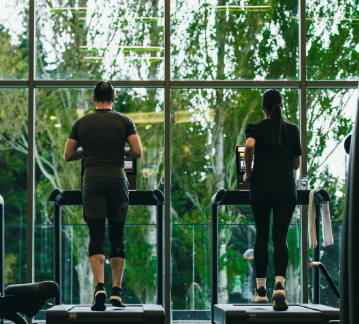
A concrete example: a refurbished professional treadmill may seem like a bargain, but if it produces too much noise or takes up too much space, it will end up being rarely used. In this case, a simpler and more compact solution would have been more appropriate.
How to properly evaluate refurbished equipment
To avoid mistakes, it is useful to apply a practical evaluation filter. Before even looking at the price, ask yourself: where will the machine be placed? How often will it be used? Is it compatible with the home environment? Only after answering these questions does it make sense to consider the cost.
This approach allows you to move from a “deal-driven” mindset to a conscious decision-making process. Refurbished equipment is neither inherently good nor bad: it becomes a good choice only when it aligns with real needs. In all other cases, even the lowest price can turn into a mistake.
Adopting this perspective means protecting your budget and building a truly functional fitness space. It’s not about giving up savings, but about making them smart and sustainable over time.
Comments (0)