
Trolley
You have no items in your shopping cart

 Budgets
 Dumbers
 Discs
Discs
 Benches
 Racks and Rigs
 Weights Holders
 Isotonic machines
 Calisthenics
 Cardio
 Kettlebells
 Flooring
 Gym Set
 Accessories
 Combat
 ARTI MARZIALI
 CONTAINER GYM
 Tug-Of-War
 Used Gym Equipment
 PILATES MACCHINARI
 GINNASTICA ARTISTICA
 CAMPI DA PADEL
 Prodotti in Pronta Consegna
 Informazioni
 IRONMAN
 Gift Card
- Donatif
- General information
- 0 I like it
- 1210 Views
- 0 comments
- gym flooring, safety flooring, gym safety, shock-absorbing materials
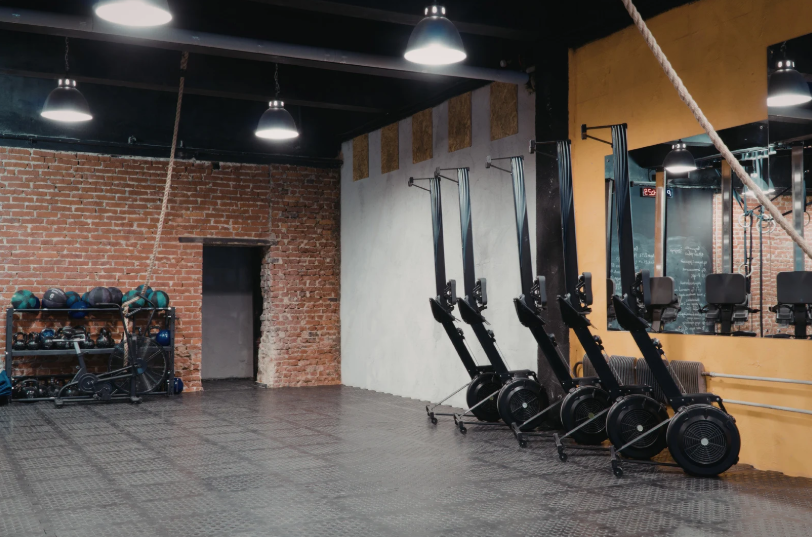
Condominium Gym: Is It Better to Choose a New Entry-Level Machine or a More Solid Refurbished One?
When setting up a condominium gym, the choice between a new entry-level machine and a more solid refurbished one is not just technical. It’s a decision that needs to hold up over time, both in terms of actual usage and shared perception among residents. This makes the comparison more delicate than a typical individual purchase.
In many cases, the dilemma stems from a difficult balance: on one hand, new equipment feels reassuring; on the other, the more robust structure of refurbished machines promises greater durability. Understanding which option is truly more sustainable in a shared environment means analyzing usage, management, and long-term value, avoiding decisions driven purely by first impressions.
The real context of a condominium gym
Shared use and equipment stress
A condominium gym does not follow a linear usage pattern. Even if the number of users is limited, usage tends to be irregular but intense, with different people using the machines without specific technical attention. This results in greater stress compared to typical home use, as the way equipment is handled constantly changes.
In this scenario, the most important variable becomes structural strength. A machine that appears adequate at the time of purchase can quickly reveal its limits if designed for light use. Shared environments amplify construction flaws and highlight the difference between an economical structure and one built to last.
Budget constraints and collective decision-making
In a condominium, the budget is always a compromise. The goal is not perfection, but a solution that can be justified. This often leads to prioritizing initial cost over total cost of ownership, especially when the decision must be approved by people with varying levels of expertise.
Another key factor is defensibility of the choice. A new machine, even if less robust, is often perceived as safer. A refurbished one, on the other hand, may raise doubts—even when it offers superior performance. This creates a tension between perception and reality that must be carefully managed.
New entry-level machine: advantages and limitations
Why new is easier to justify
A new entry-level machine has an immediate advantage: it is easy to explain and approve. The fact that it is new reduces objections, as it conveys a sense of safety, cleanliness, and absence of prior issues. In a condominium context, this aspect carries significant weight during the decision-making phase.
New equipment works as a cognitive shortcut. It doesn’t require technical expertise to evaluate and allows the decision-maker to avoid complex discussions. This often makes it the “safer” choice in the short term, even if it is not the most durable in the long run.
Where limitations emerge over time
The main limitation of entry-level machines is their reduced build quality. Lighter materials, less durable components, and wider tolerances result in faster wear, especially in shared environments. These aspects are not always visible at purchase but become evident with use.
Over time, this can lead to recurring issues: more frequent maintenance, instability, and loss of smooth operation. The real risk is that initial savings are offset by shorter lifespan and more complex management, leading to user dissatisfaction.
More solid refurbished machine: what really changes
Structure, materials, and durability
A higher-end refurbished machine often originates from equipment designed for professional environments. This means stronger structures, better materials, and engineering focused on longevity. Even after refurbishment, these characteristics remain its main strength.
In a condominium setting, this translates into greater stability, less wear, and a more solid user experience. The machine handles irregular use better and reduces the likelihood of frequent interventions, offering more predictable long-term management.
The issue of group perception
The real barrier for refurbished equipment is not technical, but perceptual. The term “used” can create distrust, even when the product has been inspected and restored. This requires more careful communication within the condominium.
Explaining what refurbished truly means is essential. It is not an improvised product, but a machine that has been checked, restored, and often proves more reliable than a new entry-level one. When this is clearly understood, perception shifts and acceptance increases.
Direct comparison for shared use
Durability, management, and maintenance
In direct comparison, the main difference lies in long-term durability. Entry-level machines tend to degrade faster under shared use, while more solid refurbished machines maintain stable performance over time. This directly affects the user experience.
Management also differs. A more robust machine requires fewer interventions and reduces the risk of unexpected breakdowns. This simplifies the role of the manager and minimizes internal disputes, which often arise from recurring technical issues.
Long-term value and risk of wrong choice
Long-term value is often underestimated. A low-cost new machine may seem convenient, but if it needs frequent repairs or replacement, the actual cost increases. In contrast, a more solid refurbished machine spreads its value over a longer period.
From a decision-making perspective, this reduces risk. Choosing a more robust solution means less exposure to future criticism, as the machine continues to perform reliably. In a collective context, this aspect carries real weight.
How to make a defensible long-term choice
Technical criteria that reduce risk
To choose wisely, it helps shift the focus from “new vs used” to robustness vs fragility. The most relevant criteria include structure, stability, component quality, and the machine’s original intended use. These factors determine its real ability to withstand shared use.
A technical approach allows you to move beyond superficial evaluation and build a more solid decision. It also helps explain the choice to other residents, making it more understandable and less open to criticism.
Managing condominium perception
The best choice in a shared context is one that combines real quality and perceived acceptance. This means not ignoring the appeal of new equipment, but placing it within a broader evaluation that considers durability and management.
Presenting refurbished equipment as a more solid and already tested solution, rather than just a cost-saving option, changes how it is perceived. When the focus shifts to long-term reliability, the decision becomes more rational and easier to defend within the group.
Between an apparently simpler option and a more solid one, the difference always emerges over time. Understanding this before purchasing helps avoid costly mistakes and ensures a condominium gym that truly works.
Comments (0)