
Trolley
You have no items in your shopping cart

 Budgets
 Dumbers
 Discs
Discs
 Benches
 Racks and Rigs
 Weights Holders
 Isotonic machines
 Calisthenics
 Cardio
 Kettlebells
 Flooring
 Gym Set
 Accessories
 Combat
 ARTI MARZIALI
 CONTAINER GYM
 Tug-Of-War
 Used Gym Equipment
 PILATES MACCHINARI
 GINNASTICA ARTISTICA
 CAMPI DA PADEL
 Prodotti in Pronta Consegna
 Informazioni
 IRONMAN
 Gift Card
- Donatif
- General information
- 0 I like it
- 2294 Views
- 0 comments
READING TIME: 12 MINUTES ➤➤
After the age of 45, the body begins to show signs that are often overlooked yet highly significant. Among these, the loss of chest elasticity is one of the most common and underestimated. A less mobile chest negatively affects not only breathing, but also posture, daily energy levels, and overall quality of movement. Sedentary habits and age-related postural changes gradually lead to a “closing” of the upper body, with consequences that can extend to mental well-being as well. The good news is that this process can be reversed through awareness, targeted exercises, and small daily habits.
In this article, you will discover how to preserve and improve thoracic mobility after the age of 45 through effective strategies, easy-to-understand explanations, and a practical routine you can start applying right away.
- Why the chest becomes stiff with age
- Breathing and chest opening: a fundamental connection
- Improving thoracic mobility naturally
- Posture, awareness, and prevention
- Long-term benefits of a flexible chest
Why the Chest Becomes Stiff with Age
The Role of Sedentary Lifestyle in Chest Tightness
As we age, one of the first visible effects of a sedentary lifestyle is a reduction in thoracic mobility. Spending many hours sitting, often with rounded shoulders and a collapsed upper body, trains the body to remain in a protective posture that eventually becomes chronic. The chest tends to “close in” on itself, limiting the natural expansion of the rib cage during breathing. If not counteracted through targeted movement, this stiffness becomes increasingly established, compromising both respiratory function and overall posture.
Inactivity also causes a gradual loss of elasticity in the intercostal muscles, diaphragm, and connective tissues of the upper torso. As these structures become stiff, breathing becomes shallower and less efficient, creating a vicious cycle of immobility and chronic fatigue. For individuals over 45, taking action to break this pattern before it becomes structural is essential.
How Posture Changes After 45
The human body is designed to move, yet modern life often forces it into the opposite condition. After the age of 45, posture tends to change gradually but significantly: the shoulders round forward, the head protrudes beyond the body’s natural alignment, and the chest becomes compressed. These postural adaptations are the result of years of poor habits, stress, lack of physical activity, and muscular compensations. The upper body, in particular, becomes less active and loses both tone and flexibility.
This postural decline directly affects breathing capacity. A closed chest prevents the lungs from expanding fully, reducing oxygen intake and contributing to fatigue. Recognizing these signs is the first step toward reversing the trend and beginning a targeted chest-opening program aimed at restoring space, breath, and well-being.
Breathing and Chest Opening: A Fundamental Connection
Opening the Chest to Breathe Better
Breathing is an automatic process, but it often becomes inefficient when the chest loses its natural elasticity. After the age of 45, many people begin to breathe more superficially, relying mainly on the upper portion of the lungs while neglecting full diaphragmatic movement. This happens because the chest, stiffened by poor posture and sedentary habits, can no longer expand completely. Opening the chest means restoring the body’s ability to breathe deeply and naturally.
Through specific exercises, it is possible to retrain the body to activate a broad and fluid diaphragmatic breathing pattern. This type of breathing not only improves tissue oxygenation but also reduces stress, lowers tension levels, and enhances the sense of vitality and presence. An open chest is the foundation of deep and restorative breathing, especially during the second half of life.
The Effects of Poor Breathing on Vitality
Poor breathing has far-reaching consequences that go well beyond what most people imagine. Shallow breathing, limited by thoracic stiffness, reduces oxygen delivery to the blood and tissues. This can lead to chronic fatigue, difficulty concentrating, sleep disturbances, and a general feeling of low energy. In addition, restricted breathing prevents the effective release of emotional tension, making the body more vulnerable to stress.
Restoring thoracic mobility helps recover a full and dynamic breathing pattern, improving not only physiological functions but also mood and daily energy levels. For those over 45, integrating breathing practices and chest-opening movements is a strategic way to maintain vitality over time.
Improving Thoracic Mobility Naturally
A Daily Routine to Maintain Elasticity
Recovering and maintaining chest elasticity after the age of 45 is possible without sophisticated equipment or complicated training programs. The key is to introduce a simple, consistent, and well-structured routine into daily life. Just a few minutes a day can reactivate the intercostal muscles, diaphragm, and thoracic spine. The goal is not only to mobilize these structures but also to develop greater body awareness that supports an open and dynamic posture.
An effective routine should include thoracic spine mobility exercises, chest extensions, shoulder-opening movements, and guided breathing techniques. Consistency is the most important factor: even a few minutes per day, spread throughout the day if necessary, can produce significant long-term benefits. The important thing is not to postpone action. Every day without movement is a step toward greater stiffness.
Simple Exercises to Integrate into Your Day
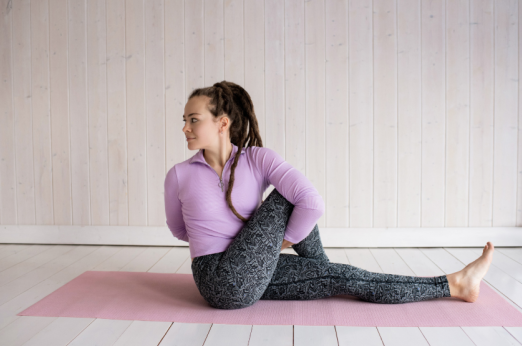
Several exercises can be performed easily at home or in the office. For example, sitting upright and placing the hands behind the head while opening the elbows and gently lifting the chest helps reactivate thoracic extension. Another option is to perform slow standing torso rotations while keeping the pelvis stable, stimulating the thoracic spine to regain its natural rotational capacity.
You do not need to become an expert. What matters is being present and mindful. Every small movement, when performed with intention and consistency, contributes to maintaining a free chest, a fuller breath, and a clearer mind. Integrating these exercises into your daily routine is a practical and sustainable way to invest in long-term well-being.
Posture, Awareness, and Prevention
Recognizing the Signs of a Stiff Chest
Many people do not realize they have a stiff chest until noticeable symptoms appear, such as shallow breathing, shoulder tension, early fatigue, or difficulty performing broad trunk movements. Identifying these signs early makes it possible to intervene effectively before the condition becomes chronic. Body awareness plays a crucial role in this process. Simply observing how you breathe, sit, or move your chest while walking can provide valuable insights.
A stiff chest is also visible in everyday posture: rounded shoulders, a sunken chest, and limited expansion during inhalation are all warning signs. Taking a few moments each day to reconnect with your body is the first step toward meaningful and lasting change.
Strategies to Open the Chest and Improve Posture
Improving posture and encouraging chest opening does not require drastic interventions. A few targeted strategies that can be applied immediately are often enough. First, retrain the body to maintain an upright position, with the spine aligned and the shoulders relaxed yet open. Whenever you notice yourself collapsing forward, pause and take a deep breath while visualizing the chest expanding outward.
Other useful tools include ergonomic supports such as properly designed chairs and posture cushions, as well as short chest-stretching sessions in the morning and evening. Practices such as yoga and Pilates can also help restore a balance between strength and flexibility in the upper body. The key is not to ignore the signals your body sends. Listening to them is an act of self-care.
Long-Term Benefits of a Flexible Chest
Better Oxygenation and Deeper Breathing
A free and flexible chest allows for complete breathing, fully engaging the diaphragm and improving tissue oxygenation. This translates into greater energy, concentration, and physical endurance, as well as better recovery after exertion and deeper sleep. After the age of 45, maintaining broad and functional breathing patterns means providing renewed vitality to both body and mind while slowing functional aging processes.
Deep breathing also benefits the parasympathetic nervous system, promoting relaxation and regeneration. It is a simple yet powerful action: every full breath is an opportunity to rebalance both body and emotions. And it all begins with a chest that can move freely.
Positive Impact on Energy and Well-Being
Maintaining chest elasticity has a cascading effect on many aspects of daily well-being. In addition to more efficient breathing, it contributes to improved posture, reduced muscular and joint discomfort in the upper body, and a greater sense of strength and openness. These benefits positively influence emotional health as well, increasing self-confidence and improving resilience to stress.
Investing just a few minutes each day in caring for your chest is a long-term strategy for prevention and improvement. Having a flexible chest after the age of 45 is not only possible—it is a realistic goal that can significantly enhance everyday quality of life.
Comments (0)