
Trolley
You have no items in your shopping cart

 Budgets
 Dumbers
 Discs
Discs
 Benches
 Racks and Rigs
 Weights Holders
 Isotonic machines
 Calisthenics
 Cardio
 Kettlebells
 Flooring
 Gym Set
 Accessories
 Combat
 ARTI MARZIALI
 CONTAINER GYM
 Tug-Of-War
 Used Gym Equipment
 PILATES MACCHINARI
 GINNASTICA ARTISTICA
 CAMPI DA PADEL
 Prodotti in Pronta Consegna
 Informazioni
 IRONMAN
 Gift Card
- Donatif
- General information
- 0 I like it
- 2277 Views
- 0 comments
- stress reduction, improved self-esteem, physical and mental well-being, gym training
READING TIME: 9 MINUTES ➤➤
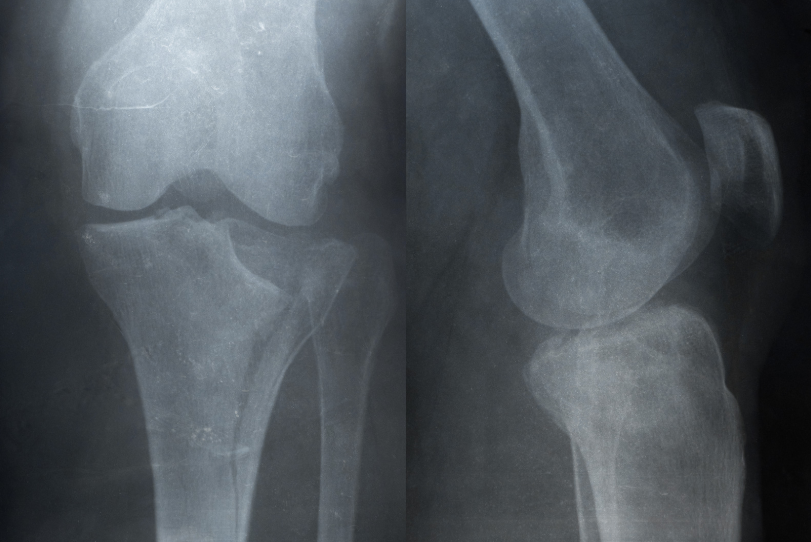
Facing a recovery process after a tibia fracture requires a structured, progressive, and highly conscious approach. For an advanced athlete training in a home gym, returning to full functionality cannot be left to chance, but must follow precise principles of physiological adaptation and controlled loading.
The transition from assisted walking to returning to the squat represents a delicate phase, where every technical decision directly impacts the quality of recovery. Using appropriate tools such as racks and certified barbells allows for safe and effective modulation of the training stimulus.
- From assisted walking to active recovery
- Progressive loading: the key principle
- Gym exercises for tibia strengthening
- Returning to the squat
- Structuring a complete plan
From assisted walking to active recovery
The first goal after a tibial fracture is restoring load-bearing capacity under controlled conditions. The initial phase is characterized by limited movement and the use of support aids, but it is precisely at this stage that the foundation for an effective gym-based rehabilitation is established.
Gradually, the body must be exposed to increasing stimuli, promoting the recovery of coordination and stability. The transition to active exercises marks the beginning of a phase in which muscular work becomes essential to protect and strengthen the bone structure.
The physiological foundations of bone and muscle recovery
Bone responds to mechanical stimuli through a remodeling process. This means that a well-managed progressive load stimulates regeneration and structural adaptation, improving the tibia’s resistance over time.
At the same time, the muscular system must regain tone and the ability to generate force. The loss of muscle mass and neuromuscular control is inevitable after injury, but it can be recovered through targeted and progressive work.
When to start gym training after a tibial fracture
Returning to the gym should only occur after medical clearance, but it is important to understand that controlled activity is an integral part of the healing process. Delaying movement too long can slow down functional recovery.
A smart approach involves gradually introducing low-impact exercises, with particular attention to movement quality and load perception.
Progressive loading: the key principle in tibia rehabilitation
The concept of progressive leg loading is central to any recovery program. It is not simply about increasing weight, but about building a progression aligned with the adaptive capacity of both bone and muscle tissue.
Each increase must be carefully calibrated, avoiding both premature overload and excessively slow progression that could limit results.
Bone adaptation and response to mechanical stimuli
The tibia responds positively to controlled compressive loads. This makes exercises such as squats and lunges particularly effective, provided they are introduced at the appropriate stage of recovery.
Using tools like a barbell allows for even load distribution, promoting a progressive and safe structural adaptation.
Common mistakes in load management
One of the most common mistakes is introducing heavy loads before stability has been fully restored. This can lead to compensatory movements and increase the risk of re-injury.
At the same time, completely avoiding load due to fear of pain can compromise recovery. The key is finding the right balance between stimulus and safety.
Gym exercises for tibia strengthening
Gym exercises for tibia fracture rehabilitation must follow a functional progression logic. The process starts with simple movements and gradually evolves into more complex, multi-joint exercises.
The focus should always remain on execution quality and movement control, which are essential for ensuring a complete recovery.
From isometrics to multi-joint exercises
Isometric contractions represent the first step, allowing muscle activation without excessive stress on the bone. Dynamic bodyweight exercises are then gradually introduced.
The transition to multi-joint exercises marks a crucial phase, where the body returns to integrated movement patterns, improving strength, balance, and coordination.
The role of racks and barbells in structured recovery
The use of racks enables safe training even with progressive loads, while the barbell allows precise control of weight distribution.
Professional equipment makes it possible to adapt training to the different stages of recovery, making the process more effective and sustainable over time.
Returning to the squat after a tibial fracture
Returning to the squat is one of the main goals for an advanced athlete. When performed correctly, this exercise allows for full recovery of strength and functionality.
However, it is essential to follow a precise technical progression, avoiding the temptation to rush the process.
Technical progressions and movement control
The process begins with simplified variations, such as assisted squats or reduced loads, and gradually increases in intensity. Movement control must always take priority over the amount of weight lifted.
Proper technique reduces the risk of compensations and ensures an effective stimulus across the entire kinetic chain.
Load management and joint safety
Load management must be extremely precise, with gradual increases and constant monitoring of physical feedback. Pain should not be ignored, but properly interpreted.
The goal is to build a stable and long-lasting load capacity, avoiding peaks that could compromise recovery.
Structuring a a complete plan for the advanced home gym athlete
An effective tibia strengthening gym plan must integrate progression, variety, and monitoring. There is no standard solution, but rather a path tailored to the specific needs of the athlete.
Consistency is a determining factor: only through continuous work is it possible to achieve lasting results and return to pre-injury performance levels.
Weekly programming and progression
Programming should include a gradual increase in both volume and intensity, alternating more demanding training days with active recovery sessions.
Tracking progress allows for dynamic adjustments to the plan, preventing plateaus or overload.
The importance of equipment: Donatif multi-diameter barbells
The use of proper equipment is often underestimated. Donatif multi-diameter barbells offer unique versatility, allowing grip and load to be adapted across different stages of recovery.
This feature enables a progressive disclosure of load, supporting a gradual and safe approach aligned with the principles of commitment and consistency, which are essential for effective and sustainable recovery.
Comments (0)