
Trolley
You have no items in your shopping cart

 Budgets
 Dumbers
 Discs
Discs
 Benches
 Racks and Rigs
 Weights Holders
 Isotonic machines
 Calisthenics
 Cardio
 Kettlebells
 Flooring
 Gym Set
 Accessories
 Combat
 ARTI MARZIALI
 CONTAINER GYM
 Tug-Of-War
 Used Gym Equipment
 PILATES MACCHINARI
 GINNASTICA ARTISTICA
 CAMPI DA PADEL
 Prodotti in Pronta Consegna
 Informazioni
 IRONMAN
 Gift Card
- Donatif
- General information
- 0 I like it
- 5011 Views
- 0 comments
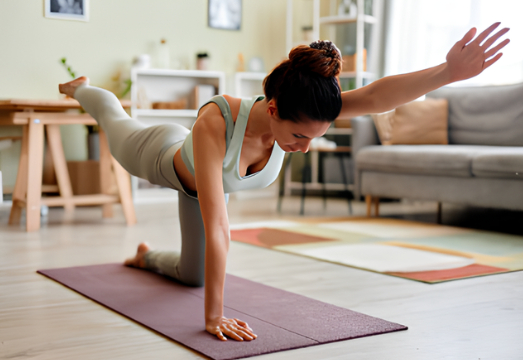
READING TIME: 6 MINUTES ➤➤
Pilates and core training: why strengthening the center of the body changes everything
In the world of advanced fitness, the difference between a good workout and outstanding performance often lies in a barely visible yet decisive element: the core. It is not just about having sculpted abs, but about developing a strong, stable and responsive central structure capable of transferring power, control and fluidity into every athletic movement. Pilates and core training represent two synergistic approaches to this goal, offering both biomechanical and performance benefits.
In this article we explore the strategic value of core training: from its technical definition to its practical application, including the role of Pilates in a multidisciplinary training context. A guide designed for athletes, trainers and fitness enthusiasts who want to bring their body to a new level of efficiency.
- The core as the foundation of physical performance
- Functional core training: strategies and benefits
- Pilates and body control: a precision-oriented method
- Biomechanics and performance: the invisible value of the core
The core as the foundation of physical performance
What “core” means in advanced fitness
In common language the core is often identified with the abdominal muscles, but technically the concept is much broader. The core includes all the deep and superficial muscles that stabilize the trunk and pelvis, including the transverse abdominis, pelvic floor, multifidus and diaphragm. This central region acts as a transfer point between the upper and lower body, influencing the quality of every movement, from running to squatting, from jumping to technical sports gestures.
For advanced athletes, understanding what the core truly is means being able to work more intelligently on movement efficiency, prevent injuries and increase the ability to generate force in a stable and controlled way. It is not just a muscle group: it is the functional center of the body, the operational base of human biomechanics.
The role of the core in stability and motor control
A well-trained core improves postural stability and allows greater control in complex movements, especially under load or in dynamic situations. This results in greater effectiveness during multi-joint exercises and in the ability to maintain balance even in unstable conditions, such as in sports contexts or when using functional training equipment.
Furthermore, the core is responsible for managing the reactive forces that travel through the body. Weakness in this area often results in energy dispersion, postural compensations and an increased risk of overuse or injury. Training the core, therefore, is not optional: it is a strategic investment for anyone aiming to optimize performance and athletic longevity.
Functional core training: strategies and benefits
The difference between abs workouts and core training
Many people confuse abdominal training with true core training. While classic crunches or sit-ups mainly stimulate the rectus abdominis, core training involves a broader muscular network, including deep stabilizing muscles. The goal is not purely aesthetic but functional: to improve the body’s ability to stabilize, coordinate and transfer forces efficiently.
A good core training program includes isometric exercises, anti-rotational movements and controlled instability work. The body is challenged across multiple planes of motion, simulating real conditions such as those found in sports or complex athletic movements. The result is integrated strength development that directly improves the quality of global movement.
Core stability and strengthening: what really changes
Core stability refers to the ability to keep the trunk stable and aligned even when external forces or peripheral movements occur. It is a fundamental neuromuscular skill that helps avoid compensations and protects the spine. Strength development, on the other hand, adds the element of force: improving the core’s ability to resist and respond to increasing loads.
An athlete who develops both qualities not only improves performance but also drastically reduces the risk of injury. The combination of stability and strength makes the core a true internal engine, capable of supporting loads, speed and directional changes without losing efficiency or balance.
Effective exercises to activate the center of the body
Among the most effective exercises are the plank and its dynamic variations, anti-rotational exercises such as the Pallof Press, as well as functional movements like the dead bug, the bird dog and pull movements performed from unstable positions. The goal is not simply to contract the muscles, but to learn how to manage and control tension in dynamic conditions.
Progression is also essential: starting with isometric exercises and gradually introducing variables such as load, instability or movement. In this way the body learns to integrate the core into the overall movement pattern, transforming strength into control and stability into applicable power.
Pilates and body control: a precision-oriented method
The Pilates approach to strengthening the core
Pilates is based on six fundamental principles: concentration, control, center, precision, flow and breathing. All revolve around a key concept: the “Powerhouse”, meaning the central core of the body. Pilates training strengthens the deep muscles of the trunk, stimulating pelvic and spinal stabilization through controlled movements performed with high motor awareness.
Unlike other approaches, Pilates does not focus on heavy loads or high repetitions but on the quality of muscular activation. This makes the discipline particularly effective for improving neuromuscular control, reducing postural imbalances and building the foundation for more solid and precise performance.
Why Pilates is effective for athletes and sports practitioners
Many multidisciplinary athletes have integrated Pilates into their training protocols to enhance motor control and prevent injuries. Thanks to its emphasis on the body’s center, Pilates helps build a stable base from which every technical movement can originate, improving coordination and optimizing kinetic chains.
Additionally, Pilates helps develop high proprioception, making the body more responsive and aware even in dynamic situations. It is a method perfectly suited for those seeking precision, stability and performance regardless of the sport they practice.
Integrating Pilates into a multidisciplinary training plan
Including Pilates in sports programming does not mean sacrificing intensity, but adding a level of sophistication and control that can make a significant difference. Whether in contact sports, endurance disciplines or technical sports, having a strong and intelligent body center improves every phase of movement, from warm-up to execution under pressure.
Many strength and conditioning coaches integrate Pilates as an activation or recovery phase, taking advantage of its ability to rebalance the muscular system and improve efficiency in subsequent movements. It is not merely a complementary practice: it is a strategic tool for those striving for excellence.
Biomechanics and performance: the invisible value of the core
Biomechanical analysis of core-oriented exercises
From a biomechanical perspective, the core represents the center of dynamic stability. Every movement of the limbs is connected to and influenced by the ability of the trunk to maintain control. Exercises such as planks, controlled rotations, extensions on a stability ball or anti-rotational actions help measure and improve this ability by working on internal force management and neuromuscular responsiveness.
Analysis of technical movements in sports such as tennis, cycling, running or weightlifting demonstrates that a stable and active core reduces biomechanical compensations, increases power transmission and improves precision. In this sense, core training is not an isolated exercise but a means of optimizing the entire kinetic chain.
Movement efficiency and injury prevention
One of the most important functions of the core is its ability to absorb and redistribute forces, protecting joints and tissues from excessive stress. This results in a reduction in injury risk, particularly for athletes operating in high-intensity or repetitive conditions. The core acts as an “internal shock absorber,” maintaining efficiency even under stress.
Numerous studies highlight how deficits in central stability can predispose individuals to musculoskeletal issues, particularly in the lumbar region. Conversely, an efficient core allows athletes to perform movements with greater movement economy, limiting energy loss and increasing neuromuscular endurance.
Core and sports: transferability to competitive performance
The true value of the core emerges in its transferability to sports performance. In every sport requiring strength, speed, endurance or precision, a solid center of the body improves execution quality and allows athletes to express their abilities more completely and safely. From the explosive action of a sprinter to the rotational power of a tennis player, every movement originates from and returns to the core.
Training the core is no longer merely an aesthetic or accessory choice, but a high-impact strategy for those seeking high and lasting performance. Whether through Pilates, functional training or integrated programs, the body’s center remains the hidden heart of athletic efficiency.
Comments (0)