
Trolley
You have no items in your shopping cart

 Budgets
 Dumbers
 Discs
Discs
 Benches
 Racks and Rigs
 Weights Holders
 Isotonic machines
 Calisthenics
 Cardio
 Kettlebells
 Flooring
 Gym Set
 Accessories
 Combat
 ARTI MARZIALI
 CONTAINER GYM
 Tug-Of-War
 Used Gym Equipment
 PILATES MACCHINARI
 GINNASTICA ARTISTICA
 CAMPI DA PADEL
 Prodotti in Pronta Consegna
 Informazioni
 IRONMAN
 Gift Card
- Donatif
- General information
- 0 I like it
- 1625 Views
- 0 comments
- gym flooring, safety flooring, gym safety, shock-absorbing materials
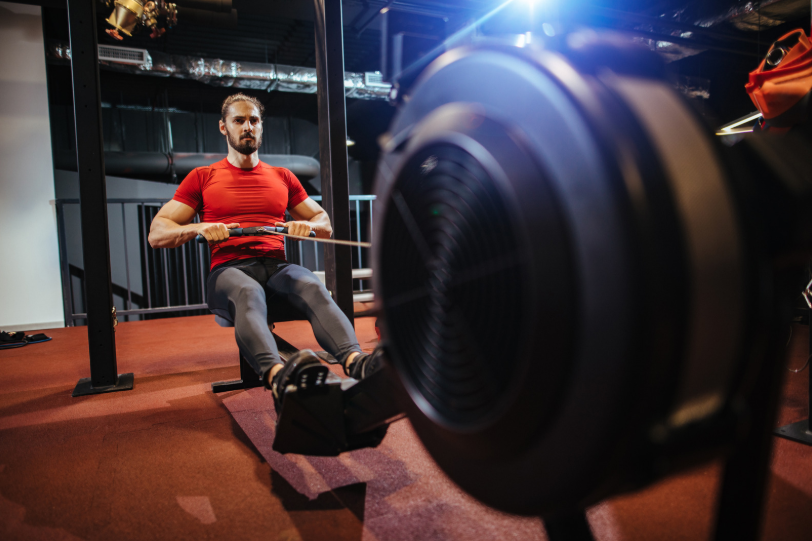
Noise and Neighbors: How Loud Is a Rowing Machine and How to Reduce It
The fear that a noisy rowing machine could disturb neighbors, family members, or people sleeping at home is one of the most common concerns when considering the purchase of a cardio machine for home use. This concern is understandable, especially in apartments where thin floors, shared walls, and family routines make every sound more noticeable. However, the noise produced by a rowing machine should not automatically be seen as a major or unavoidable issue: it depends on the resistance system, build quality, flooring, rowing technique, and the accessories used to isolate vibrations and sound.
In practice, a quiet rowing machine or a properly managed setup can fit perfectly into domestic life, as long as real disturbances are distinguished from the normal sounds generated during exercise. What matters is not only “how loud” the machine is, but also how the sound travels. A smooth, consistent swishing sound may be far less intrusive than sharp vibrations transmitted through the floor, even if both are heard at a similar volume inside the room. For this reason, the solution is not giving up on home workouts, but choosing carefully, positioning the rower correctly, and following a few simple yet effective best practices.
- How much noise does a rowing machine really make?
- Where does the noise come from during training?
- How to choose a quiet rowing machine for an apartment
- How to reduce vibrations and noise effectively
- Schedules, neighbors, and home coexistence
- Checklist before training without disturbing others
How much noise does a rowing machine really make?
The noise level of a rowing machine varies significantly depending on the technology used. Air rowers tend to produce a more noticeable sound, similar to a fan that becomes louder as rowing intensity increases. Water rowers create a softer and more continuous sound generated by the movement of water inside the tank. Magnetic or electromagnetic rowers are generally the best option for people looking for a discreet solution because they reduce mechanical resistance noise and mainly produce the sound of the seat sliding and the chain or belt moving.
For a realistic evaluation, comparisons are useful. A well-built rowing machine used correctly should not automatically be compared to a power drill or a particularly loud household appliance. In many situations, the main issue is not the overall volume itself but the repetitive movement and the transmission of vibrations through the floor. In an isolated room and with a quality anti-vibration mat, the perceived noise can become far more manageable compared to using the same machine directly on parquet, tile, or floating flooring.
Where does the noise come from during training?
The first important point is understanding that a rowing machine does not generate just one type of noise. There is the sound of the resistance system, which changes depending on whether the machine uses air, water, or magnetic resistance. Then there is the sound of the seat moving along the rail, often underestimated but very noticeable in lower-quality or poorly maintained models. Finally, there are impact sounds related to technique: feet pushing too aggressively, returning too quickly, uncontrolled finishes, and the frame slightly shifting during each repetition.
This distinction matters because it allows targeted solutions. If the noise comes from the resistance mechanism, choosing the right model becomes essential. If the issue comes from the floor, insulation and stability are the priorities. If the sound is generated mainly by movement technique, smoother rowing mechanics are often enough to make workouts quieter and more efficient. A fitness equipment noise problem does not always mean the product itself is poor quality: it may indicate unsuitable flooring, assembly issues, or neglected maintenance.
How to choose a quiet rowing machine for an apartment
People living in apartment buildings should focus on rowing machines with smooth operation, solid construction, and low-noise resistance systems. In this context, magnetic rowers are often the most reassuring option because they allow workouts with a more controlled and predictable sound level. The transmission system also matters: a well-designed belt can be quieter than a metal chain, especially for people training early in the morning, during lunch breaks, or in the evening without creating tension at home.
However, quietness should not be judged only by the technical specifications. A quiet rowing machine must also be stable because lightweight or poorly rigid frames can amplify vibrations and small side movements. It is important to consider the machine’s weight, the quality of its support feet, the smoothness of the rail system, and the possibility of placing it on an insulating surface. For apartment buyers, these details have practical value because they reduce perceived risk, increase freedom of use, and make the purchase more reassuring.
How to reduce vibrations and noise effectively
The first practical solution is using a thick and stable anti-vibration mat, which is far more effective than a thin standard fitness mat. Its role is not only protecting the floor but also absorbing part of the micro-vibrations generated during pushing and recovery phases. In homes with rigid flooring or sensitive building structures, this choice can make a noticeable difference. The mat should fully cover the machine footprint, remain stable during use, and avoid creating instability under the support points.
A second useful intervention involves noise-reducing pads or rubber supports placed under the machine’s contact points, especially when vibrations travel downward through the floor. It is also important to regularly check screws, rails, seats, and moving components because small mechanical movements can turn into repetitive squeaks. Cleaning the rail is a simple but crucial detail: dust and debris increase friction, reduce smoothness, and can make even a high-quality rowing machine seem unnecessarily noisy.
Schedules, neighbors, and home coexistence
Managing workout timing is a form of prevention rather than a limitation. In apartments, the best workout times are usually when the building and household are already active: late morning, lunchtime, late afternoon, or early evening. Training very early or very late can still be possible with a quiet and well-insulated machine, but it requires more attention to workout duration, intensity, and flooring conditions. A short and smooth workout is often less problematic than a long, intense, and technically uncontrolled session.
The room chosen for training also affects household harmony. Positioning the rower away from walls shared with bedrooms, avoiding corners that amplify sound, and preferring stable flooring surfaces can help reduce perceived noise. For people with small children or noise-sensitive family members, creating a predictable workout routine may help normalize training sessions and avoid the feeling of sudden disturbance. The real solution is not absolute silence, but managing the environment intelligently.
Checklist before training without disturbing others
Before starting a workout, it is useful to quickly check a few elements: stable machine positioning, properly laid anti-vibration mat, clean rail, balanced support feet, correct resistance settings, and smooth rowing technique. This should not become a complicated procedure but rather a simple habit that reduces avoidable noise and improves workout safety. A stable and properly positioned machine is quieter, more pleasant to use, and less stressful for everyone sharing the same environment.
The real question, therefore, is not simply “how loud is a rowing machine?” but “how can I make it compatible with my home?”. With the right choice, proper insulation, and sensible scheduling, a rowing machine can become far easier to manage than many people imagine. For those worried about complaints, judgment, or condominium issues, the best solution is a practical approach: choose the right model, reduce vibrations at the source, and turn training into a discreet, controlled, and sustainable daily habit.
Comments (0)