
Trolley
You have no items in your shopping cart

 Budgets
 Dumbers
 Discs
Discs
 Benches
 Racks and Rigs
 Weights Holders
 Isotonic machines
 Calisthenics
 Cardio
 Kettlebells
 Flooring
 Gym Set
 Accessories
 Combat
 ARTI MARZIALI
 CONTAINER GYM
 Tug-Of-War
 Used Gym Equipment
 PILATES MACCHINARI
 GINNASTICA ARTISTICA
 CAMPI DA PADEL
 Prodotti in Pronta Consegna
 Informazioni
 IRONMAN
 Gift Card
- Donatif
- General information
- 0 I like it
- 1404 Views
- 0 comments
- gym flooring, safety flooring, gym safety, shock-absorbing materials
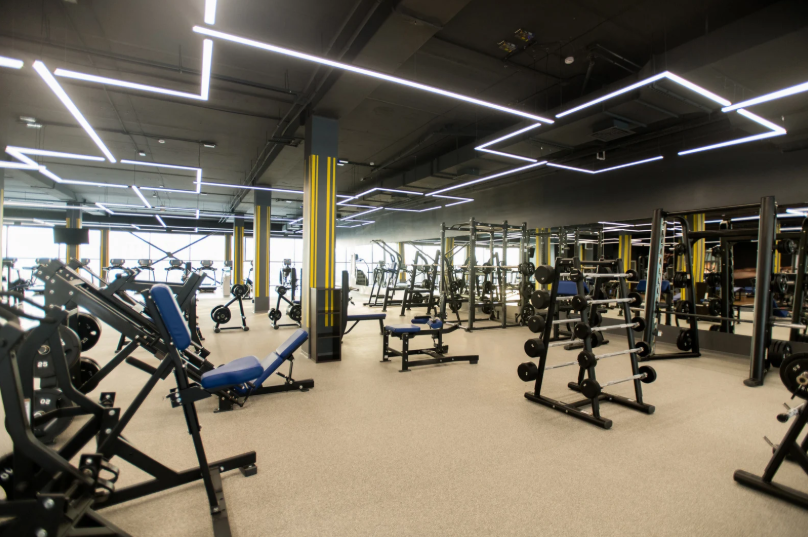
If One Element Stops Working: Is It Easier to Maintain Operational Continuity with a Modular Setup or a Multi-Function Machine?
When designing a professional fitness area, the choice between a modular structure and a multi-function station is often evaluated based on available space, number of exercises, and initial investment. In day-to-day operations, however, there is another factor that directly affects service management: operational continuity in the event of a partial shutdown.
A worn component, a pulley that needs replacement, or scheduled technical maintenance can impact how the entire area functions. In this context, the difference between a single machine and a distributed system becomes primarily a matter of operational resilience. For gym owners, designers, and B2B partners, understanding how an architecture reacts to everyday issues helps reduce interruptions, management stress, and operational bottlenecks.
How Operational Continuity Changes Between Multi-Function and Modular Systems
A Single Machine Concentrates Functions and Dependencies
Multi-function stations are often chosen because they allow multiple exercises to be concentrated within a compact footprint. In many gyms, this approach simplifies layout planning and makes station management more straightforward. However, when several functions depend on the same structure, even a limited issue can create wider operational consequences than initially expected.
If a central component requires maintenance, a significant part of the area may temporarily become unusable. The issue is not limited to a complete machine failure, but also includes smaller interventions affecting cables, weight stacks, or guide systems. In facilities with constant traffic, this can generate waiting times, disorganized user redistribution, and additional pressure on the remaining available stations.
A Modular System Distributes Operational Risk
A modular architecture works differently. Racks, benches, storage units, and separate stations create a system that is less dependent on a single operational point. If one component requires service, the others continue functioning normally, keeping most of the training area active.
This does not mean modular systems eliminate technical issues, but they tend to limit their spread. A bench temporarily out of service or an accessory needing replacement usually has a contained impact. In terms of operational continuity, distributing functions therefore allows more flexible management of everyday challenges.
The Risk of Bottlenecks in Fitness Areas
A More Complete Machine Does Not Always Mean Greater Resilience
Many facility managers automatically associate a more comprehensive machine with higher operational security. In reality, functional completeness does not always match the ability to absorb issues or maintenance work. When several exercises depend on the same structure, the likelihood increases that a single interruption will affect multiple activities at once.
This aspect becomes especially noticeable during peak hours. A heavily used multi-function station can turn into a congestion point if one section becomes unavailable. Users tend to concentrate on the remaining active alternatives, creating imbalances in area usage and reducing training flow efficiency.
User Redistribution Becomes Easier with Separate Modules
With a modular structure, redistributing workload is generally more natural. Users can move to benches, racks, or alternative stations without completely interrupting their workout flow. This approach reduces dependence on a single machine and makes the area more adaptable to operational changes.
For installers and designers, the issue is not limited to extraordinary maintenance. Even routine interventions, such as scheduled inspections or quick replacements, have less impact when the system consists of independent elements. Modular design therefore tends to offer a stronger ability to absorb minor operational disruptions.
Why Modular Systems Handle Partial Downtime More Effectively
Each Component Maintains an Independent Function
One of the main advantages of modular systems is the separation of operational functions. Racks, benches, and accessories continue working independently even when one element requires maintenance. This creates a more resilient structure, particularly valuable in fitness centers that need to ensure continuity throughout the day.
In an area composed of separate modules, the shutdown of a single station rarely blocks the entire training experience. Users can adapt their routines while keeping most planned activities available. From a management perspective, this reduces operational stress and minimizes the need for immediate reorganization.
A Practical Example of Operational Continuity
In a weight room equipped with racks, adjustable benches, and separate stations, the temporary unavailability of one component still leaves the remaining areas operational. If a bench requires replacement or maintenance, the rack and connected accessories can continue to be used normally.
In a highly centralized setup, on the other hand, the shutdown of one section can affect several exercises simultaneously. This example helps explain why many modern projects evaluate architectural resilience beyond the simple number of available functions.
When a Multi-Function Machine Still Offers Practical Advantages
Compactness and Operational Order Remain Relevant
Multi-function systems still offer concrete advantages in many contexts. In gyms with limited space or in areas where many activities must fit into a small footprint, a single machine can improve organization, environmental readability, and ease of use.
In some cases, a centralized structure also helps reduce equipment dispersion and simplifies area supervision. For this reason, the choice should not be viewed as a strict comparison between “right” and “wrong” solutions, but rather as an evaluation of different operational needs.
Scheduled Maintenance Influences Perception of Downtime
A well-maintained multi-function machine included in a regular maintenance plan can provide long-term stability. The difference mainly emerges in how the system reacts when an unexpected issue occurs. At that moment, the concentration of many functions in one location can increase the perceived impact of downtime.
For this reason, professional facility planning often considers maintenance together with function distribution. The objective is not only to prevent failures, but also to limit operational consequences when intervention becomes necessary.
Checklist for Evaluating Operational Resilience
Key Signs That Help Measure System Resilience
When comparing modular and multi-function structures, it is useful to observe certain practical factors. The presence of alternative pathways, the ability to redistribute users, and the independence of stations are all important indicators of a system’s capacity to absorb problems without shutting down the area.
The way traffic is managed during peak hours also matters. A resilient architecture tends to reduce congestion points and allows multiple activities to remain operational even during maintenance work or minor technical interruptions.
Design Logic Matters More Than the Individual Machine
Many operational issues do not depend exclusively on the quality of the individual equipment, but on the logic behind the area design. A balanced distribution of racks, benches, storage units, and multi-function stations can improve the long-term behavior of the entire weight room.
For this reason, installers and technical partners increasingly evaluate how effectively an environment can continue operating during routine interventions. Service continuity has become an integral part of professional gym planning, especially in facilities managing constant user flow.
Operational Continuity as a Design Criterion
The Best Choice Depends on the Expected Behavior of the Area
The comparison between modular and multi-function systems is not only about aesthetics, space, or the number of available exercises. Increasingly, the deciding factor is the structure’s ability to maintain operational continuity when something requires technical attention.
A modular system generally offers greater flexibility during partial downtime, while a multi-function machine may provide a more compact and organized solution in specific environments. The most effective evaluation therefore comes from analyzing the actual gym workflow, user volume, and the acceptable level of dependence on a single operational point.
Resilience and Daily Management Become Part of the Decision
For gym owners and designers, architectural resilience is becoming an increasingly concrete consideration. Reducing operational interruptions, distributing functions more effectively, and keeping the area usable during small maintenance interventions help contain management stress and service disruptions.
From this perspective, the choice between a modular structure and a multi-function station should not be guided solely by the perceived completeness of the machine, but by the ability of the entire system to absorb problems without compromising the daily operation of the fitness area.
Comments (0)