
Trolley
You have no items in your shopping cart

 Budgets
 Dumbers
 Discs
Discs
 Benches
 Racks and Rigs
 Weights Holders
 Isotonic machines
 Calisthenics
 Cardio
 Kettlebells
 Flooring
 Gym Set
 Accessories
 Combat
 ARTI MARZIALI
 CONTAINER GYM
 Tug-Of-War
 Used Gym Equipment
 PILATES MACCHINARI
 GINNASTICA ARTISTICA
 CAMPI DA PADEL
 Prodotti in Pronta Consegna
 Informazioni
 IRONMAN
 Gift Card
- Donatif
- General information
- 0 I like it
- 2689 Views
- 0 comments
- gym, sports, muscles, core, pectorals
READING TIME: 4 MINUTES ➤➤
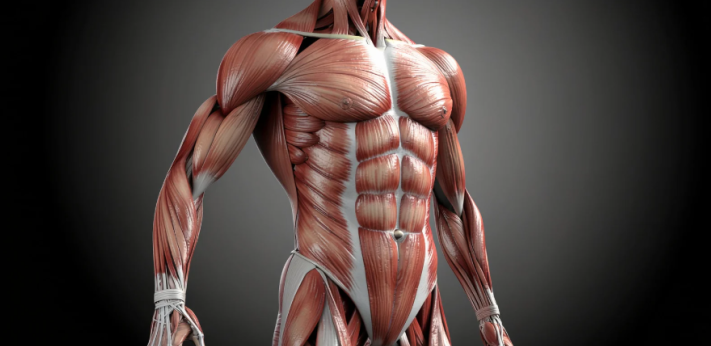
Understanding the anatomy of the pectoral muscles is the first step in building a complete, symmetrical, and functionally effective chest. In this in-depth article, we’ll explore the structure of the pectoralis major, dividing it into its three main sections: upper, middle, and lower. Each section plays a distinct biomechanical role and requires a targeted approach to achieve visible and lasting results. We’ll also look at the role of synergistic muscles, such as the shoulders and triceps, to provide a complete and professional overview of chest training.
This article is aimed at intermediate athletes and bodybuilders looking to optimize chest muscle growth with a focus on anatomical precision. It’s not just about "pumping up" the chest — it’s about building it in a smart and balanced way by enhancing every section of the muscle. Let’s dive in.
- Anatomical structure of the pectoral muscles
- Upper section: strengthening and targeted training
- Middle section: mass and chest thickness
- Lower section: definition and chest line
- Synergistic muscles in chest work
- How to achieve balanced and complete development
Anatomical structure of the pectoral muscles
The pectoralis major: functions and composition
The pectoralis major is one of the most prominent muscles of the chest and plays a key role both aesthetically and functionally. It’s a thick and powerful muscle that extends from the clavicle to the sternum and down to the humerus, enabling adduction, internal rotation, and flexion of the arm. Its size and complexity require detailed understanding to stimulate it effectively during training.
Anatomically, the pectoralis major is divided into three main sections: clavicular (upper), sternocostal (middle), and abdominal (lower). Each one responds to different working angles and activates distinct muscular chains, making it essential to design training that engages all portions thoroughly.
Distinguishing the upper, middle, and lower sections
The upper section originates from the clavicle and gives the chest a full, elevated appearance at the top. The middle section is the largest, arising from the sternum and contributing central volume and mass to the torso. Finally, the lower section is less prominent but critical for defining the lower chest line and enhancing the separation between chest and abdomen.
Understanding this segmentation is not just theoretical — it allows for precise targeting of each muscle area through specific exercises and angles. This attention to detail makes the difference between a generic chest and one that is aesthetically sculpted.
Upper section: strengthening and targeted training
Anatomical role and biomechanical function
The clavicular section of the pectoralis major is responsible for flexing the humerus upward, as seen in incline pressing movements. It’s especially important for lifting and filling out the upper chest — a highly desired feature both aesthetically and competitively. This section is often underdeveloped in individuals who train the chest only on flat or decline angles.
From an anatomical perspective, the upper section works in strong synergy with the anterior deltoid, making it essential to perform controlled, properly angled movements to avoid offloading work onto the shoulder.
Recommended exercises for developing the clavicular section
The most effective exercises for the upper section include incline barbell bench press and incline dumbbell press. Also effective are incline flyes and cable movements performed from low to high, which further isolate the area.
A critical factor is load control and execution: performing movements too quickly or with excessive weight can shift the effort onto the deltoid, negating the stimulus on the upper chest. It’s best to use moderate loads and focus on building a strong mind-muscle connection.
Middle section: mass and chest thickness
Importance in chest shape and symmetry
The sternocostal section is the central and most voluminous part of the pectoralis major. It’s responsible for overall chest mass and plays a key role in visual symmetry. Weakness in this section leads to a flat, underdefined chest — even if the upper and lower parts are well developed.
Its biomechanical action mainly involves adduction and internal rotation of the arm. It’s heavily engaged in horizontal pressing movements, meaning it’s activated in all standard flat bench chest exercises.
Effective exercises to maximize activation
To effectively train the middle section, go for the flat barbell bench press, flat dumbbell press, and flat bench flyes. These movements provide a full range of motion and constant tension on the muscle.
It’s also beneficial to vary grips and the range of movement to hit different fibers within the section. Advanced techniques such as rest-pause, drop sets, or extended time under tension can increase training intensity without sacrificing form.
Comments (0)