
Trolley
You have no items in your shopping cart

 Budgets
 Dumbers
 Discs
Discs
 Benches
 Racks and Rigs
 Weights Holders
 Isotonic machines
 Calisthenics
 Cardio
 Kettlebells
 Flooring
 Gym Set
 Accessories
 Combat
 ARTI MARZIALI
 CONTAINER GYM
 Tug-Of-War
 Used Gym Equipment
 PILATES MACCHINARI
 GINNASTICA ARTISTICA
 CAMPI DA PADEL
 Prodotti in Pronta Consegna
 Informazioni
 IRONMAN
 Gift Card
- Donatif
- General information
- 0 I like it
- 1830 Views
- 0 comments
- gym flooring, safety flooring, gym safety, shock-absorbing materials
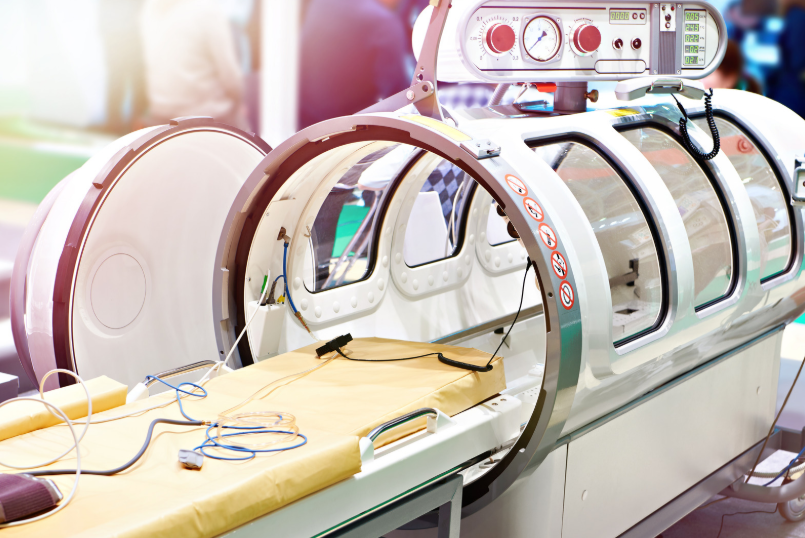
Hypoxic Chamber Meaning: Beyond Simple Altitude Simulation
When people talk about a hypoxic chamber, the term is often broadly associated with high-altitude training. In reality, its technical meaning is far more precise, and understanding it allows fitness professionals to evaluate the technologies available on the market with greater confidence. For gym owners and fitness center managers, knowing what "hypoxia" truly means is the first step in distinguishing a professional solution from a purely commercial offering.
Technical terminology is not just a linguistic detail. Correctly defining a technology means understanding how it works, its limitations, its potential, and the value of the investment. For this reason, it is essential to explore what normobaric hypoxia really means, how it is simulated, and the physiological effects sought during training.
- What does "hypoxic chamber" really mean?
- The technical meaning of normobaric hypoxia
- How the body responds
- Why understanding its meaning matters
What Does "Hypoxic Chamber" Really Mean?
A hypoxic chamber is an enclosed environment where the oxygen concentration in the air is artificially controlled. The term derives from the word "hypoxia," which refers to a condition in which oxygen availability is lower than the level normally found in the atmosphere. It does not mean eliminating oxygen, but rather reducing its concentration in a precise and continuously monitored manner.
In the professional fitness industry, this technology is used to reproduce conditions similar to those experienced at high altitude without changing atmospheric pressure. Understanding this definition helps avoid misconceptions and makes it possible to evaluate a solution based on its technical characteristics rather than marketing claims.
The Technical Meaning of Normobaric Hypoxia
The term normobaric hypoxia describes a condition in which atmospheric pressure remains unchanged while only the oxygen concentration is reduced. This is the operating principle adopted by most hypoxic chambers designed for professional sports training.
Hypoxic technology relies on generators and control systems that maintain a stable oxygen concentration throughout the training session. The objective is not to perfectly replicate every aspect of mountain environments but to reproduce the primary physiological stimulus associated with reduced oxygen availability, providing a controlled, repeatable, and safe training environment.
How Oxygen Concentration Is Reduced
Modern systems use specialized equipment capable of modifying the composition of the air through gas separation processes. Oxygen concentration is continuously monitored by dedicated sensors, ensuring precise operation throughout every training session.
For professional facilities, this aspect is particularly important. A reliable technology must maintain stable oxygen levels over time, ensuring that physiological stimuli remain consistent with the intended training protocol.
The Difference Between Hypoxia and Real High Altitude
One of the most common misconceptions is to consider a hypoxic chamber as simply an "artificial mountain." In reality, there are significant differences. At high altitude, both atmospheric pressure and oxygen availability decrease simultaneously, whereas in normobaric hypoxia only the oxygen concentration is reduced.
This distinction is essential for understanding how the technology actually works and for setting realistic expectations regarding the physiological adaptations that can be achieved through hypoxic training.
How the Body Responds to Training in a Hypoxic Environment
When oxygen availability decreases, the body activates a series of adaptive responses aimed at maintaining efficient oxygen transport to tissues. During training, oxygen saturation is also monitored, as it provides valuable information about an individual's physiological response to hypoxic exposure.
The ability to precisely regulate the intensity of the hypoxic stimulus makes these systems particularly valuable for athletic preparation, functional training, and advanced performance programs, provided that professional training protocols are followed.
Oxygen Saturation and Physiological Adaptations
Reduced oxygen availability acts as a metabolic stimulus that encourages the body to activate specific adaptive mechanisms. The extent of these responses depends on factors such as exercise intensity, duration of exposure, and individual physiological characteristics.
For this reason, professional hypoxic systems incorporate advanced monitoring tools that ensure continuous control of operating conditions and safety throughout every training session.
Benefits and Limitations of Hypoxic Simulation
Hypoxic technologies represent an advanced training tool, but they should not be viewed as a universal solution. Results depend on the quality of the equipment, the correct design of training protocols, and their integration into a comprehensive athletic development program.
Accurate technical communication helps avoid unrealistic expectations while highlighting what truly makes a hypoxic chamber effective: precision, control, and the ability to consistently reproduce specific environmental conditions.
Why Understanding the Technical Meaning Is Essential for a Professional Investment
For gym owners and fitness center operators, understanding the meaning behind hypoxic technology is a key factor when evaluating an investment. Correct terminology often reflects the manufacturer's level of expertise and the transparency with which technical specifications are presented.
Choosing a solution based solely on marketing claims may lead decision-makers to overlook critical factors such as sensor accuracy, component quality, control system reliability, and long-term operational consistency.
The Importance of Technology Quality
A professional hypoxic chamber should stand out for its operational stability, precise oxygen regulation, and advanced monitoring systems. These are the features that truly determine the quality of the solution, far more than promotional statements.
Carefully analyzing technical specifications enables buyers to compare different products objectively and invest in technologies specifically designed for intensive professional use.
Linguistic Precision Reflects Engineering Precision
Within the professional fitness equipment industry, precise terminology often reflects precise engineering. A company capable of accurately describing how its technology works demonstrates attention to detail, technical expertise, and respect for professional customers.
For this reason, the meaning of a hypoxic chamber extends far beyond a simple definition. Understanding what normobaric hypoxia really is, how it is controlled, and the physiological adaptations it promotes enables more informed investment decisions and helps identify technologies designed with rigorous engineering standards, where linguistic precision mirrors engineering precision.
Comments (0)