
Trolley
You have no items in your shopping cart

 Budgets
 Dumbers
 Discs
Discs
 Benches
 Racks and Rigs
 Weights Holders
 Isotonic machines
 Calisthenics
 Cardio
 Kettlebells
 Flooring
 Gym Set
 Accessories
 Combat
 ARTI MARZIALI
 CONTAINER GYM
 Tug-Of-War
 Used Gym Equipment
 PILATES MACCHINARI
 GINNASTICA ARTISTICA
 CAMPI DA PADEL
 Prodotti in Pronta Consegna
 Informazioni
 Gift Card
- Donatif
- General information
- 0 I like it
- 13 Views
- 0 comments
- gym flooring, safety flooring, gym safety, shock-absorbing materials
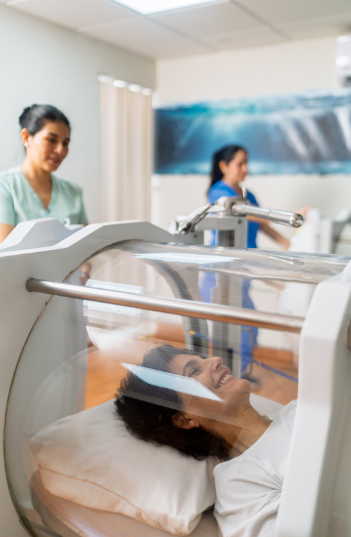
Hypoxic Chamber vs Training Masks: Facts and Myths
When discussing simulated altitude training, it is easy to come across misleading information or marketing claims that treat fundamentally different tools as if they were the same. One of the most common misconceptions is that wearing a training mask is equivalent to exercising in a hypoxic chamber. In reality, from a physiological standpoint, these two technologies operate according to completely different principles and produce equally different adaptations.
Understanding this distinction is essential for both athletes looking to improve their sports performance and gym owners or advanced home gym enthusiasts who want to invest in equipment that delivers real results. Restricting airflow during breathing does not reduce the amount of oxygen present in the surrounding environment. This key difference separates the simple sensation of breathing harder from genuine exposure to hypoxia.
- What Is a Hypoxic Chamber and How Does It Work?
- What Training Masks Actually Do
- The Main Differences Between a Hypoxic Chamber and Training Masks
- What Scientific Research Says
- How to Choose the Right Solution
What Is a Hypoxic Chamber and How Does It Work?
A hypoxic chamber is a controlled environment designed to simulate high-altitude conditions by reducing the concentration of oxygen in the air being breathed. Atmospheric pressure remains essentially unchanged, while the percentage of available oxygen is lowered using dedicated technological systems. This allows the body to experience a physiological stimulus similar to that encountered at high altitude without the need to travel to mountainous regions.
The simulation is accurate, stable, and continuously monitored. Oxygen levels can be adjusted according to training goals, the athlete's experience, and the specific protocol being followed. This makes it possible to create a progressive and repeatable stimulus, a crucial factor for achieving measurable physiological adaptations over time.
Simulating Altitude Through Reduced Oxygen Availability
The fundamental principle is to decrease the amount of oxygen available with each breath while maintaining normal breathing mechanics. Athletes continue to breathe naturally, but every breath contains less oxygen than ambient air. It is precisely this reduction that triggers numerous physiological adaptation mechanisms within the body.
Among the primary physiological responses are changes in oxygen saturation, activation of cellular pathways associated with altitude adaptation, and, under appropriate protocols, metabolic responses that may contribute to improved endurance. This condition is therefore entirely different from simply increasing the workload of the respiratory muscles.
The Difference Between Normobaric Hypoxia and Traditional Training
Normobaric hypoxia changes the oxygen content of the air without altering atmospheric pressure. The objective is not to make breathing more difficult but to reduce the amount of oxygen available to body tissues. This forces the body to activate compensatory mechanisms that represent the true value of simulated altitude training.
During conventional gym workouts, oxygen availability remains constant. Exercise intensity increases metabolic demand, but it does not alter the composition of the air being inhaled. A hypoxic chamber therefore introduces an additional physiological stimulus that cannot be replicated simply by increasing training intensity.
What Training Masks Actually Do
Restricted Airflow Does Not Create Hypoxia
So-called training masks, often marketed as elevation masks, work according to a completely different principle. These devices restrict airflow during inhalation and exhalation through adjustable valves. The result is increased breathing effort from a mechanical perspective, while the oxygen concentration in the surrounding air remains exactly the same.
In other words, the athlete continues breathing air that contains approximately 21% oxygen. What changes is only the level of effort required to move that air into and out of the lungs. This means that a training mask does not reproduce high-altitude conditions and does not create genuine hypoxia, despite what some marketing messages may suggest.
What Effects Does a Training Mask Produce?
Using a training mask may increase the workload placed on the respiratory muscles, including the diaphragm and intercostal muscles. Some athletes report greater breathing difficulty and increased respiratory fatigue during high-intensity exercise. However, this sensation should not be mistaken for the physiological adaptations associated with altitude training.
Airflow restriction primarily alters the mechanics of ventilation. Any potential benefits are therefore mainly related to respiratory muscle training rather than to reducing oxygen availability throughout the body. These are two distinct physiological mechanisms that lead to different outcomes.
Comments (0)