
Trolley
You have no items in your shopping cart

 Budgets
 Dumbers
 Discs
Discs
 Benches
 Racks and Rigs
 Weights Holders
 Isotonic machines
 Calisthenics
 Cardio
 Kettlebells
 Flooring
 Gym Set
 Accessories
 Combat
 ARTI MARZIALI
 CONTAINER GYM
 Tug-Of-War
 Used Gym Equipment
 PILATES MACCHINARI
 GINNASTICA ARTISTICA
 CAMPI DA PADEL
 Prodotti in Pronta Consegna
 Informazioni
 IRONMAN
 Gift Card
- Donatif
- General information
- 0 I like it
- 2357 Views
- 0 comments
READING TIME: 6 MINUTES ➤➤
Mindset After 40: Changing Without Going to War With Your Body
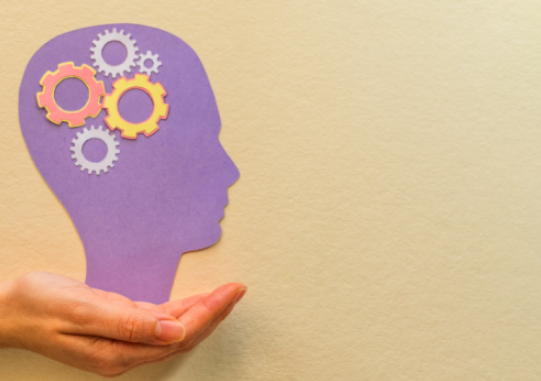
Once you cross the threshold of 40, many people begin to see their body and mind through new eyes. Perspective changes, priorities are redefined, and a new awareness emerges: it’s no longer about “getting back to how you were before,” but about building a version of yourself that is aligned with who you are today. In an age that often imposes eternally youthful standards, the idea of accepting yourself and focusing on your physical and mental well-being can feel revolutionary. Yet this is precisely the key to living adulthood fully and authentically, without going to war with your body.
This article explores how to face change with a mature and positive mindset, focusing on acceptance, realism, and sustainable goals. There is nothing to fight against — only much to understand, appreciate, and nurture.
- Accepting Change: The Mind After 40
- Living in Balance: Physical and Mental Well-Being
- Realistic Goals and New Priorities
- Toward Personalized Well-Being
Accepting Change: The Mind After 40
How Mindset Changes With Age
Around the age of 40, a subtle yet profound transformation takes place: the way we think about ourselves changes. Daily challenges, family and professional responsibilities, and the first signs of aging lead many people to reconsider their approach to life. The mindset after 40 is no longer focused on absolute performance, but on balance. There is a growing desire to make more conscious choices, respect personal rhythms, and act according to who we truly are rather than who we are expected to be.
This evolution is not a synonym for giving up, but for inner maturity. You begin to recognize your limits not as obstacles, but as boundaries to navigate intelligently. A new dialogue with yourself begins — kinder, more honest, and more open to possibilities that may once have been ignored.
Identity After 40: Evolving Without Denying Yourself
Many people experience turning 40 as both a moment of reflection and an opportunity to redefine who they are. Identity is not static: it evolves through experiences, successes, and hardships. After 40, it becomes essential to recognize your value beyond physical appearance or social expectations.
Accepting age does not mean surrendering — it means stopping the pursuit of unrealistic ideals. It is an act of freedom. It means choosing to fully be yourself without needing to go backward. This shift requires deep inner work, but it opens the possibility of living a new season of life that is more authentic, more stable, and more fulfilling.
Living in Balance: Physical and Mental Well-Being
Active Aging: Moving With Awareness
The body changes — that’s true. But it can continue to be a source of strength, pleasure, and well-being. The concept of active aging is not just about appearance, but about the ability to remain vital and engaged in your life. Moving, walking, and practicing physical activity suited to your condition are ways to nourish energy and mental clarity, not to fight against the passing of time.
After 40, it becomes important to listen to your body instead of forcing it. Exercising should no longer be about punishment or meeting aesthetic standards, but about supporting your health and mental well-being. Every movement then becomes an act of care, not of conflict.
Feeling Good in the Body You Have
Authenticity also passes through the skin we live in. Learning to feel good in your own body means acknowledging its history, its transformations, and the truth it tells. After 40, the body is no longer the same as it was at 20, but it can become far more aware and deeply strong.
Physical well-being is no longer measured in inches or pounds, but in terms of daily energy, resilience, and peace of mind. It is about cultivating a form of fitness that is useful — one that supports real life, not an idealized fantasy. And within this perspective lies a new kind of freedom, far removed from unattainable standards.
Realistic Goals and New Priorities
Learning to Redefine Your Goals
Adulthood brings with it a precious opportunity: the chance to redefine your goals in light of who you have become. After 40, many people begin to ask themselves not only what they want to achieve, but what truly matters. The focus shifts from “doing more” to “doing better,” from success for others to fulfillment for oneself.
This change requires the courage to let go of externally imposed goals and embrace realistic and sustainable objectives. The focus moves toward quality of life, well-being, authentic relationships, and personal growth. It is a process of conscious simplification that makes room for what truly matters.
The Value of Authenticity in Adulthood
Authenticity is an achievement that comes with time. After years spent trying to conform to external standards, there comes a moment when you can finally say: “This is who I am, and that is okay.” This does not mean stopping self-improvement, but approaching it from a solid and respectful foundation rooted in your uniqueness.
In adulthood, authenticity becomes a guiding light: it shapes decisions, protects against the influence of judgment, and allows for more genuine relationships. It is also a powerful tool for mental health because it reduces stress and increases self-efficacy. In this sense, accepting your limits is not defeat — it is an act of inner strength.
Toward Personalized Well-Being
The Body You Need, Not the One You Used to Have
One of the most powerful ideas to remember after 40 is this: “You do not need the body you had before — you need the body that serves you now.” It is a mindset shift that frees you from the prison of nostalgia and opens the door to a new relationship with your body. The goal is no longer to go backward, but to create a present condition that feels functional, comfortable, and rewarding.
The body you “need” is the one that allows you to fully live your current life: to work, love, move, and enjoy your free time. It is a body that functions — one that asks not for perfection, but for respect. This is where a new type of well-being is born, centered on real functionality and the joy of living.
Personal Sustainability: Finding Your Own Rhythm
Every stage of life has its own rhythm, and after 40 it becomes essential to learn how to recognize it. Living according to your own pace does not mean slowing down — it means carefully choosing where to invest your energy. Well-being becomes a matter of balance between activity and rest, ambition and acceptance, action and listening.
From this perspective, taking care of yourself is not a luxury, but a strategy for sustainability. It means learning to say no, respecting your own timing, and building a daily life that supports — rather than undermines — your physical and mental state. This is where true adult freedom emerges: in the right to feel well in your own body and mind.
Comments (0)