
Trolley
You have no items in your shopping cart

 Budgets
 Dumbers
 Discs
Discs
 Benches
 Racks and Rigs
 Weights Holders
 Isotonic machines
 Calisthenics
 Cardio
 Kettlebells
 Flooring
 Gym Set
 Accessories
 Combat
 ARTI MARZIALI
 CONTAINER GYM
 Tug-Of-War
 Used Gym Equipment
 PILATES MACCHINARI
 GINNASTICA ARTISTICA
 CAMPI DA PADEL
 Prodotti in Pronta Consegna
 Informazioni
 IRONMAN
 Gift Card
- Donatif
- General information
- 0 I like it
- 3268 Views
- 0 comments
READING TIME: 8 MINUTES ➤➤
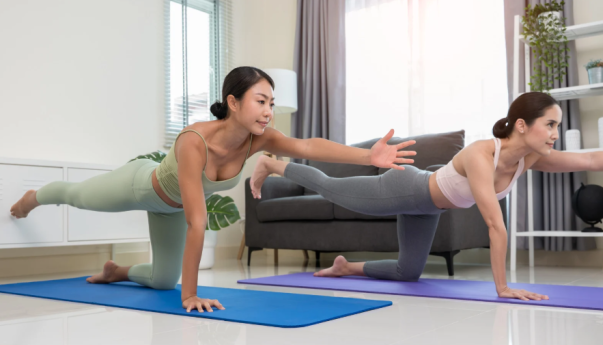
Finding the right balance again, especially after the age of 40, is not only a matter of physical well-being, but also of safety and prevention. Motor control and proprioception are abilities that naturally tend to decline over time, yet they can be effectively trained with targeted, simple, and accessible exercises. In this article, you will discover a daily routine to improve balance in just a few minutes a day and naturally strengthen your body’s stability in a gradual and sustainable way.
- Why balance is essential after 40
- The simplest and most effective balance exercises
- How to gradually develop proprioception
- Fall prevention and everyday safety
Why balance is essential after 40
The risks associated with loss of balance
After the age of 40, the body naturally begins to change: muscle mass tends to decrease, coordination slows down, and reflexes become less responsive. All of this directly affects balance, increasing the risk of trips, falls, and injuries at home or during physical activity. Ignoring these signs can lead to reduced independence and greater vulnerability in daily life.
Training balance is not a luxury, but a real necessity. The good news is that just a few minutes a day are enough to achieve meaningful results. The key is to begin mindfully and choose exercises suited to your physical condition, focusing on the gradual improvement of motor control and stability.
The role of proprioception and motor control
Proprioception is the body’s ability to perceive the position and movement of joints even without looking at them. It is an essential function for maintaining balance, especially while moving. With age, this ability may decline, but it can also be strengthened through targeted exercises.
Motor control, meaning the ability to coordinate movements smoothly and safely, plays a crucial role in preventing falls. Exercises that stimulate balance and coordination help maintain the body’s responsiveness and reduce the risk of accidents, while also improving overall quality of life.
The simplest and most effective balance exercises
A 5-minute daily routine
You do not need professional equipment or long gym sessions to work on balance. A 5-minute routine, performed consistently, can make a real difference. Start with simple exercises such as standing on one leg, walking in a straight line, or alternating between the right and left foot on soft surfaces.
It is important to focus on breathing and postural alignment. Just a few daily repetitions are enough to improve your awareness of your body in space. Over time, you can gradually introduce small variations to increase the level of difficulty, always respecting your own abilities.
Exercises you can do at home without equipment
Many balance exercises can be performed at home using only your body weight. Walking on your heels, stepping up and down from a stair, balancing on a cushion, or closing your eyes while standing on one leg are excellent foundational exercises.
These movements naturally stimulate the proprioceptive system and help you become more aware of your posture and body alignment. No expensive equipment is required—just attention and consistency. The goal is not performance, but safety in everyday movements.
How to gradually develop proprioception
Exercises to stimulate the proprioceptive system
To stimulate proprioception, it is useful to introduce exercises that involve controlled instability. A simple example is performing squats on slightly unstable surfaces, such as a thick mat or a cushion. Even the simple act of closing your eyes during an exercise intensifies sensory and neurological activation.
The important thing is to start with simple exercises and gradually increase intensity according to your progress. Every proprioceptive stimulus strengthens the connection between the nervous system and muscles, improving responsiveness and the ability to correct balance in real time.
Mistakes to avoid and practical advice
A common mistake is trying to do too much too soon. Balance is a skill that develops over time and requires patience. Avoid sudden movements, excessively unstable surfaces, or heavy loads. Train safely, preferably near a stable support in case you lose balance.
Wear comfortable shoes, choose safe and well-lit surfaces, and practice your exercises at the same time each day to build a sustainable routine. Remember that consistency is more important than intensity: a few minutes every day are worth more than one hour once in a while.
Fall prevention and everyday safety
Visible benefits after just a few weeks
Regular balance training can lead to noticeable improvements within the first month. You will feel more stable while walking, climb stairs with greater confidence, and notice smoother movements overall. This not only improves quality of life, but also plays a key role in preventing falls and injuries.
Many adults over 40 underestimate the importance of proprioceptive training until they personally experience a fall or accident. Starting early means protecting yourself in the long term and maintaining a good level of independence as the years go by.
Daily habits that strengthen balance
Incorporating simple daily habits can enhance the effects of your training. For example, taking the stairs instead of the elevator, walking on uneven terrain such as sand or grass, or performing short balance exercises during work breaks.
Every mindful movement becomes an ally for your stability. Remember that improving balance is not only a physical matter: it also strengthens self-confidence, reduces fear of movement, and contributes to a more active and peaceful lifestyle. Everything starts with just a few minutes a day. And with you.
Comments (0)