
Trolley
You have no items in your shopping cart

 Budgets
 Dumbers
 Discs
Discs
 Benches
 Racks and Rigs
 Weights Holders
 Isotonic machines
 Calisthenics
 Cardio
 Kettlebells
 Flooring
 Gym Set
 Accessories
 Combat
 ARTI MARZIALI
 CONTAINER GYM
 Tug-Of-War
 Used Gym Equipment
 PILATES MACCHINARI
 GINNASTICA ARTISTICA
 CAMPI DA PADEL
 Prodotti in Pronta Consegna
 Informazioni
 IRONMAN
 Gift Card
- Donatif
- General information
- 0 I like it
- 1021 Views
- 0 comments
- gym flooring, safety flooring, gym safety, shock-absorbing materials
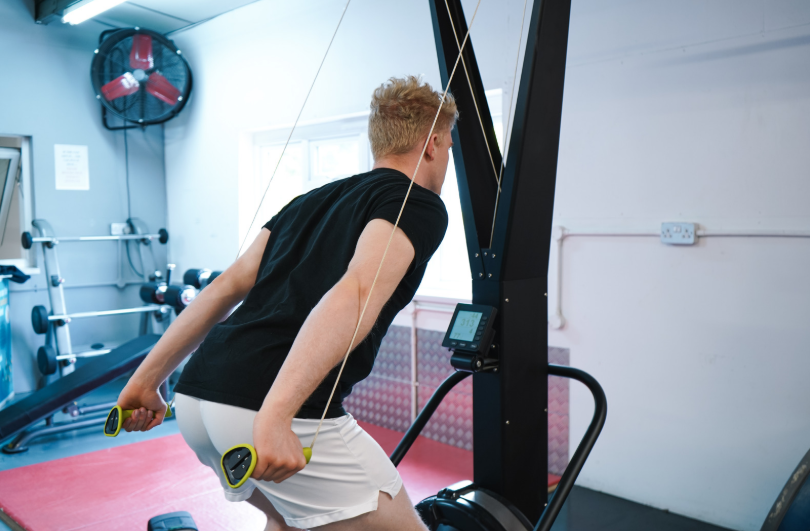
Refurbished machines: how much does origin matter when choosing for a PT studio or micro-gym
When evaluating a refurbished gym machine, the first instinct is often to treat refurbished equipment as a single category: on one side new, on the other everything that has already had a previous life. For a PT studio or a micro-gym, however, this is an oversimplification that can lead to imprecise decisions. A machine coming from a trade show, a test environment, a showroom, or a professional decommissioning does not tell the same usage story. The perceived level of wear, the type of checks required, and the level of trust you can place in the equipment all change.
The origin of refurbished equipment therefore becomes a concrete criterion, not a secondary detail. There is no need to turn the purchase into a highly technical analysis, but it is useful to understand where the machine comes from, how it may have been used, and what role it will play in your setup. In a personal training studio, where equipment is often used in a guided and structured way, a well-filtered choice can offer a strong balance between budget, reliability, and professional perception.
Why not all refurbished equipment means the same thing
The term refurbished refers to a machine that already existed and has been checked, restored, and made suitable for use again, but it does not by itself indicate how much stress it has previously endured. A machine displayed at a trade show may have seen very limited use, perhaps only brief demonstrations. A machine coming from a decommissioned gym, on the other hand, may have undergone years of daily use, with different loads, users, and rhythms. This is why origin helps interpret the real value of the equipment more accurately.
For a personal trainer or a micro-gym, this distinction matters because the purchase is not just about price. Operational continuity, the sense of safety conveyed to clients, and consistency with the service offering all play a role. A well-selected refurbished strength machine can be a rational choice, but only if its past is carefully interpreted. The goal is not to avoid refurbished equipment, but to avoid evaluating it superficially.
Refurbished from trade shows, tests, or demos: when origin increases trust
A refurbished machine coming from a trade show, test, or showroom is often perceived as more trustworthy because its previous use is typically limited and controlled. It may have been assembled for display, used for demonstrations, or showcased as part of a product line. In these cases, wear is more likely to be cosmetic, related to transport or minor handling marks, rather than intensive use of functional components.
This type of origin is particularly interesting for a PT studio looking to introduce professional-looking equipment without bearing the full cost of new. A demo refurbished multi-gym, for example, can fit well in an environment where equipment is used by appointment, under supervision, and with predictable volumes. It remains important to verify checks, stability, smoothness, friction components, and service availability, because even a favorable origin does not replace a complete evaluation.
Decommissioned machines: what to evaluate before deciding
Machines coming from gym decommissioning require a more careful reading, not because they are automatically less valuable, but because their usage history can vary significantly. A high-traffic commercial gym puts continuous stress on cardio equipment, weight stacks, cables, pulleys, and padding. A smaller facility, on the other hand, may have used the same equipment far less intensively. The word decommissioned alone is not enough: it must be linked to the type of environment, years of use, and the level of refurbishment performed.
In this case, trust is built through transparency. It is important to know whether the machine has simply been resold or if it has been thoroughly checked, serviced, and restored to a professional standard. For a PT studio, a decommissioned machine can be a sensible option when the supplier clearly explains the work carried out and when the equipment is not critical to daily operations. The key is not the lowest price, but the balance between previous use, refurbishment, and future context.
Cardio, multi-function and strength machines: origin and level of caution
Origin also weighs differently depending on the category. In refurbished cardio equipment, for example, usage hours, motors, belts, displays, and electronic components play a central role. A treadmill or bike from heavy use requires more caution than a demo product, because wear may not be immediately visible. In a micro-gym, where equipment must remain available and reliable, this directly impacts service quality.
For strength machines and multi-gyms, the focus often shifts to the frame, cables, pulleys, weight stacks, joints, padding, and movement fluidity. A solid machine, properly refurbished and with replaced components where necessary, can maintain high usability even if it comes from professional use. The correct filter is understanding which parts have been stressed and what interventions have been carried out to restore the equipment to a standard consistent with its intended use.
How to use origin as a quality filter
Origin should be treated as a quality filter, not as a definitive label. A machine from a trade show may offer an initial trust advantage, while a decommissioned one requires more questions and deeper evaluation. In both cases, decisions improve when you connect origin, actual condition, interventions performed, and the role the equipment will play in your setup. This allows you to move from a generic idea of refurbished equipment to a more precise and informed choice.
For a personal trainer or micro-gym owner, the most useful criterion is whether a specific machine aligns with your working model. If the equipment will be used daily by multiple clients, caution should increase. If it will serve as a complement within a guided program, a good refurbished opportunity can make perfect sense. From this perspective, Donatif refurbished equipment should be seen as a category to evaluate methodically: clear origin, understandable checks, and a choice proportional to the intended use.
Comments (0)