
Trolley
You have no items in your shopping cart
 Budgets
 Dumbers
 Discs
Discs
 Benches
 Racks and Rigs
 Weights Holders
 Isotonic machines
 Calisthenics
 Cardio
 Kettlebells
 Flooring
 Gym Set
 Accessories
 Used Gym Equipment
 Combat
 ARTI MARZIALI
 Tug-Of-War
 CAMPI DA PADEL
 PILATES MACCHINARI
 GINNASTICA ARTISTICA
 CONTAINER GYM
 Gift Card
 Informazioni
 Prodotti in Pronta Consegna
- Donatif
- General information
- 0 I like it
- 2 Views
- 0 comments
- stress reduction, improved self-esteem, physical and mental well-being, gym training
Errors That Make You Ask for Custom Equipment When You Only Needed a More Coherent Standard Solution
In the daily work of a PT studio or a micro gym, there often comes a moment when something “doesn’t work.” Spaces feel tight, movements are not fluid, and equipment seems to limit rather than support. At that exact point, a belief emerges: you need something custom.
This reaction is understandable, but not always correct. In many cases, the problem is not the standard equipment itself, but how it has been chosen, positioned, or integrated into the context. Understanding this distinction helps avoid unnecessary costs and difficult-to-correct design choices.
When the problem is not the equipment but how the space is interpreted
The mistake of attributing to standard equipment a limit caused by layout
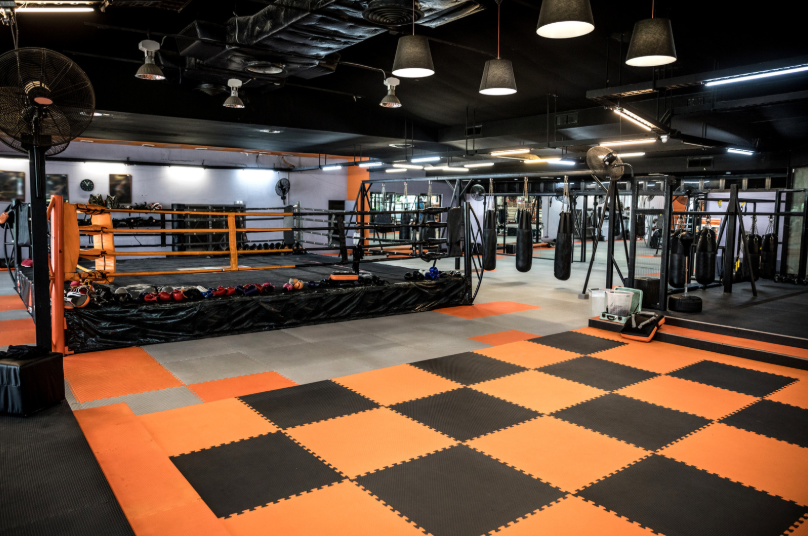
Gym layout refers to how space is organized in relation to real activities. When a rack feels “too bulky” or a bench seems “out of place,” the issue is rarely the product itself. More often, it results from a setup that does not account for movement flow, exercise sequences, or minimum working distances.
In a PT studio, where every square meter directly impacts daily work, a wrong configuration amplifies perceived limitations. The risk is interpreting this discomfort as a flaw of standard equipment, when it is actually due to an incomplete understanding of the space. In many cases, simply rotating the setup or redistributing zones solves problems that seemed structural.
How to recognize an inefficient setup before changing equipment
An inefficient configuration means that equipment works individually but not as a system. Typical signs include interrupted movements, waiting times between exercises, and difficulty transitioning between stations. These elements indicate an organizational issue, not a product flaw.
Before considering custom solutions, it is useful to observe how the space is actually used. If the problem emerges during real use and not when the space is empty, the solution is likely a smarter reallocation of standard equipment. This step avoids more complex interventions and keeps the budget under control.
False signals that push you toward custom solutions
When operational frustration is mistaken for a structural limitation
Operational frustration is a real feeling: something slows you down, gets in the way, or feels inefficient. However, automatically turning this into a limitation of the equipment is a common mistake. In small spaces, even a correct choice can become inefficient if placed in the wrong context.
This mental step leads to a quick conclusion: “we need something custom.” In reality, what is often needed is a reassessment of the system as a whole. In this case, custom becomes a response to a problem that has not yet been clearly defined.
The risk of using custom as a mental shortcut
Custom solutions are often perceived as the ultimate answer. They are adaptable, flexible, and built around specific needs. But precisely for this reason, they risk becoming a shortcut: instead of understanding what doesn’t work, everything is redesigned from scratch.
This approach increases complexity and costs without guaranteeing a better outcome. If the issue lies in usage logic or spatial priorities, custom simply replicates the same mistake in a more expensive form. The goal is not uniqueness, but alignment with real usage.
Common mistakes in choosing standard equipment
Choosing standard equipment without coherence with workflow
Gym equipment selection does not mean choosing good individual products, but building a coherent system. An excellent rack can become a limitation if it blocks circulation or forces unnatural training sequences.
Many mistakes come from purchases based on isolated features, without considering the overall system. The result is a fragmented space where each element works, but not together. In these cases, the issue is not the standard itself, but a lack of systemic vision.
Confused priorities between aesthetics, space, and functionality
Design priorities define what matters most: aesthetics, capacity, versatility, or flow. When these priorities are unclear, standard equipment is chosen using inconsistent criteria. Visual impact may be prioritized at the expense of functionality.
This leads to spaces that “look right” but don’t work effectively. Moving to custom in these situations does not solve the underlying issue. Instead, priorities need to be realigned to assess whether a more coherent standard solution can already meet the need.
How to understand if the problem can be solved without custom
Proper diagnosis: space, usage, and operational sequence
Gym space diagnosis means analyzing three elements: actual dimensions, usage patterns, and activity sequences. If one of these has been underestimated, efficiency drops even with correct equipment.
An effective diagnosis starts with observation. Where do bottlenecks occur? Which movements feel uncomfortable? Which equipment is underused? These questions help identify the real issue and often lead to solutions based on reorganization rather than replacement.
Concrete examples of realignment using standard equipment
A common case involves a rack placed too close to a wall, limiting lateral movement. The solution is not a custom rack, but a different space distribution. Similarly, a bench perceived as bulky can become functional when integrated into a more logical sequence.
These examples show how properly selected and configured standard equipment can solve operational problems without adding complexity. The advantage is maintaining flexibility, reducing costs, and improving real space efficiency.
When custom is truly the right choice
Cases where standard cannot provide a solution
Custom equipment makes sense when there is a real constraint that standard solutions cannot handle. This may include specific geometries, structural limitations, or integration with existing elements that cannot be modified.
In these cases, custom is not a shortcut but a design necessity. The difference lies in problem clarity: it is not based on perception, but on an objective constraint requiring a dedicated solution.
From perceived need to real requirement
A real requirement means that all standard alternatives have been evaluated and found insufficient. Only at this point does custom become a conscious decision rather than an impulsive reaction.
This approach allows custom to be used correctly: as a precise tool, not a generic response. The result is a more efficient space, controlled costs, and a design that truly reflects daily operational needs.
Understanding when to act on layout and when on equipment completely changes the outcome. If you want to explore how to structure a truly coherent space, analyzing your specific case is the most effective step to avoid difficult-to-correct mistakes.
Comments (0)