
Trolley
You have no items in your shopping cart

 Budgets
 Dumbers
 Discs
Discs
 Benches
 Racks and Rigs
 Weights Holders
 Isotonic machines
 Calisthenics
 Cardio
 Kettlebells
 Flooring
 Gym Set
 Accessories
 Combat
 ARTI MARZIALI
 CONTAINER GYM
 Tug-Of-War
 Used Gym Equipment
 PILATES MACCHINARI
 GINNASTICA ARTISTICA
 CAMPI DA PADEL
 Prodotti in Pronta Consegna
 Informazioni
 IRONMAN
 Gift Card
- Donatif
- General information
- 0 I like it
- 1519 Views
- 0 comments
- sport, exercises, squats, shoulder blades
READING TIME: 9 MINUTES ➤➤
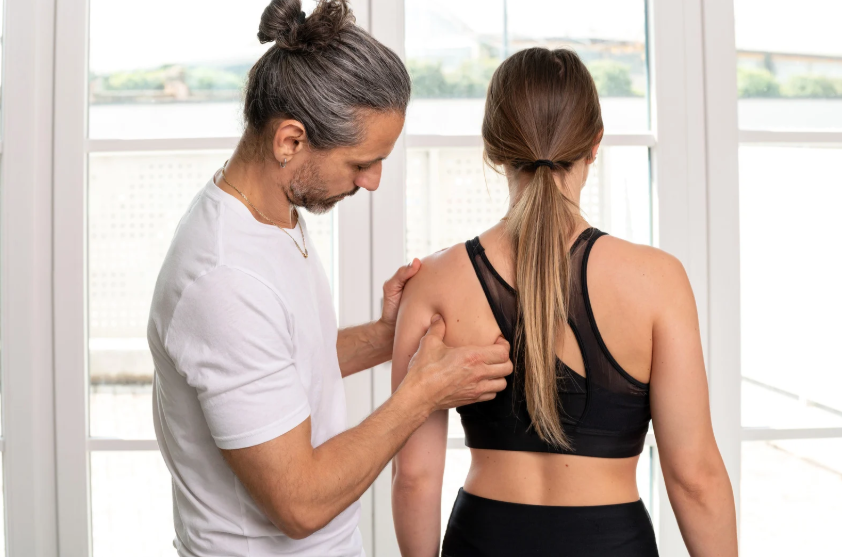
In the world of Streetlifting, where movement precision and joint stability are essential, neglecting scapular mobility can compromise the entire kinetic chain. If the scapulae do not move correctly, the shoulders pay the price with pain, inflammation, or long‑term injuries. Understanding how to improve scapular control means building a solid foundation for pull‑ups, dips, and complex movements.
This guide is aimed at those who have already experienced scapular discomfort, or want to prevent joint problems during training. Through a targeted scapular mobility routine for streetlifting, we will explore why the scapulae are so important, which mistakes to avoid, and how to train them effectively. The movement improves if the scapulae work as they should: let’s get started.
- Why the Scapulae Are Crucial in Streetlifting
- Signs of Ineffective Scapular Control
- How to Improve Scapular Mobility
- Practical Mobility Routine for Streetlifting
- Direct Applications to Pull‑Ups and Dips
- Movement Education and Preventing Compensations
Why the Scapulae Are Crucial in Streetlifting
The Role of the Scapula in the Kinetic Chain
The scapulae are not just two “floating” bones on the back: they are fundamental structures for the proper function of the entire upper limb. In Streetlifting, where every movement requires control and strength, their ability to move freely on multiple planes enables a powerful yet safe gesture. A mobile, well‑positioned scapula provides a stable platform for the shoulder, enhancing force transmission and reducing the risk of joint stress.
When scapular mobility is compromised, a chain of compensations begins at the scapula and spreads to the shoulder, neck, and thoracic spine. For this reason, anyone training seriously in Streetlifting should consider scapular work not as an add‑on, but as an integral part of technical and preventive programming.
When Scapular Mobility Is Insufficient
Many athletes, even advanced ones, realize too late that they have a scapular restriction. Early signs may be subtle: slight asymmetry during a pull‑up, early fatigue in dips, or difficulty “feeling” dorsal activation. But these symptoms often foreshadow more serious issues such as tendinous inflammation, anterior shoulder pain, or limitations in thoracic mobility.
In Streetlifting, where technique matters most, the absence of proper scapular movement results in loss of efficiency and reduced load capacity. The good news? Scapular mobility and control can be trained in a targeted way, with tangible benefits visible within the first few weeks.
Signs of Ineffective Scapular Control
Restricted Scapulae and Postural Rigidity
One of the most common signs of ineffective scapular control is a feeling of “stuckness” between the shoulder blades, often accompanied by rigidity in the upper back. This condition can stem from insufficient thoracic mobility, compensatory movement patterns, or a lack of awareness of scapular movement during training. In practice, the scapulae stop “gliding” on the ribcage as they should, becoming stiff and ineffective.
The result? The body tries to compensate in other ways: overloading the shoulder, engaging the upper trapezius excessively, or altering trunk posture during movements. These changes not only reduce movement effectiveness but also dramatically increase the risk of overload injuries.
Recurring Shoulder and Back Pain
When the scapulae do not work properly, surrounding muscles are forced to “cover” their role. In particular, the rotator cuff and anterior deltoid muscles end up working under constant stress. This leads to common symptoms among Streetlifting practitioners: shoulder pain during pull‑ups, discomfort in dips, neck tension, or early dorsal fatigue.
These signs should not be ignored. They are warning signals indicating a posterior chain imbalance and a problem of mobility and control at the scapular level. Working on prevention is therefore essential to preserve joint integrity long‑term and to progress technically in a safe way.
How to Improve Scapular Mobility
Specific Work on Thorax and Dorsals
To improve scapular mobility, you cannot focus on the scapulae alone: you must also consider the structures that influence their movement, such as the thorax and the dorsal musculature. Good thoracic mobility allows the scapulae to glide without restriction, while a strong, active back ensures control during the most intense phases of the gesture. Including thoracic extension exercises and rhomboid activation in your routine can make a big difference.
Additionally, working on posture “setting” before beginning a training session can prevent many compensations. Awareness of body alignment, combined with breathing and spine mobilization exercises, represents the foundation for any progress in scapular management.
Scapular Activation and Dissociation
A key step is learning to dissociate scapular movement from arm movement. Too often, especially among beginners, there is simultaneous and rigid activation of the shoulders and arms, preventing fine scapular control. Working on this aspect means developing the ability to move the scapulae independently, with fluidity and precision.
Low‑intensity scapular activation exercises – such as scapular push‑ups, scapular pull‑ups, or banded retractions – are excellent tools for developing awareness and control. The goal is not so much to strengthen, but to re‑educate proper movement patterns and “teach” the nervous system how to move the shoulder girdle safely.
Practical Mobility Routine for Streetlifting
Dynamic Warm‑Up with Bands
A good warm‑up is the first step to ensuring adequate scapular mobility and activation before training. Using resistance bands allows for controlled, progressive work that is easy to modulate, perfect for “waking up” the deep muscles of the scapula without overloading them. Exercises like face pulls, paused W pulls, and T‑band raises are great for activating the mid‑lower traps, rhomboids, and serratus anterior.
This phase can also be done bodyweight only, integrating thoracic mobility exercises such as cat‑cow or quadruped rotations to free up scapular movement. The key word is control. Each repetition should be performed with attention to the gesture, without rushing, feeling the scapulae moving correctly along the ribcage.
Bodyweight Exercises for Scapular Control
In addition to bands, there are many effective bodyweight movements for training scapular mobility without equipment. Scapular push‑ups, for example, are a key exercise to learn how to control scapular protraction and retraction in a closed chain. Similarly, scapular pull‑ups teach how to manage the movement before performing a full pull‑up, improving stability and dorsal activation.
Another interesting option is the wall slide, performed with attention to spinal position and fluid scapular movement. Including these exercises at the beginning of each session or as specific work on technical days helps build correct postural habits that transfer directly to performance on bars and parallettes.
Direct Applications to Pull‑Ups and Dips
Scapulae in Pull‑Ups: What to Observe and Correct
In the pull‑up movement, the scapulae play a key role in the initial phase. A proper scapular pull – that is, depression and adduction of the scapulae before pulling with the arms – is what allows full dorsal activation and shoulder stabilization. Unfortunately, many athletes skip this step, initiating the pull directly with the arms and thus losing control and strength.
Observing scapular position in each phase of the movement is essential: at the start, the scapulae should be depressed and retracted; during ascent, maintain dorsal connection; and during descent, control the opening without collapsing. Training these phases slowly and with pauses helps internalize the gesture and reduce the risk of dangerous compensations.
Dips and Scapular Instability: How to Prevent It
During dips, scapular stability is challenged in a different way than in pull‑ups. Here the main risk is excessive protraction or uncontrolled shoulder depression, which places improper load on the glenohumeral joint. This often occurs when stabilizer muscles around the scapula lack strength, or when the athlete lacks movement awareness.
To avoid these issues, it is useful to include assisted dips with a focus on the scapulae, for example starting with isometric holds in full depression, or working low repetitions while paying attention to elbow trajectory. Negative work (controlled descent) also helps a lot in feeling the movement and building a safe, sustainable technique.
Movement Education and Preventing Compensations
How to Listen to Your Body During Training
Real progress in Streetlifting is not measured only in kilos lifted or reps completed, but in the ability to perform each movement with awareness and control. Learning to listen to your body, recognize unnecessary tension, and feel scapular work during execution is what separates a beginner from an advanced athlete. Body awareness is trained just like strength: with consistency, attention, and correct feedback.
A good method is recording your movements, comparing them with correct technical models, or working with an experienced coach who can provide targeted corrections. Every small postural adjustment and every moment of increased movement awareness helps reduce compensation and reinforces cleaner, safer athletic performance.
Control, Awareness, and Technique in the Long Term
Training scapular mobility is not a temporary phase or an optional “extra”: it is an ongoing process that accompanies every stage of athletic development. Even when technique seems consolidated, keeping attention on scapular movement helps prevent regressions, stiffness, and overload injuries. The body changes, adapts, and attention to detail becomes increasingly important.
Those seeking long‑lasting athletic practice must integrate scapular movement education into their routine. Even a short weekly dedicated session or a few exercises inserted into warm‑ups keeps the system active and responsive. It’s a small investment that protects the body, improves performance, and makes every training session more effective.
Comments (0)