
Trolley
You have no items in your shopping cart

 Budgets
 Dumbers
 Discs
Discs
 Benches
 Racks and Rigs
 Weights Holders
 Isotonic machines
 Calisthenics
 Cardio
 Kettlebells
 Flooring
 Gym Set
 Accessories
 Combat
 ARTI MARZIALI
 CONTAINER GYM
 Tug-Of-War
 Used Gym Equipment
 PILATES MACCHINARI
 GINNASTICA ARTISTICA
 CAMPI DA PADEL
 Prodotti in Pronta Consegna
 Informazioni
 IRONMAN
 Gift Card
- Donatif
- General information
- 0 I like it
- 2540 Views
- 0 comments
- gym flooring, safety flooring, gym safety, shock-absorbing materials
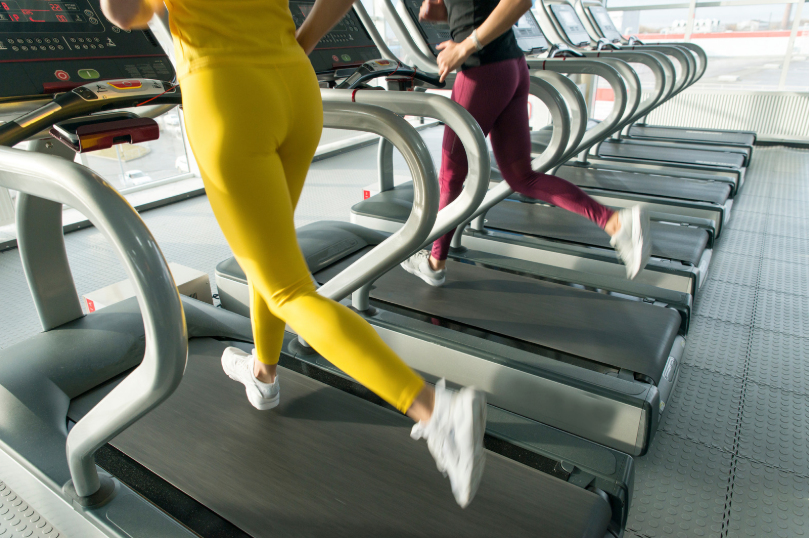
Entry-Level New Cardio or More Solid Refurbished for an Apartment: What Really Makes Sense?
When deciding to add a cardio machine at home, the same question always comes up: is it better to go for a new entry-level product or choose a more solid refurbished machine? The answer is not as obvious as it may seem, especially in an apartment setting, where space, noise, and stability become just as important as price.
Many users start from a simple but misleading assumption: “if it’s new, it must be better.” In reality, this belief often leads to ineffective choices in the medium term. Truly understanding the differences between these two options means avoiding common mistakes and building a functional, sustainable, and long-lasting home gym.
The myth of “new is always better” in a home setting
In the home fitness market, the concept of “new” is often automatically associated with quality and reliability. However, in the entry-level segment, this connection is often weak. Many low-cost new cardio machines are designed for light use, with less robust materials and lighter structures, built to keep costs down rather than ensure durability.
This means that a new but inexpensive treadmill or exercise bike may start showing limitations after just a few months of regular use. Vibrations, instability, and noise become especially noticeable in home environments, where every detail is amplified. In this context, the “new” advantage quickly fades.
Why entry-level new machines can disappoint over time
Entry-level machines are often designed with simplified components, less powerful motors, and lighter frames. This results in reduced stability during use and increased wear over time. In an apartment, where surfaces can amplify vibrations and noise, these limitations become even more evident.
Moreover, the initial perception of convenience can quickly turn into frustration. A machine that doesn’t feel solid or creates discomfort during daily use often ends up being abandoned, completely undermining the initial investment.
The hidden value of refurbished machines
On the other hand, a refurbished machine often comes from a professional or semi-professional category. This means it was originally built with higher construction standards, designed to withstand intensive use. Even after refurbishment, it retains a more solid and reliable structure.
Refurbished equipment suffers from a stigma related to being “used,” but in reality, it often represents a more rational choice. It’s not just about saving money, but about accessing higher quality at the same budget, with tangible benefits in everyday use.
Real differences between entry-level new and more solid refurbished
The main difference between these two categories is not aesthetic, but structural. A cardio machine should not be judged only by its appearance or digital features, but by its ability to ensure stability, consistency, and comfort over time.
In direct comparison, it becomes clear that a more solid refurbished machine offers a more reliable base, while entry-level new products focus mainly on accessibility and immediacy.
Structure, materials, and stability
Refurbished machines often come from gym-grade lines, with heavier frames and higher-quality components. This results in greater stability during workouts, especially at medium to high intensity.
In contrast, entry-level new models tend to be lighter and less structured. While this can be an advantage in terms of portability, it is a significant limitation in terms of both perceived and actual solidity.
Perceived wear vs real wear
One of the main barriers to choosing refurbished equipment is the fear of wear. However, it’s important to distinguish between cosmetic wear and functional wear. A refurbished machine may show superficial signs, but still be perfectly efficient mechanically.
On the other hand, a new entry-level product may look perfect at first, but degrade quickly under stress. The real difference lies in the initial build quality, not the product’s age.
Noise, space, and everyday life in an apartment
In an apartment, the experience of using a cardio machine is very different from that in a gym. It’s not just about working out, but about living with the equipment every day in a limited and shared space.
For this reason, factors such as noise, vibrations, and footprint become critical in the decision-making process.
Vibrations and impact on neighbors
Lighter machines tend to transmit more vibrations to the floor, increasing the risk of disturbing neighbors. This is particularly noticeable with budget treadmills, which can be noisy even at moderate speeds.
A more robust machine, even if refurbished, tends to absorb stress better, providing a quieter and more stable experience. This aspect is often underestimated, but it directly affects the long-term sustainability of training at home.
Home space and real integration
Footprint is not just about dimensions, but about how the machine integrates into the living space. A lighter machine may seem more practical, but can feel unstable. A more solid one takes up space but offers a more reliable presence.
The choice should therefore consider not only the available space, but also the quality of the experience you want to achieve within that environment.
Comparison table for home use
In the direct comparison between entry-level new cardio and more solid refurbished, clear differences emerge that help guide the decision. New products win in immediacy and initial perception, while refurbished machines stand out for solidity, stability, and long-term durability.
If the goal is occasional and light use, a new machine may be sufficient. But for those seeking consistency, comfort, and a real training experience, refurbished often proves to be the more suitable choice for a home environment.
How to truly choose based on your usage
The choice between new and refurbished should never be based solely on price or aesthetics. It’s essential to consider real usage, the living context, and expectations over time.
A conscious approach helps avoid common mistakes and build a truly sustainable solution.
Frequency of use and consistency
Those planning frequent use should lean toward a more solid machine, even if refurbished. Consistent training requires reliability and comfort, elements often lacking in entry-level models.
Conversely, for occasional use, a new machine may be an acceptable option, as long as its limitations are clearly understood.
Budget and investment logic
Budget should not be seen merely as a cost, but as an investment. Spending less initially on a less durable product can lead to higher costs over time, due to replacements and lack of use.
A quality refurbished machine often delivers more for the same budget, turning the purchase into a smarter and more sustainable long-term decision.
Comments (0)