
Trolley
You have no items in your shopping cart

 Budgets
 Dumbers
 Discs
Discs
 Benches
 Racks and Rigs
 Weights Holders
 Isotonic machines
 Calisthenics
 Cardio
 Kettlebells
 Flooring
 Gym Set
 Accessories
 Combat
 ARTI MARZIALI
 CONTAINER GYM
 Tug-Of-War
 Used Gym Equipment
 PILATES MACCHINARI
 GINNASTICA ARTISTICA
 CAMPI DA PADEL
 Prodotti in Pronta Consegna
 Informazioni
 IRONMAN
 Gift Card
- Donatif
- General information
- 0 I like it
- 3166 Views
- 0 comments
READING TIME: 7 MINUTES ➤➤
Pilates for Abdominal Diastasis: Safe and Progressive Protocols
Restoring core functionality after childbirth is a priority for many women who find themselves dealing with abdominal diastasis. This guide was created to offer a scientific, safe and progressive approach based on the Pilates method, with the aim of providing practical tools, reliable tests and a clear vision of the rehabilitation journey. Intended for new mothers and women who want to address diastasis consciously, the article focuses on clinical evidence, body awareness and risk prevention.
- Recognizing abdominal diastasis: symptoms and self-assessment tests
- The Pilates approach: a safe and progressive strategy
- Evidence-based protocols: progression and recovery phases
- Safety first: criteria for protected practice
- Recovering the core consciously: practical conclusions
Recognizing abdominal diastasis: symptoms and self-assessment tests
What diastasis is and why it affects new mothers
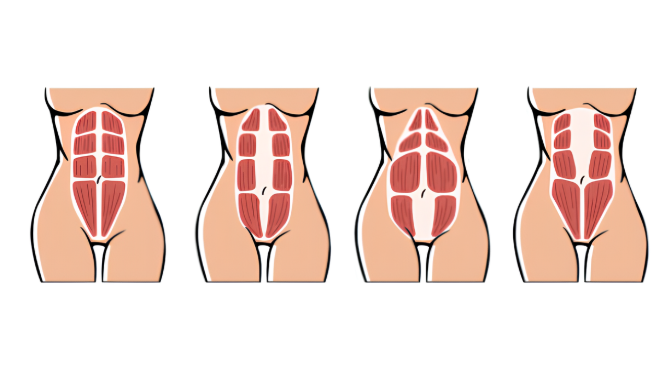
Diastasis recti is a physiological condition that often occurs during or after pregnancy, caused by the separation of the rectus abdominis muscles along the linea alba. In many women, this separation reduces spontaneously after childbirth, but in some cases it persists and may cause symptoms such as abdominal swelling, core weakness, back pain or postural problems. Understanding the nature of this condition is the first step in addressing it without fear, but with appropriate tools designed for women’s health.
How to perform a safe test to identify diastasis
A simple self-assessment test can provide initial indications of diastasis: lying on your back with knees bent, slightly lift your head from the floor and use your fingers to check the distance between the rectus muscles. However, this method does not replace a clinical evaluation. For a reliable diagnosis, it is always advisable to consult experienced professionals such as physiotherapists specialized in pelvic floor and core rehabilitation, who can use tools such as functional ultrasound or more in-depth palpation tests.
The Pilates approach: a safe and progressive strategy
Why Pilates is recommended in the treatment of diastasis
Pilates is recognized as one of the most effective and safest methods for core recovery after childbirth, thanks to its focus on breathing, motor control and deep abdominal strengthening. When adapted by professionals trained in diastasis management, the Pilates approach allows activation of the transverse abdominis muscle, which is essential for trunk stability and spinal protection. Through slow, mindful and progressive movements, it promotes the closure of the linea alba and improves the quality of the connective tissue that forms it.
Differences between traditional and rehabilitative Pilates
It is important to distinguish between “classical” Pilates and Pilates specifically designed for postnatal rehabilitation. In the first case, some exercises may be counterproductive or even harmful for individuals with uncompensated diastasis. Rehabilitative Pilates, on the other hand, includes a precise selection of exercises and constant attention to diaphragmatic breathing, intra-abdominal pressure management and pelvic floor activation. Only in this way can a safe and truly effective recovery path be ensured.
Evidence-based protocols: progression and recovery phases
Initial phase: deep core activation
During the first phase of recovery, the goal is to restore neuromuscular connection with the deep abdominal muscles, such as the transverse abdominis and the pelvic floor. Guided breathing exercises, isometric activations and unloaded positions are essential to prepare the body without generating excessive pressure on the linea alba. This phase may last several weeks and represents the foundation of all subsequent work.
Intermediate phase: targeted exercises and neuromuscular control
Once basic activation has been restored, more complex and functional movements are gradually introduced while continuously monitoring the response of the core. Exercises such as the bridge, modified dead bug and controlled trunk rotations encourage coordination between abdominal and pelvic muscles. In this stage, it is crucial to listen to the body, avoid compensatory movements and maintain focus on movement quality.
Advanced phase: stability, posture and return to functionality
In the advanced stage, the focus shifts to restoring overall postural functionality. Standing movements, controlled loads and dynamic sequences of adapted Pilates are introduced. The objective is to restore balance, stability and confidence in everyday movements. Only a well-structured and supervised progression can lead to a complete and lasting recovery.
Safety first: criteria for protected practice
Common mistakes to avoid during practice
Among the most common mistakes in postnatal Pilates practice are excessive haste, the use of inappropriate exercises and the underestimation of symptoms. Performing traditional abdominal exercises (such as crunches or planks) without proper control can worsen muscle separation. Ignoring warning signs such as pain, tension or outward pressure is also risky. The key word remains: gradual progression.
When to consult a qualified professional
The support of a Pilates instructor trained in the treatment of abdominal diastasis or a specialized physiotherapist is essential to design a safe and personalized plan. Beyond technical guidance, a professional can provide psychological support, encouragement and monitoring of progress. In more complex cases, especially those associated with pelvic dysfunctions, a multidisciplinary team approach is the safest choice.
Recovering the core consciously: practical conclusions
Listening to the body and maintaining continuity
Postpartum recovery is not a race against time but a journey to be approached with patience, consistency and awareness. Every body has its own pace, and respecting it helps prevent relapses and achieve lasting results. Pilates offers a unique opportunity to reconnect with oneself and regain confidence in the body, especially when integrated into a holistic and personalized vision of women’s well-being.
The importance of personalization after childbirth
There is no single protocol that works for everyone: the quality of the intervention depends on the ability to adapt it to the specific needs of each woman. Age, type of delivery, previous activity level and associated symptoms are just some of the factors to consider. For this reason, a personalized approach based on scientific evidence and guided by qualified professionals is the only way to ensure an effective return to full postpartum core functionality.
Comments (0)