
Trolley
You have no items in your shopping cart

 Budgets
 Dumbers
 Discs
Discs
 Benches
 Racks and Rigs
 Weights Holders
 Isotonic machines
 Calisthenics
 Cardio
 Kettlebells
 Flooring
 Gym Set
 Accessories
 Combat
 ARTI MARZIALI
 CONTAINER GYM
 Tug-Of-War
 Used Gym Equipment
 PILATES MACCHINARI
 GINNASTICA ARTISTICA
 CAMPI DA PADEL
 Prodotti in Pronta Consegna
 Informazioni
 IRONMAN
 Gift Card
- Donatif
- General information
- 0 I like it
- 819 Views
- 0 comments
- gym flooring, safety flooring, gym safety, shock-absorbing materials
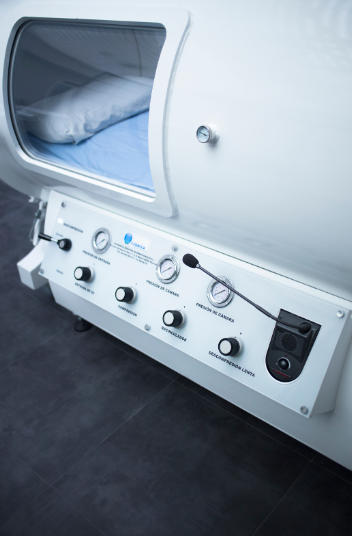
Portability vs Stability: Analysis of Weight and Structure in Hyperbaric Chambers
When evaluating a portable vs fixed hyperbaric chamber, weight is often the first specification that attracts attention. A lightweight structure seems easier to move, simpler to assemble, and less demanding to place in a home or professional space. However, in a technical comparison between models, weight should not be interpreted as an automatic advantage. In many cases, it only reflects part of the design, while overall quality depends on materials, frame, closing system, stability, and footprint management.
Choosing between a portable solution and a fixed structure therefore requires a broader assessment. An athlete who travels frequently may have different needs from a homeowner with a dedicated space, just as a sports center may prioritize continuity of use and long-term solidity. A lightweight hyperbaric chamber can be functional in mobile contexts, but a more stable structure can offer greater operational consistency when use is frequent, planned, and set within a defined environment.
Why weight does not tell the whole story about the quality of a hyperbaric chamber
Weight as a partial indicator
The weight of a hyperbaric chamber is a useful parameter, but it is not sufficient to define the quality of a model. A lighter chamber may have been designed to support quick relocation, reduce logistical complexity, and simplify positioning in domestic environments. However, this does not mean it is always the most suitable solution. In a technical evaluation, weight must be considered together with the load-bearing structure, the quality of the materials, stability during use, and the resistance of components subject to mechanical stress.
An excessively lightweight structure may be practical to move, but less convincing when the main requirement is continuity of use. For this reason, the question should not only be how much a chamber weighs, but why it weighs that much. Greater weight may come from a more solid frame, more resistant materials, or a design focused on durability. In other words, lightness is an advantage only when it does not compromise stability, perceived safety, and structural reliability.
Build quality and perceived safety
The structure of the hyperbaric chamber directly affects the feeling of control, ease of management, and user confidence. Elements such as closures, joints, external surfaces, supports, and the base must be evaluated carefully, because they determine how the device behaves over time. A stable chamber, well assembled and built with materials consistent with the intended use, communicates solidity from the first contact, without needing generic promises or excessive claims.
For a home user with limited space, perceived safety also depends on predictability. The chamber must be positioned in an orderly way, without obstructing passageways or requiring constant adjustments. For a professional athlete traveling frequently, on the other hand, confidence comes from the product’s ability to be assembled and managed consistently. In both cases, risk reduction does not depend only on lightness, but on the consistency between structure, environment, and frequency of use.
Portable vs fixed hyperbaric chamber: construction differences
Materials and technologies used
When comparing a portable vs fixed hyperbaric chamber, materials are one of the most important factors. Portable chambers are generally designed to offer flexibility, ease of transport, and a smaller footprint when not in use. This often involves lighter structures, flexible surfaces, and modular systems. Rigid or fixed chambers, on the other hand, tend to prioritize a more stable configuration, with a structure less subject to frequent movement and better suited to continuous use in a dedicated environment.
The difference is not only about the external shape, but about how each component works together with the others. A rigid structure can offer a greater feeling of stability, while a portable one must balance resistance, foldability, and ease of assembly. For this reason, the concept of build quality cannot be separated from the intended use scenario. A model designed to be moved frequently must be evaluated for modularity and operational simplicity; a fixed model must be assessed above all in terms of robustness, durability, and integration into the space.
How structure affects stability and durability
The stability of a hyperbaric chamber depends on the structure’s ability to maintain predictable behavior during use. A well-designed base, balanced weight distribution, and consistent support components reduce unwanted movement and make the experience more orderly. This aspect becomes particularly relevant when the chamber is placed in a home, professional studio, or sports environment where every element must work alongside furniture, passageways, and operational areas.
Durability, on the other hand, is measured over time and concerns the overall strength of the design. Repeated assembly, frequent transport, and changes in environment can affect the most stressed parts of a portable structure. A fixed chamber reduces some of these stresses because it remains installed more stably and requires less movement. This does not mean that a portable chamber is less valid in absolute terms, but that the hyperbaric chamber structure must be chosen according to the real rhythm of use, not only according to initial convenience.
Hyperbaric chamber weight: advantages and limits
When a lightweight structure is an advantage
A lightweight hyperbaric chamber can be a sensible choice when mobility is the priority. For a professional athlete moving between competitions, training camps, workouts, and periods away from home, the possibility of transporting the device more easily can become a concrete criterion. In these cases, modularity makes it possible to adapt use to different contexts, reducing dependence on a single fixed space and simplifying logistics.
Lightness can also be valuable in a home setting, especially when the available space is limited or shared. A structure that is easier to move can be positioned with less impact, managed more flexibly, and integrated into environments not specifically designed for it. However, portability should be evaluated together with assembly quality and final stability. A lightweight chamber is truly useful when it remains simple to manage without creating uncertainty, disorder, or frequent maintenance needs.
When a more solid structure is preferable
A more solid structure becomes preferable when the chamber is used regularly and in a stable space. In these contexts, the main advantage is not moving the device quickly, but relying on a dependable, orderly, and consistent presence over time. A fixed or more robust model may be better suited to those who have a dedicated room, to a sports center, or to a professional environment where frequency of use is high.
Solidity should not be interpreted as a simple increase in weight, but as a balance between materials, design, and structural behavior. A heavier chamber may convey greater stability, but only if the weight corresponds to well-considered construction. In a conscious purchasing decision, the point is not to look for the lightest or most imposing model, but to identify the hyperbaric chamber with the most coherent relationship between footprint, perceived safety, frequency of use, and available space.
Assembly, transport, and footprint
Home installation
The assembly of a hyperbaric chamber is a central aspect for anyone considering home installation. A home does not always offer dedicated technical spaces, wide passageways, or rooms that can remain permanently free. For this reason, it is necessary to consider not only the dimensions of the device during use, but also the area required to access it, manage it, and keep it in order. The real footprint includes the volume occupied by the chamber, but also the operational space around it.
For a homeowner with limited space, portability may seem like the most immediate answer. However, if assembly requires time, attention, or repeated adjustments, the initial advantage may be reduced. A fixed structure, although it takes up more space, may prove more convenient in the long term if placed in a dedicated environment. The correct evaluation therefore starts from a practical question: does the chamber need to be moved often, or should it remain ready for use in a stable way?
Needs of athletes traveling
For a professional athlete traveling frequently, the footprint of the hyperbaric chamber takes on a different meaning. It is not only about the available square meters, but about compatibility with travel, changes of location, preparation times, and the need to quickly restore a routine. A portable chamber may be more suitable when the priority is maintaining operational continuity even away from the usual location, provided the structure is designed to withstand repeated assembly and disassembly.
Transportability, however, should not overshadow the solidity of the components. Every movement introduces stresses, potential impacts, environmental variations, and the need for reconfiguration. In this scenario, quality does not coincide with the lowest weight, but with the chamber’s ability to remain reliable even after dynamic use. For the athlete, true portability is a combination of manageable weight, consistent structure, reasonable assembly times, and stability once installed.
How to choose the solution best suited to your needs
Assessing available space and frequency of use
The choice between a portable and fixed chamber should start from two concrete questions: how much space is available and how often will it be used? If the space is temporary, shared, or difficult to dedicate permanently, a portable solution can offer greater adaptability. If, on the other hand, there is a stable, orderly, and easily accessible room, a more solid structure can become more rational. In this sense, the portable vs fixed hyperbaric chamber comparison is not an absolute opposition, but a contextual evaluation.
Frequency of use radically changes the weight of the decision. A device used occasionally may justify greater attention to compactness and ease of storage. A device used often instead requires stability, management comfort, and less need for reconfiguration. The most solid choice is the one that reduces daily friction, avoids continuous compromises, and allows the chamber to be integrated into the space without turning it into an element that is difficult to manage.
The importance of build quality and safety
Hyperbaric chamber safety must be evaluated through technical data, materials, stability, and design consistency. It is not enough to look at the external appearance or compare the declared weight. It is useful to verify how access points are built, which elements ensure stability, how operating pressure is managed, and how suitable the product is for the intended scenario. A serious evaluation does not stop at the commercial promise, but considers the user experience over time.
In a purchase of this type, the supplier’s reputation and the quality of technical support also play an important role. Reviews, assistance, clear information, and the presence of a competent point of contact help reduce uncertainty. Social proof does not replace the technical data sheet, but it helps interpret it better. When a structure is designed carefully, explained transparently, and supported by adequate service, the choice becomes clearer and less dependent on a single parameter such as weight.
The technical value of a well-considered choice
Beyond immediate convenience
A hyperbaric chamber should not be chosen only because it appears easy to move or because it takes up little space at first glance. Immediate convenience is important, but it must be balanced with structural quality, stability, and the device’s ability to adapt to real use. A chamber that is too light for its intended scenario may become less practical over time, while a more robust structure may prove more efficient when the environment is stable and use is frequent.
The key point is to avoid superficial evaluations. A lightweight hyperbaric chamber can be the right solution for mobility, travel, and dynamic spaces; a fixed chamber may be more coherent for dedicated environments, continuity of use, and greater stability. Weight alone does not define quality. Quality emerges from the relationship between design, materials, assembly, footprint, assistance, and reduction of operational risk.
Solidity, modularity, and context of use
The best choice comes from the balance between solidity and modularity. A modular structure makes it possible to adapt to different spaces and needs, while a solid structure ensures greater consistency when the device becomes a stable part of the environment. Neither feature is superior in absolute terms. They become relevant only when read in relation to the person using the chamber, the place where it is installed, and the frequency with which it is managed.
For anyone evaluating a purchase, the most useful criterion is to observe the entire usage cycle: product arrival, assembly, placement, daily management, possible transport, and assistance over time. A well-chosen hyperbaric chamber is not necessarily the lightest, but the one that weighs enough to offer stability, reliability, and practicality in the intended context. Exploring the technical characteristics and comparing the available solutions makes it possible to navigate more precisely between portable models, fixed structures, and intermediate configurations.
Comments (0)