
Trolley
You have no items in your shopping cart

 Budgets
 Dumbers
 Discs
Discs
 Benches
 Racks and Rigs
 Weights Holders
 Isotonic machines
 Calisthenics
 Cardio
 Kettlebells
 Flooring
 Gym Set
 Accessories
 Combat
 ARTI MARZIALI
 CONTAINER GYM
 Tug-Of-War
 Used Gym Equipment
 PILATES MACCHINARI
 GINNASTICA ARTISTICA
 CAMPI DA PADEL
 Prodotti in Pronta Consegna
 Informazioni
 IRONMAN
 Gift Card
- Donatif
- General information
- 0 I like it
- 2454 Views
- 0 comments
READING TIME: 10 MINUTES ➤➤
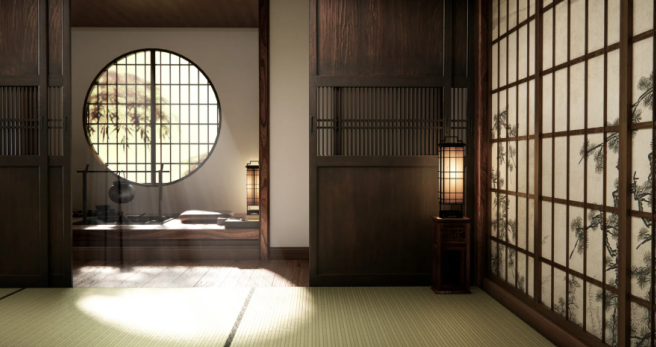
Bringing an authentic piece of Japan into your living room is now possible thanks to the tatami, a solution that combines essential design and natural well-being. From its ancient origins in traditional Japanese homes to the most refined modern interiors, tatami has evolved while preserving its original essence. Beyond being a cultural symbol, it now represents a true choice of comfort and authenticity for those seeking a natural, breathable floor with strong aesthetic value. In this article, we’ll explore how tatami can transform domestic spaces into harmonious and functional environments.
From material selection to its various applications – from the futon and Japanese bed to modular panels – we’ll analyze everything you need to choose the right tatami for your home. A useful guide for style-conscious homeowners as well as interior designers looking for evocative and timeless furnishing solutions.
- Japanese tatami: between culture and symbolism
- Tatami as a modern furnishing choice
- Types of tatami for home use
- How to integrate tatami into your home
Japanese tatami: between culture and symbolism
Historical origin and meaning
The Japanese tatami originated centuries ago as the typical flooring of aristocratic residences and temples. Made with a core of compressed straw and a woven rush (igusa) covering, tatami represented a symbol of social and cultural distinction. Over time, it spread to ordinary homes while maintaining a strong symbolic value tied to order, discipline, and connection with nature. Even today, room size in Japan is measured in “jo,” meaning the number of tatami mats, highlighting its central role in daily life.
Its thickness, stitching finishes, and the distinctive scent of fresh rush are defining characteristics that immediately evoke Japanese tradition. More than just a furnishing element, tatami is part of a cultural universe that values silence, gesture, ritual, and simplicity.
The importance of tatami in Japanese daily life
In traditional Japanese homes, tatami is not just flooring: it is a multifunctional space. It is used for sleeping, eating, and meditating. Its use reflects a philosophy of living based on harmony, flexibility, and respect for space. Each tatami room transforms according to needs: simply move a futon to create a sleeping area or open a low table to welcome guests and share tea.
This intimate and modular dimension is one of the reasons why tatami continues to fascinate in Western contexts. Those who choose tatami for their home are not just seeking an aesthetic, but a true essential lifestyle, rooted in simplicity and connection with natural materials.
Tatami as a modern furnishing choice
Why more and more homes choose tatami
In recent years, tatami for home use has gained a prominent role in contemporary interior design. It is not just an aesthetic trend, but a practical response to the need for comfort, well-being, and sustainability in living spaces. Its natural qualities – thermal insulation, breathability, and absence of chemicals – make it ideal for those seeking a healthy, relaxing, and welcoming environment. With its low profile and firm yet soft surface, tatami also promotes a more natural posture and a direct connection with the ground, in line with Eastern philosophies of well-being.
In many modern homes, tatami is used to create reading corners, meditation spaces, or even minimalist sleeping areas. Its use does not necessarily require Japanese-style furnishings: it can be integrated with Scandinavian, ethnic, or contemporary styles, creating harmonious and original results.
Harmony between design and well-being
The beauty of tatami lies in its ability to convey an immediate sense of balance and calm. Its presence changes the perception of space: it softens contours, reduces noise, and invites a slower pace. Those looking to bring a sense of tranquility and authenticity into their home will find the Japanese tatami a coherent and functional choice.
From a design perspective, tatami is highly versatile: it can cover entire rooms or define specific functional areas. Interior designers and architects appreciate its modularity and the way it pairs with materials such as light wood, raw stone, or natural fabrics. A solution that blends tradition and modernity through empathetic design and everyday comfort.
Types of tatami for home use
Tatami for beds and futons
One of the most common uses of tatami in the home is in the sleeping area. Paired with a traditional futon, tatami provides a solid, breathable, and natural base for rest. This combination, deeply rooted in Japanese culture, promotes deep sleep thanks to its uniform support and lack of synthetic components. The tatami bed is increasingly appreciated in the West for its minimalist design, compact size, and ergonomic benefits.
Available in standard or custom modules, tatami panels can be placed directly on the floor or inserted into low bed frames, often made of light wood. This solution offers a perfect balance between functionality, aesthetics, and well-being, especially for those seeking a simple, orderly, and uncluttered bedroom environment.
Modular solutions and wooden tatami
In addition to the classic rice-straw-filled model, modern variants are designed to meet contemporary housing needs. Wooden tatami, for example, offers a more rigid structure, ideal for those seeking greater stability or wishing to integrate tatami into non-traditional settings. These modules are perfect for creating relaxation areas, reading corners, or small multifunctional spaces with a Zen style.
Modular solutions provide even greater flexibility: panels can be easily positioned and removed, allowing the space to adapt to changing needs. Some models include modern finishes, solid wood edges, or moisture-resistant coatings, while maintaining a connection to traditional Japanese aesthetics. A practical solution for those who want to reinterpret tatami in a contemporary way without sacrificing natural material quality.
How to integrate tatami into your home
Ideal rooms and pairing tips
Integrating tatami into your home does not require major renovations, but rather a clear vision of the space and desired effect. The most suitable rooms are those dedicated to relaxation, such as bedrooms, studies, reading areas, or even small yoga or meditation spaces. Thanks to its simple and natural aesthetic, tatami pairs perfectly with materials like light wood, neutral walls, linen, and raw cotton, creating warm and harmonious environments.
For those who appreciate essential and functional design, tatami can become the key element of Japanese or Nordic-inspired interiors. Even in modern urban settings, adding tatami modules can create a personal “refuge zone,” a place to slow down and restore balance. The arrangement of panels – symmetrical or free-form – allows creative use of geometry and texture while maintaining visual coherence.
Maintenance and durability over time
One of the most common questions concerns tatami maintenance. Despite its delicate appearance, tatami is durable and long-lasting if properly cared for. It is important to avoid prolonged exposure to moisture and ensure good room ventilation. Cleaning can be done with a slightly damp cloth or a vacuum cleaner, following the direction of the weave.
Over time, the color of the rush may gradually turn amber: a natural process that does not affect performance but instead gives the tatami a lived-in, authentic look. In case of localized wear, individual panels can be replaced. With proper care, tatami can last more than ten years while maintaining its aesthetic and functional value.
Comments (0)