
Trolley
You have no items in your shopping cart

 Budgets
 Dumbers
 Discs
Discs
 Benches
 Racks and Rigs
 Weights Holders
 Isotonic machines
 Calisthenics
 Cardio
 Kettlebells
 Flooring
 Gym Set
 Accessories
 Combat
 ARTI MARZIALI
 CONTAINER GYM
 Tug-Of-War
 Used Gym Equipment
 PILATES MACCHINARI
 GINNASTICA ARTISTICA
 CAMPI DA PADEL
 Prodotti in Pronta Consegna
 Informazioni
 IRONMAN
 Gift Card
- Donatif
- General information
- 0 I like it
- 2548 Views
- 0 comments
READING TIME: 7 MINUTES ➤➤
Traditional Japanese Tatami: History, Materials, and Cultural Meaning
At the heart of Japanese homes, among sliding walls and soft atmospheres, the traditional tatami represents far more than a simple walking surface. It is an element that brings together architecture, spirituality, and cultural identity, defining a space that is both physical and symbolic. This ancient rush flooring has been the silent protagonist of Japanese daily life for centuries, expressing a deep balance between functionality and philosophy.
Through a journey into history, materials, and the meaning of tatami, we can discover how this simple rectangular module has taken on a central role in shaping interiors, domestic rituals, and Japan’s aesthetic culture. From the dojo to the tea room, from Zen temples to contemporary homes, tatami still stands today as a symbol of authenticity and respect for tradition.
- Tatami as a defining element of the Japanese home
- Historical origins of tatami: from noble roots to widespread use
- Tatami materials: between craftsmanship and sustainability
- The cultural meaning of tatami in daily life
- Tatami today: preservation and reinterpretation
Tatami as a defining element of the Japanese home
A symbol of order, respect, and spirituality
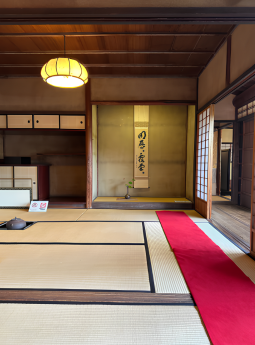
The Japanese tatami is not just an architectural choice, but reflects a value system deeply rooted in Japanese culture. Room layouts, the habit of walking barefoot, and the organization of living spaces all revolve around the presence and arrangement of tatami. Each mat, typically measuring around 90x180 cm, becomes a unit of measurement not only for room size but also for its social and ritual use.
The modular nature of tatami has fostered the creation of orderly and harmonious environments, where every element has meaning and purpose. Stepping onto tatami naturally induces a sense of mindfulness, encouraging measured gestures and respectful interactions. This meditative atmosphere makes tatami not only a functional surface, but a true everyday spiritual space.
Where tatami is found: domestic and ritual spaces
Traditionally, tatami is found in rooms called washitsu, interior spaces designed for rest, tea ceremonies, or hospitality. Even today, many Japanese homes retain at least one tatami room, considered the quiet heart of the house. Here, family activities, moments of relaxation, or formal gatherings take place in an environment that encourages calm and introspection.
Beyond domestic settings, the traditional tatami is an integral part of places with high symbolic value, such as martial arts dojos, Buddhist temples, or tea rooms. In each of these contexts, tatami helps create an atmosphere of discipline, spirituality, and respect, reinforcing its role as a bridge between physical space and cultural meaning.
Historical origins of tatami: from noble roots to widespread use
The use of tatami in aristocratic residences
The earliest historical traces of tatami date back to the 8th century, when it was used exclusively by Japan’s aristocratic classes. At the time, it did not cover entire floors but was used as a movable mat for sitting or sleeping in noble residences. Tatami was a symbol of status and refinement, and its presence signaled belonging to a cultured and powerful elite.
During the Heian period (794–1185), tatami became increasingly important as a marker of social distinction. Only members of the imperial court or high-ranking officials could afford rooms fully covered with tatami, whose materials and craftsmanship were carefully selected. The connection between tatami history and social hierarchy was firmly established during this era.
The democratization of tatami in the Edo period
It was during the Edo period (1603–1868) that traditional tatami began to spread among merchant and artisan classes. With the growth of cities and the standardization of housing, tatami became more accessible, turning into a common feature of everyday Japanese life. New production techniques and the rise of specialized workshops made it more affordable and widespread.
This transition marked a turning point: from an elite object to a cornerstone of Japanese domestic identity. Homes were designed around tatami modules, and with them, customs, rituals, and practices that still endure today were consolidated. The democratization of tatami is key to understanding its deep cultural significance.
Tatami materials: between craftsmanship and sustainability
Rice straw, rush, and natural bindings
The core of the Japanese tatami consists of a compressed rice straw base, called tatami-doko, covered with a woven rush mat known as tatami-omote. The edges are finished with fabric borders, often decorated with geometric patterns or auspicious symbols. Each material is carefully chosen to ensure breathability, durability, and adherence to the aesthetic principles of wabi-sabi.
This combination of natural materials not only provides comfort and insulation but also integrates harmoniously with the environment. The rush used for the surface is mainly grown in the Kumamoto region, while the rice straw comes from local harvests. This entirely artisanal supply chain makes tatami a remarkable example of sustainability and tradition.
The artisan’s role: traditional craftsmanship and production techniques
Creating a traditional tatami is a complex process requiring refined manual skills and knowledge passed down through generations. Tatami craftsmen, known as tatami-ya, follow a precise protocol of measuring, cutting, assembling, and stitching to ensure accuracy and longevity. Each mat is custom-made to fit the exact layout of the room where it will be placed.
Even today, despite the rise of industrial versions, handcrafted tatami are still valued for their superior quality and respect for tradition. Classical techniques are sometimes combined with modern innovations, such as hypoallergenic materials or anti-humidity treatments, but the spirit of the original tatami remains intact, preserved by the skilled hands of master artisans.
The cultural meaning of tatami in daily life
Gestures and behavior on tatami: etiquette and unwritten rules
Stepping on the edge of a traditional tatami is considered impolite. Sitting with properly folded legs, entering barefoot, and avoiding abrupt movements are all part of an unwritten etiquette that reflects respect for the space and for others. Tatami encourages composed posture and mindful behavior.
These rules are not mere formalities but stem from a deep relationship with the environment. Walking on tatami invites silence, slowness, and presence. It is not just flooring, but a ritual surface that guides daily behavior. Even today, during tea ceremonies or formal gatherings, respecting tatami etiquette is a sign of good manners and cultural awareness.
Tatami as a mental and symbolic space
Beyond its practical function, the meaning of tatami extends into a more subtle and symbolic dimension. Its modularity, the natural scent of rush, and the tactile sensation under bare feet all contribute to creating an environment that promotes inner calm and connection with the present. For many Japanese people, tatami is a mental space—a place to regain balance and harmony.
This symbolism is also reflected in traditional arts such as haiku poetry, ikebana, or Nō theater, which often take place on or are inspired by the aesthetics of tatami. Its role in Japanese culture goes far beyond the domestic sphere: it represents a spatial and spiritual code capable of expressing an entire worldview.
Tatami today: preservation and reinterpretation
Modern homes, modular tatami, and a return to origins
In contemporary Japan, the presence of Japanese tatami has declined, especially in urban homes. However, many families still choose to keep at least one tatami room, recognizing its aesthetic and symbolic value. Hybrid solutions have emerged, with modular tatami that are easy to assemble and disassemble, suited to modern life while remaining faithful to tradition.
At the same time, there is a renewed interest in traditional living practices, often linked to sustainability and well-being. Tatami is once again seen as a symbol of a slower, more mindful lifestyle that respects the environment, attracting the attention of architects and designers worldwide.
Tatami as an icon in contemporary Japanese design
Even beyond residential settings, tatami has become a true icon of Japanese design. It is reinterpreted in public spaces, luxury hotels, yoga studios, and even offices, where the goal is to recreate an atmosphere of calm and focus. Its visual and sensory impact remains unmistakable, instantly evoking a deep connection with Japanese culture.
These reinterpretations do not distort the essence of tatami but rather highlight its versatility. From traditional Japanese culture to global minimalism, tatami continues to tell an ancient story of respect, balance, and connection with nature. Today more than ever, it represents a bridge between past and future, between ritual and innovation.
Comments (0)