
Trolley
You have no items in your shopping cart

 Budgets
 Dumbers
 Discs
Discs
 Benches
 Racks and Rigs
 Weights Holders
 Isotonic machines
 Calisthenics
 Cardio
 Kettlebells
 Flooring
 Gym Set
 Accessories
 Combat
 ARTI MARZIALI
 CONTAINER GYM
 Tug-Of-War
 Used Gym Equipment
 PILATES MACCHINARI
 GINNASTICA ARTISTICA
 CAMPI DA PADEL
 Prodotti in Pronta Consegna
 Informazioni
 IRONMAN
 Gift Card
- Donatif
- General information
- 0 I like it
- 1178 Views
- 0 comments
- gym flooring, safety flooring, gym safety, shock-absorbing materials
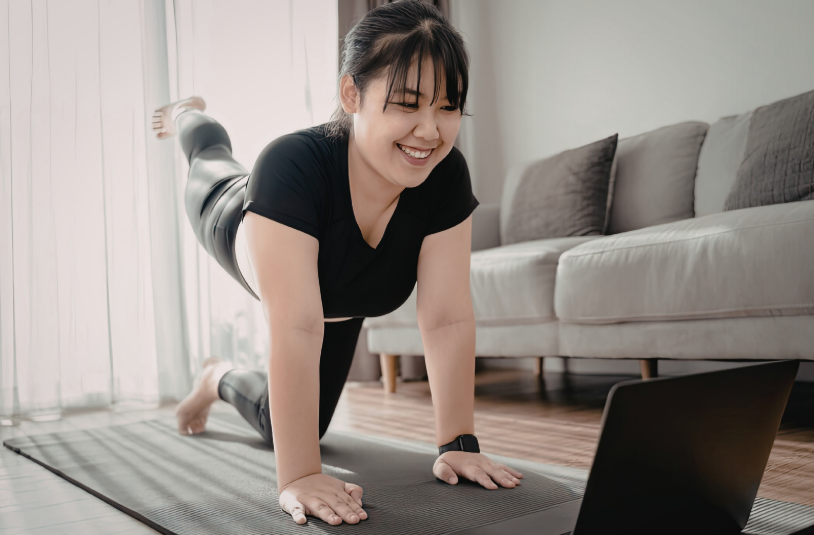
Home Fitness Corner: Standard Modular Kit or Custom Mini Solution?
Setting up a home fitness corner doesn’t simply mean finding a free spot to place a bench, some plates, and a mat. In a small domestic space, every choice matters more: opening a door, moving around furniture, folding a bench, or shifting a mat can determine whether your setup is used consistently or quickly becomes cluttered.
The most common dilemma revolves around choosing between a standard modular kit and a custom mini solution. Standard options are often quicker to purchase, easier to assemble, and simpler to adjust over time. Custom solutions, on the other hand, can address specific constraints like awkward layouts, unused niches, or the need for better organization and accessibility. The right choice depends not just on square meters, but on how that space is actually used.
What it really means to organize a fitness corner in a small space
Perceived footprint vs actual footprint: where mistakes begin
In small home environments, the most common mistake is evaluating only the static footprint of equipment. A folded bench, a compact rack, or a pair of dumbbells may seem manageable on paper, but real use requires space to move, load plates, switch exercises, and store everything without obstacles. That’s why the right question isn’t “how much space does it take?” but “how much space does it need to work properly?”. The key metric is usable footprint, which includes equipment, body movement, and accessibility.
Perceived footprint, on the other hand, is visual. A corner filled with multiple small items can feel more chaotic than a slightly larger but well-organized setup. In an entry-level home gym, this matters because the fitness space often shares areas with living rooms, bedrooms, or multi-purpose zones. A compact but messy setup can be less practical than a simple, structured one. The quality of organization matters as much as the compactness of each item.
Why small spaces amplify poor decisions
When space is limited, every poorly planned element creates friction. A foldable bench without a proper storage spot, a poorly cut EVA mat, or overly deep storage can disrupt the training flow. The issue isn’t just aesthetic: if starting a workout requires moving furniture, clearing space, and searching for accessories, the fitness corner loses its main purpose—making training accessible.
Small spaces don’t always require custom solutions. Sometimes they simply demand more careful selection of standard components. A standard modular kit can work perfectly when rack, bench, flooring, and storage are chosen as parts of a unified system. Conversely, a custom mini solution becomes useful when the limitation isn’t size, but shape—irregular walls, tight passages, or the need to integrate equipment with existing furniture.
Standard modular kit: when it really works
Structure, compactness, and logic of modular systems
A standard modular kit works best when the space has regular proportions and allows for a stable training area. In this case, elements like compact racks, foldable benches, EVA flooring, and plate storage can create an organized setup without requiring special modifications. The main advantage is simplicity: components are designed to be purchased, assembled, and integrated بسهولة. For entry-level users, this reduces the risk of overcomplicating the project.
Modularity also allows for growth. You can start with a basic setup and add accessories over time without rethinking everything. This approach suits those still refining their routine or figuring out which exercises they’ll actually use. A well-chosen standard system isn’t generic—it becomes effective when every component has a clear function, a defined place, and a balanced relationship with movement space.
Hidden limits of standard solutions in very small spaces
Standard setups show limitations when the space doesn’t allow natural use. A compact bench might technically fit, but become inconvenient if it must be unfolded in a tight passage every time. A shallow rack may seem ideal, but limit movement or plate loading. In these cases, declared compactness doesn’t equal real compactness.
Another limitation is organization. Standard kits often solve main equipment needs but overlook smaller items like bands, collars, mats, or accessories. In a home setting, these details remain visible and can create clutter. To avoid false optimization, standard setups should be evaluated as complete systems: setup, use, cleaning, storage, and visual impact when not in use.
Custom mini solution: what changes in practice
Targeted adaptation: where custom really makes a difference
A custom mini solution makes sense when a small adjustment significantly improves order, access, or usability. This doesn’t require complex design: it could be a lightweight storage unit shaped to a wall, a platform sized for a niche, or a dedicated support for plates and accessories. The value of customization lies in precision, not complexity.
Custom solutions are particularly useful when the space has constraints that standard products can’t solve. A corner near a window, a short wall, a recess, or a narrow but long area may require tailored choices. In these cases, customization isn’t about filling space better, but about ensuring proper use. Done correctly, it reduces compromises and makes training feel more natural within the home.
When custom becomes unnecessary or counterproductive
Custom isn’t automatically better. If the goal is simply to start training with essential equipment, an over-designed solution can increase time, cost, and rigidity without real benefits. In entry-level home gyms, locking the space too early into specific configurations can limit flexibility as routines evolve.
The risk is chasing a perfect setup instead of a usable one. In apartments or shared spaces, the priority is often simplicity, order, and minimal visual impact. If a custom solution is difficult to modify, it may reduce future adaptability. The real comparison isn’t “cheap standard vs better custom,” but modular approach vs targeted adaptation, based on actual daily needs.
Direct comparison: modular vs custom
Accessibility, order, and workflow
In direct comparison, a modular kit suits users who can dedicate a stable corner and want a quick, organized, and scalable solution. It works best when the workflow is linear: enter, set up, train, and store without unnecessary movement. A custom mini solution is more useful when accessibility is the main issue—hard-to-reach equipment, tight passages, or lack of logical storage.
The most practical evaluation is what happens before and after training. If time is lost preparing and tidying up, a custom storage solution may improve the experience. If everything already has a logical place, modular setups are often sufficient. The goal isn’t minimizing space at all costs, but creating a smooth workflow where everything is easily accessible.
Assembly, flexibility, and future growth
From an assembly standpoint, modular kits are more predictable. Components follow defined assembly logic and can be moved, replaced, or expanded easily. This is ideal for renters, shared spaces, or anyone avoiding permanent changes. Flexibility is their strongest advantage.
Custom solutions require more planning but can deliver cleaner results when constraints are fixed. If the space won’t change and the setup is already aligned with training needs, a small custom intervention can reduce clutter and inefficiency. The key question is: do you need flexibility or precision? The answer determines the balance between standard and custom.
How to choose without wasting space or budget
Practical signals to guide your decision
A modular kit is the most logical choice when space is small but regular, training is still evolving, and the goal is a clean starting point. It works best with a few coordinated elements: proper flooring, foldable bench, organized supports, and a compact structure. Simplicity here is control—fewer unnecessary items mean more usable space.
A custom mini solution is more appropriate when there’s a specific limitation that standard setups can’t solve. If a wall prevents proper storage, a mat needs a precise shape, or accessibility remains poor, customization can help. It should remain light, proportional, and functional—often solving just one critical issue.
Common mistake: over-optimizing without improving usability
The most subtle mistake is optimizing for appearance without validating real use. A space may look perfect but feel awkward if movement is restricted or setup is slow. Similarly, ultra-compact solutions can become frustrating if they require constant assembly. Smart choice comes from balancing order, accessibility, and frequency of use.
In a home fitness corner, the comparison between modular and custom should stay grounded: what stays set up, what must be stored, which tools are used regularly, and how much room is needed to move freely. When these factors are clear, the decision becomes easier. Modular offers practicality and flexibility; custom solves specific constraints. The best setup is the one that makes training feel natural within your home, without unnecessary complexity.
Comments (0)