
Trolley
You have no items in your shopping cart

 Budgets
 Dumbers
 Discs
Discs
 Benches
 Racks and Rigs
 Weights Holders
 Isotonic machines
 Calisthenics
 Cardio
 Kettlebells
 Flooring
 Gym Set
 Accessories
 Combat
 ARTI MARZIALI
 CONTAINER GYM
 Tug-Of-War
 Used Gym Equipment
 PILATES MACCHINARI
 GINNASTICA ARTISTICA
 CAMPI DA PADEL
 Prodotti in Pronta Consegna
 Informazioni
 IRONMAN
 Gift Card
- Donatif
- General information
- 0 I like it
- 2131 Views
- 0 comments
- stress reduction, improved self-esteem, physical and mental well-being, gym training
READING TIME: 9 MINUTES ➤➤
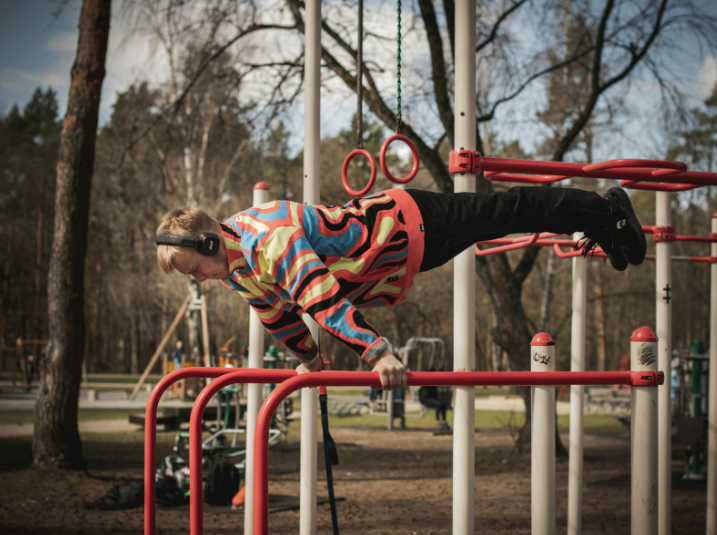
Starting calisthenics functional training means choosing a natural, progressive, and accessible path to fitness. No complex machines or expensive gym memberships are required: your body becomes your primary tool for growth. For those starting from scratch, this discipline represents one of the smartest ways to develop strength, control, and body awareness.
If you are between 18 and 35 years old and have never followed a structured calisthenics training program, this guide is designed to walk you through every step. You will discover how to begin without fear, which exercises to choose, and how to methodically achieve your first pull-ups.
- What Is Calisthenics and Why It’s the Ideal Functional Training to Start With
- Basic Calisthenics Exercises for Beginners
- Safe Progressions: How to Build Strength from Zero
- The Most Common Beginner Mistakes to Avoid
- Your First Calisthenics Workout Plan to Start Immediately
- From Couch to First Pull-Ups: A Transformation Within Reach
What Is Calisthenics and Why It’s the Ideal Functional Training to Start With
Calisthenics is a form of bodyweight training that uses natural movements to develop strength, mobility, and coordination. Unlike traditional machine-based workouts, each exercise engages multiple muscle groups at once, making it a true example of functional fitness. This means the strength you build during training directly translates into greater control and stability in everyday life.
For a complete beginner, the main advantage is gradual progression. You do not need to be strong to start; you become strong by training. Functional training applied to bodyweight exercises allows for steady adaptations, reducing the risk of injury while building a solid foundation for long-term progress.
Basic Calisthenics Exercises for Beginners
Every effective journey begins with the fundamentals. In calisthenics training, the basic exercises are simple yet incredibly powerful movements. Push-ups, bodyweight squats, planks, and Australian pull-ups form the structural foundation on which real strength and motor control are built.
These functional exercises teach the body to work as an integrated unit. It is not just about muscles, but about coordination between the nervous system and muscular structure. For this reason, focusing on movement quality and maintaining proper technique from the very first repetitions is essential.
Safe Progressions: How to Build Strength from Zero
One of the key aspects that makes calisthenics for beginners so effective is the use of progressions. Every exercise can be simplified or made more challenging, adapting to your current level. If you cannot perform a standard push-up yet, you can start with an incline variation; if pull-ups feel impossible, Australian pull-ups are the first concrete step.
This approach removes the fear of failure. Strength is not forced; it is built through gradual adaptation. The body responds positively when the stimulus matches current abilities, creating sustainable and consistent growth over time.
The Most Common Beginner Mistakes to Avoid
Initial enthusiasm can lead to doing too much, too soon. One of the most common mistakes in calisthenics functional training is skipping the basics and attempting advanced movements without having developed sufficient stability and strength. This does not speed up results, but instead increases the risk of frustration and injury.
Another frequent mistake is neglecting technique. In functional fitness, quality always comes before quantity. It is better to perform fewer repetitions correctly than many with poor form. Focusing on control and breathing creates a solid foundation for future progress.
Your First Calisthenics Workout Plan to Start Immediately
To begin, a simple and sustainable structure is enough. Training three times per week is an ideal frequency that allows the body to adapt without being overloaded. Each session should include pushing, pulling, core, and leg exercises to create complete muscular balance.
Progression happens by gradually increasing repetitions or selecting slightly more challenging variations. With consistency, noticeable improvements appear within a few weeks. At this stage, many beginners achieve their first assisted pull-ups, marking a fundamental milestone in their journey.
From Couch to First Pull-Ups: A Transformation Within Reach
The journey in calisthenics is not only physical, but also mental. Moving from a sedentary lifestyle to being able to lift your own body on a bar represents a profound transformation. Every small improvement strengthens confidence and proves that growth is accessible to anyone willing to start.
With a natural, progressive, and consistent approach, reaching your first pull-ups is not an exception reserved for a few, but a realistic achievement. Functional training teaches that strength is a skill built over time. And the best moment to begin is always now.
Comments (0)