
Trolley
You have no items in your shopping cart

 Budgets
 Dumbers
 Discs
Discs
 Benches
 Racks and Rigs
 Weights Holders
 Isotonic machines
 Calisthenics
 Cardio
 Kettlebells
 Flooring
 Gym Set
 Accessories
 Combat
 ARTI MARZIALI
 CONTAINER GYM
 Tug-Of-War
 Used Gym Equipment
 PILATES MACCHINARI
 GINNASTICA ARTISTICA
 CAMPI DA PADEL
 Prodotti in Pronta Consegna
 Informazioni
 IRONMAN
 Gift Card
- Donatif
- General information
- 0 I like it
- 987 Views
- 0 comments
- gym flooring, safety flooring, gym safety, shock-absorbing materials
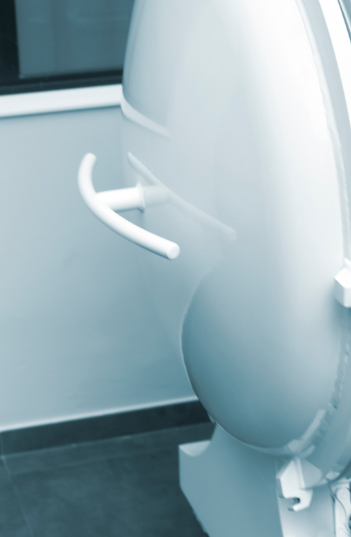
Hyperbaric Chamber and Muscle Recovery: The Science Behind Performance
In modern sport, results no longer depend only on training intensity, programming quality, or athlete discipline. An increasingly decisive part of performance lies in the ability to recover efficiently, reducing the impact of physical stress and supporting a return to optimal condition as quickly as possible. In this scenario, the hyperbaric chamber for sports recovery emerges as an advanced technology designed to support physiological regeneration processes through greater oxygen availability in the tissues.
For professional athletes, advanced sports enthusiasts, gym owners, and fitness centers, understanding the role of sports oxygen therapy means seeing recovery not as a passive phase, but as an active component of athletic preparation. The goal is not to replace rest, nutrition, sleep, or physiotherapy, but to integrate tools that can support the body when microtraumas, inflammation, and muscle fatigue may limit training continuity and quality.
- Why recovery has become a determining factor in sports performance
- How the hyperbaric chamber works
- Hyperbaric chamber and muscle recovery
- Benefits for athletic performance
- What the scientific literature says
- When the hyperbaric chamber can add value to sports recovery
Why recovery has become a determining factor in sports performance
Training more does not automatically mean achieving better results. Every intense session creates controlled stress on the body, which can become positive adaptation only if the body has the time and conditions needed to recover. When recovery is insufficient, the athlete may experience reduced performance, greater muscle stiffness, persistent fatigue, and a higher risk of overload. This is why muscle recovery is now considered an integral part of performance, not simply a break between training sessions.
The logic of active recovery comes from this very awareness: helping the body restore balance, oxygenation, and tissue function after significant exertion. The hyperbaric chamber fits into this context because it works with an essential element of muscle physiology: oxygen. In the presence of high workloads, close competitions, or intensive preparation programs, supporting the body’s natural repair processes can make a difference in training continuity and return-to-play quality.
How the hyperbaric chamber works
The hyperbaric chamber is a pressurized environment in which the subject breathes oxygen under controlled conditions. Increased pressure allows more oxygen to dissolve into the blood plasma, promoting its distribution even in areas where circulation may be temporarily less efficient due to stress, inflammation, or microlesions. This principle makes deep oxygenation especially interesting in sports, where muscle tissue is subjected to repeated and intense stress.
In athletic recovery, the value of this technology does not lie in a generic promise of immediate improvement, but in its ability to create favorable conditions for the biological processes already present in the body. Oxygen participates in numerous mechanisms related to energy production, cell repair, and inflammation management. For this reason, hyperbaric therapy applied to sport is considered a support tool, to be included in a broader approach involving physical preparation, nutrition, workload monitoring, and planned recovery.
Oxygenation in a hyperbaric environment
Under normal conditions, oxygen is mainly transported by the hemoglobin found in red blood cells. In a hyperbaric environment, however, a larger amount of oxygen can dissolve directly into the plasma, increasing availability for the tissues. This is relevant for athletes because, after intense training, muscles may be in a state of metabolic and inflammatory stress, requiring more resources to return to normal.
The increased presence of oxygen should not be interpreted as an artificial “boost” to performance, but as support for recovery processes. When the body receives oxygen more efficiently, it can better sustain the cellular activities involved in tissue repair and the restoration of muscular balance. In this sense, speaking of athletic performance and oxygen mainly means focusing on the quality of recovery that allows athletes to train with greater continuity.
Physiological effects on muscle tissue
Muscle tissues subjected to intense loads develop microtraumas, small structural alterations that are part of the normal adaptation process to training. These microtraumas are not necessarily negative, because they stimulate the body to rebuild stronger fibers, but they require adequate recovery. The hyperbaric chamber for muscle recovery can help create a more favorable physiological environment for regeneration, supporting cellular metabolism and the repair response.
Another important aspect concerns inflammation management. After intense exertion, inflammation is a natural response, but if it persists for too long, it can slow the return to full efficiency. Hyperbaric oxygen therapy is considered with interest precisely because it can support tissue rebalancing mechanisms, helping athletes move more quickly through the fatigue and stiffness phase that often follows high-impact training.
Hyperbaric chamber and muscle recovery
The relationship between hyperbaric chamber and muscle recovery is based on oxygen’s ability to intervene in the biological processes that follow exertion. After an intense session, the body must restore energy balance, reduce oxidative stress, manage inflammation, and begin repairing the fibers involved. In this phase, oxygen availability represents an essential resource for supporting cellular functions and encouraging a more efficient response.
For a professional athlete, an advanced practitioner, or a gym that wants to offer high-level services, recovery is not just a matter of comfort. It is a strategic lever that affects the ability to maintain training quality, reduce downtime, and better manage periods of greater intensity. Sports oxygen therapy therefore becomes a tool to understand carefully, avoiding oversimplification and assessing its integration within serious, supervised protocols.
Microtraumas and cellular repair
Muscle microtraumas are a physiological consequence of training, especially when working with heavy loads, eccentric exercises, sprints, changes of direction, or high-density sessions. The body responds to these stresses by activating repair processes that require energy, nutrients, and oxygen. Better tissue oxygenation can support this phase, contributing to the quality of post-training recovery.
The central point is not to eliminate muscle stress, because controlled stress is what enables adaptation. The true goal is to prevent stress from exceeding the body’s recovery capacity. In this balance, the hyperbaric chamber can be considered an interesting resource for those facing intensive programs, close competitions, or reconditioning phases where time management becomes particularly important.
Stimulation of regenerative processes
Muscle regeneration is a complex process involving cells, biological mediators, circulation, and energy metabolism. Oxygen participates in many of these functions, supporting the cellular activities needed to rebuild tissue. In a hyperbaric environment, greater oxygen availability can help create conditions better suited to the body’s repair work.
For this reason, the use of the hyperbaric chamber is often associated with the concept of active recovery. It is not simply about waiting for muscle soreness to pass, but about adopting strategies that accompany the body in the process of returning to full efficiency. In sport, this approach is particularly relevant when training continuity is a competitive factor.
Reduction of inflammation
Post-exercise inflammation is a natural and, within certain limits, useful response. It signals that tissue has been stressed and that the body is activating repair mechanisms. However, when the inflammatory response is excessive or prolonged, it can result in pain, stiffness, and reduced ability to express strength. The hyperbaric chamber in sports recovery is also evaluated for its potential role in promoting better balance in inflammatory processes.
More efficient inflammation management can help the athlete return sooner to an adequate functional condition. This does not mean canceling the body’s biological timing, but optimizing the conditions in which recovery takes place. For advanced gyms and fitness centers, offering recovery-oriented solutions means responding to a growing demand: not only training better, but recovering better to support more consistent performance.
Lactic acid recovery and fatigue
In common language, lactic acid is often associated with the burning sensation and fatigue after intense effort. In reality, muscle fatigue is a more complex phenomenon involving metabolite accumulation, neuromuscular stress, energy consumption, and temporary changes in cellular balance. The topic of hyperbaric lactic acid recovery should therefore be interpreted correctly, avoiding simplistic readings.
Greater oxygenation can support metabolic restoration after physical activity, helping create favorable conditions for the return of muscular efficiency. In particular, after high-intensity training or close competitions, the possibility of acting on recovery in a structured way can be useful for reducing the perception of residual fatigue. Here too, the value is not isolated, but depends on integration with sleep, nutrition, hydration, and intelligent workload management.
Benefits for athletic performance
The benefits of the hyperbaric chamber in sports recovery should be read in relation to training continuity. An athlete who recovers better can approach subsequent sessions with greater quality, reduce downtime linked to fatigue, and maintain a more stable performance level. Over time, this continuity can become a relevant advantage, especially in sports where training and competition frequency leaves little room for long recovery periods.
Performance, in fact, is not only the peak reached in a single race or session. It is the ability to repeat technical gestures, strength, power, and mental clarity over time. From this perspective, sports oxygen therapy can be seen as a technology serving consistency, rather than a shortcut to immediate results.
Reduction of recovery time
One of the most interesting aspects of the hyperbaric chamber is its potential to support a reduction in the time needed to return to a functional condition. When the muscle receives better support in oxygenation and repair processes, the athlete may perceive faster recovery from intense sessions. This is particularly important in professional sport, where only a few days may separate a decisive training session from a competition.
Reducing recovery time does not mean forcing the body beyond its limits, but respecting biological processes while trying to make them more efficient. The hyperbaric chamber can therefore become a useful tool when included in a well-planned protocol, with clearly defined frequency, duration, and goals. The correct approach is always complementarity, not replacement of other recovery practices.
Greater training continuity
Continuity is one of the most underestimated factors in athletic development. A well-built program produces results when it can be followed regularly, without frequent interruptions caused by fatigue, overload, or incomplete recovery. In this context, improving recovery means protecting the quality of the training path and making workload more sustainable over the medium term.
Athletic performance linked to oxygen should not be interpreted only as an increase in physical capacity, but as an improvement in the conditions that allow the athlete to train better. A body that recovers in a more orderly way can respond more effectively to subsequent stimuli. For this reason, technologies such as the hyperbaric chamber attract the interest of those seeking advanced tools to optimize every phase of preparation.
Support for professional and amateur athletes
Professional athletes are often the first to introduce advanced recovery technologies because they operate in contexts where every detail can influence performance. However, advanced amateur athletes can also benefit from a more conscious recovery culture, especially when they train frequently or take part in demanding competitions. The hyperbaric chamber for athletes can therefore interest different audiences, provided it is used with appropriate criteria.
For gym and fitness center owners, integrating recovery-related services also represents an evolution of the offering. It is no longer just about providing training equipment, but about building an ecosystem oriented toward complete performance. Training, recovery, prevention, and well-being become parts of the same path, with higher perceived value for increasingly informed users.
What the scientific literature says
The literature on hyperbaric oxygen therapy is broad in medical and clinical fields, while in the sports context it requires careful and cautious interpretation. There is evidence suggesting a possible role in supporting tissue repair, inflammation management, and recovery from certain musculoskeletal conditions. However, as happens with many technologies applied to performance, results may vary depending on protocol, subject, type of sport, and specific objective.
A serious approach to hyperbaric therapy in sport must therefore avoid both excessive enthusiasm and superficial skepticism. The hyperbaric chamber is not a miraculous solution, but a tool that can make sense when integrated into a professional pathway. Individual assessment, competent supervision, and consistency with the athletic program are essential elements for its correct use.
Main clinical evidence
The strongest evidence on hyperbaric oxygen therapy concerns its use in specific clinical contexts, where increased oxygen availability in tissues can support healing and repair processes. In the world of sport, interest arises from applying these principles to muscle recovery, microtraumas, and reduced return-to-activity times. The physiological basis is consistent: more available oxygen can promote favorable conditions for regeneration.
When discussing studies on the hyperbaric chamber in sport, it is important to distinguish between established applications and areas still evolving. Some results are promising, but individual response can vary greatly. For this reason, the decision to use a hyperbaric chamber should always be guided by professional expertise, especially when it concerns athletes with high workloads or complex recovery situations.
Limits and correct use of the therapy
Every recovery technology has limits and conditions of use. The hyperbaric chamber does not replace rest, does not compensate for poor programming, and does not cancel the effects of poorly managed overload. Its value emerges when it is included in a broader strategy built on data, goals, and athlete monitoring. Without this vision, the risk is turning an advanced tool into a solution used without real criteria.
Correct use also requires attention to safety, protocol personalization, and evaluation of possible contraindications. For a fitness center or sports facility, this means relying on adequate expertise and communicating the service realistically. Specialist validation and staff authority become fundamental for conveying trust and distinguishing a serious offering from a purely commercial proposal.
When the hyperbaric chamber can add value to sports recovery
The hyperbaric chamber can add value when recovery becomes a critical performance factor. This happens in athletes subjected to frequent workloads, in athletes facing close competitions, in gradual return-to-play pathways after periods of inactivity, and in phases where recovery quality directly affects training continuity. In these cases, deep oxygenation can help support the body during a particularly delicate phase.
For advanced home gyms, athletic preparation professionals, and gym owners, the point is not to chase technology simply because it is innovative, but to understand its role within a more mature vision of performance. Rest remains fundamental, but today it is no longer enough to consider it the only answer to fatigue. The era of hyperbaric active recovery begins precisely here: from the desire to support the body in its natural regeneration process, with advanced tools, expertise, and attention to the quality of athletic results.
Comments (0)