
Trolley
You have no items in your shopping cart

 Budgets
 Dumbers
 Discs
Discs
 Benches
 Racks and Rigs
 Weights Holders
 Isotonic machines
 Calisthenics
 Cardio
 Kettlebells
 Flooring
 Gym Set
 Accessories
 Combat
 ARTI MARZIALI
 CONTAINER GYM
 Tug-Of-War
 Used Gym Equipment
 PILATES MACCHINARI
 GINNASTICA ARTISTICA
 CAMPI DA PADEL
 Prodotti in Pronta Consegna
 Informazioni
 IRONMAN
 Gift Card
- Donatif
- General information
- 0 I like it
- 1935 Views
- 0 comments
- gym flooring, safety flooring, gym safety, shock-absorbing materials
Sleep at Altitude in Your Own Home: How Hypoxic Tents Work
The evolution of endurance sports technology has brought tools once reserved for research centers and professional teams directly into athletes' homes. Among these, the hypoxic tent is one of the most innovative solutions for those looking to improve their aerobic capacity without spending extended periods training at high altitude. Understanding what a hypoxic chamber is used for means going beyond the simple concept of "sleeping at altitude" and exploring the physiological mechanisms that allow the body to adapt to reduced oxygen availability.
The principle behind this technology is the well-known Live High, Train Low protocol, a strategy widely adopted in endurance training. By simulating altitude during nighttime sleep, athletes can stimulate specific physiological adaptations while maintaining the quality and intensity of their daytime workouts. The result is a science-based approach designed to improve oxygen transport and metabolic efficiency without drastically changing an athlete's daily training routine.
- What Is a Hypoxic Tent?
- How Altitude Is Simulated
- The Live High, Train Low Protocol
- What Happens to the Body
- Benefits for Endurance Sports
- Proper Use and Final Considerations
What Is a Hypoxic Tent and How Does It Work?
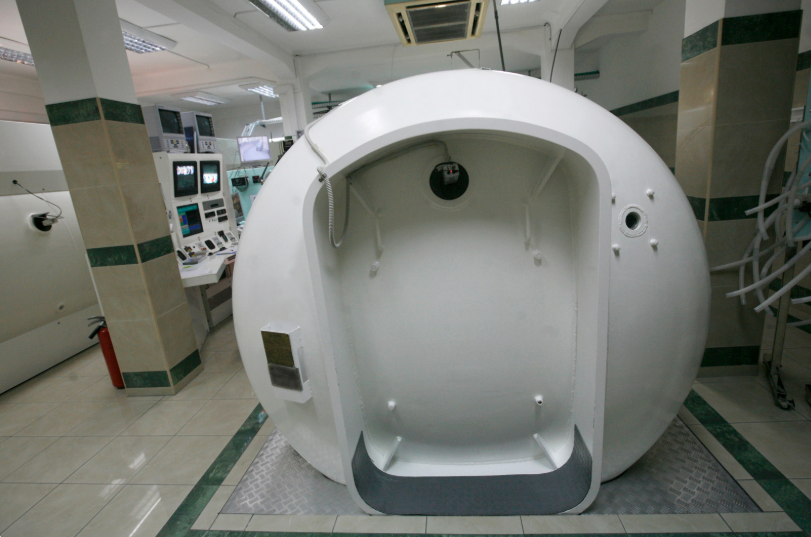
A hypoxic tent is an enclosed sleeping environment connected to a generator that modifies the oxygen concentration in the air you breathe while sleeping. Unlike a hyperbaric chamber, it does not increase atmospheric pressure. Instead, it lowers the percentage of oxygen available, recreating conditions similar to those found at altitudes between approximately 2,000 and 3,500 meters.
This technology makes it possible to recreate a controlled high-altitude environment inside your bedroom. The body perceives the reduced oxygen availability as if it were actually at altitude, allowing repeated and consistent exposure without the need to travel. The intensity of hypoxia can be adjusted progressively according to the user's adaptation and training objectives.
How Altitude Is Simulated During Sleep
At the core of the system is the hypoxic generator, a device that filters ambient air by reducing its oxygen concentration while leaving the other gases essentially unchanged. This modified air is continuously delivered into the tent, maintaining a stable and controlled environment throughout the night.
The simulated altitude can be adjusted with great precision, allowing users to progressively increase the level of hypoxic exposure over time. This gradual approach helps the body adapt more comfortably while minimizing potential discomfort during the initial stages of the protocol.
Controlled Reduction of Oxygen Concentration
Contrary to what many people assume, the system does not remove oxygen from the entire room. Instead, the generator produces a continuous flow of low-oxygen air that is introduced exclusively into the tent, creating an isolated microenvironment. This design ensures both safety and precise control over the hypoxic conditions.
The intensity of hypoxic exposure can be tailored according to the athlete's goals, training cycle, and individual adaptation capacity. This level of precision is one of the features that distinguishes professional-grade systems from more basic solutions.
The Technical Components of a Home Hypoxic Chamber
A complete setup generally includes a hypoxic generator, the sealed tent or sleeping chamber, ventilation systems, air ducts, and monitoring equipment. Each component contributes to maintaining stable environmental conditions throughout the entire overnight exposure.
More advanced systems also feature automatic controls, environmental sensors, and programmable settings that allow users to customize both the duration and intensity of the protocol. This technological precision supports gradual adaptation while ensuring consistent and repeatable conditions.
The Live High, Train Low Protocol Explained
The Live High, Train Low strategy is based on the observation that living at altitude stimulates valuable physiological adaptations, while training at high altitude often limits exercise intensity due to reduced oxygen availability. Separating these two aspects allows athletes to benefit from both.
Using a hypoxic tent, athletes can spend several hours sleeping in a simulated altitude environment while continuing to perform high-quality training sessions at sea level during the day. This balance explains why the protocol has become increasingly popular among cyclists, runners, and triathletes.
Why Sleep High and Train Low?
During sleep, the body receives a prolonged hypoxic stimulus, while daytime workouts can still be performed with full oxygen availability. This combination enables athletes to maintain high training intensities without experiencing the performance limitations associated with exercising at real altitude.
The combination of physiological adaptation and high-quality training is the foundation of the Live High, Train Low approach and remains one of the reasons it continues to be widely used by endurance coaches and sports scientists.
Physiological Adaptations Sought by Endurance Athletes
Repeated exposure to hypoxia triggers a range of physiological responses involving the cardiovascular, respiratory, and metabolic systems. The objective is not immediate performance enhancement but rather long-term adaptations that improve the body's efficiency in using oxygen during exercise.
Among the most studied adaptations are improvements in oxygen transport capacity, enhanced mitochondrial function, and greater efficiency during prolonged aerobic efforts, all of which are particularly relevant for endurance performance.
What Happens to the Body During Hypoxic Sleep?
Erythropoietin, Red Blood Cells, and Oxygen Transport
When the body detects lower oxygen availability, it activates several compensatory mechanisms. One of the most important involves the production of erythropoietin (EPO), a hormone responsible for regulating red blood cell production. This process is one of the main reasons why controlled hypoxic exposure has attracted significant scientific and athletic interest.
It is important to note that individual responses vary considerably depending on genetics, duration of exposure, training status, and consistency of the protocol. For this reason, hypoxic training should always be considered within the context of a comprehensive athletic preparation program.
Adaptation Time and Protocol Consistency
Physiological adaptations do not occur after only a few nights of exposure. Consistency is one of the key factors in developing stable and measurable responses. Most protocols are therefore designed to last several weeks, with progressively increasing levels of hypoxic exposure.
Personalized programming allows athletes to balance the intensity of the stimulus with their recovery capacity. Continuous monitoring also makes it possible to assess the effectiveness of the protocol and make adjustments when necessary.
Benefits for Cycling, Running, and Endurance Sports
For endurance athletes, the primary objective is to improve the ability to sustain prolonged efforts while maintaining high aerobic efficiency. The hypoxic tent fits perfectly into this objective by providing an additional physiological stimulus that complements conventional training methods.
Potential benefits often include improved running or cycling economy, more efficient oxygen utilization during intense efforts, and better preparation for competitions held at altitude. However, performance improvements always depend on the quality of the overall training program rather than on the technology alone.
When Technology Can Make a Difference
A home hypoxic chamber is particularly valuable for advanced athletes seeking to optimize every aspect of their preparation. Combined with structured training, proper nutrition, and effective recovery strategies, it becomes part of a comprehensive performance optimization plan.
Like any performance-enhancing technology, a hypoxic tent delivers its greatest value when integrated into a carefully planned and monitored training program with realistic goals. In this context, innovation becomes a powerful support tool rather than a substitute for consistent athletic work.
Proper Use, Limitations, and Final Considerations
Understanding what a hypoxic chamber is used for means recognizing that it is an advanced tool specifically designed to simulate altitude in a controlled and repeatable manner. Proper use requires gradual progression, structured planning, and adherence to scientifically based exposure protocols while avoiding unrealistic expectations.
For endurance athletes and those building an advanced home gym, a hypoxic tent offers a sophisticated solution for applying the principles of Live High, Train Low without leaving home. When integrated into a well-designed training plan, it can become a valuable tool for achieving measurable physiological adaptations and supporting long-term athletic performance.
Comments (0)