
Trolley
You have no items in your shopping cart

 Budgets
 Dumbers
 Discs
Discs
 Benches
 Racks and Rigs
 Weights Holders
 Isotonic machines
 Calisthenics
 Cardio
 Kettlebells
 Flooring
 Gym Set
 Accessories
 Combat
 ARTI MARZIALI
 CONTAINER GYM
 Tug-Of-War
 Used Gym Equipment
 PILATES MACCHINARI
 GINNASTICA ARTISTICA
 CAMPI DA PADEL
 Prodotti in Pronta Consegna
 Informazioni
 IRONMAN
 Gift Card
- Donatif
- General information
- 0 I like it
- 1097 Views
- 0 comments
- gym flooring, safety flooring, gym safety, shock-absorbing materials
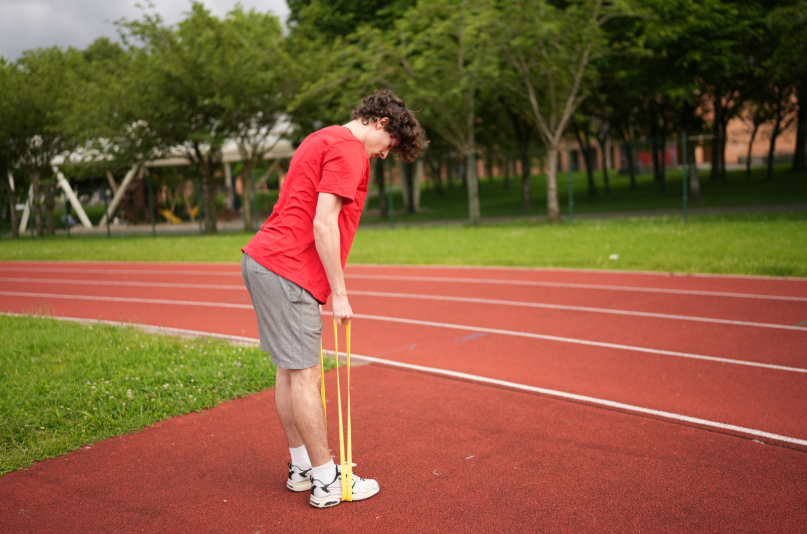
Mini Case Studies: Transformations with Resistance Bands and Functional Trainer
When discussing training with fitness resistance bands and a functional trainer, one of the most common questions concerns the actual effectiveness of these tools. Many fitness enthusiasts, beginners, and professionals alike wonder whether it is truly possible to improve strength, muscle tone, and movement quality without relying exclusively on traditional free weights. This skepticism is understandable, especially in a market where unrealistic promises and extreme transformations are often used as marketing tools.
For this reason, real-world case studies are particularly valuable. Analyzing genuine training journeys, supported by measurable data and achieved through structured programs, helps clarify what can realistically be accomplished. The stories presented below do not represent guaranteed results for everyone, but rather realistic examples of how the proper use of resistance bands and a functional trainer can contribute to progressive physical improvement.
Why Real Stories Help Evaluate Training Effectiveness
The Value of Documented Results
Testimonials become truly useful when they are supported by concrete evidence. Strength measurements, body circumference changes, workout frequency, and the time required to achieve improvements are far more reliable indicators than generic claims. A data-driven approach provides a clearer understanding of the relationship between effort and results.
In the context of training with resistance bands and a functional trainer, the most significant improvements are often observed in movement quality, muscular endurance, and the ability to perform increasingly challenging exercises. These improvements can be easily monitored, making it possible to assess program effectiveness objectively.
How to Distinguish a Credible Testimonial from Marketing
A credible success story does not focus solely on the final outcome. It describes the process, the challenges encountered, any setbacks experienced, and the time required to reach the goal. This approach reduces the risk of creating unrealistic expectations while increasing trust in the information presented.
The most useful testimonials involve ordinary people pursuing realistic goals: improving muscle tone, regaining fitness, or increasing functional strength. These are situations that many readers can identify with and draw motivation from.
Transformations Achieved with Resistance Bands: Three Real Examples
From Sedentary Lifestyle to Improved Muscle Tone
Marco, 42, worked primarily from home and engaged in very little physical activity. After twelve weeks of resistance band training three times per week, he reduced his waist circumference by 5 centimeters and achieved noticeable improvements in overall muscle tone. His program included multi-joint exercises with progressively increasing resistance.
This transformation was not the result of extreme workouts but of consistency. The ease of use of resistance bands helped him adhere to the program, allowing him to maintain regular training sessions without significant logistical obstacles.
Improved Functional Strength After Age 40
Laura, 48, wanted to increase her strength without placing excessive stress on her joints. Through a sixteen-week program, she significantly increased the number of repetitions she could perform in assisted pulling exercises and noticeably improved her core stability. Initial and final assessments showed an improvement of more than 25% in key exercises.
In her case, the main advantage of resistance bands was the ability to adjust resistance precisely. This allowed for a gradual and safe progression, which is particularly important for individuals returning to exercise after years of inactivity.
Supporting Training for Busy Professionals
Davide, a personal trainer with a demanding work schedule, used resistance bands as a complement to his traditional training sessions. Over eight weeks, he improved upper-body muscular endurance and reduced the time required to complete several functional workout circuits.
His experience demonstrates that these tools are not intended solely for beginners. Experienced athletes can also use them to introduce variety, increase training volume, and maintain high workout quality.
The Role of the Functional Trainer in Improvement Programs
Progressive Strength Development
The functional trainer is frequently used to build strength through controlled and progressive movements. In the cases examined, resistance was increased gradually, allowing users to adapt without compromising exercise technique.
One of its primary advantages is the ability to work on specific movement patterns, making training particularly effective both for athletic performance and general physical conditioning.
Movement Control and Exercise Quality
Many users report improvements in body awareness and the ability to maintain proper posture during exercises. This aspect becomes especially important when the goal extends beyond strength development to include better coordination and movement control.
The constant tension provided by the functional trainer promotes continuous muscular engagement, making every repetition more deliberate and technically effective.
Factors Behind the Results
Consistency and Progressive Overload
An analysis of the case studies reveals a common element: consistency. None of the results were achieved through shortcuts. Gradually increasing resistance and maintaining regular training sessions were the key factors behind success.
Resistance bands and functional trainers offer extensive adaptability, but their full potential is realized only when they are used within a structured and consistent training program.
Tracking Data and Goals
Monitoring progress helps maintain motivation. Body measurements, repetition counts, resistance levels used, and training frequency are simple metrics to record and highly valuable for evaluating progress.
Collecting data also makes it possible to adjust the training program strategically, preventing plateaus and improving overall training quality.
How Replicable Are These Results?
Individual Variables to Consider
Every individual starts from a different baseline. Age, training experience, initial fitness level, and available time inevitably influence the results that can be achieved. For this reason, each testimonial should be viewed as an example rather than a promise.
The most informative success stories are those that provide complete context, enabling readers to compare their own circumstances with those of the individual featured.
Setting Realistic Expectations
The most sustainable transformations are typically those developed over the medium to long term. Improving strength and muscle tone requires consistency, proper nutrition, and progressive training.
Individuals who approach resistance band and functional trainer workouts with realistic expectations are more likely to stay motivated and achieve long-lasting results.
When Social Proof Becomes a Useful Decision-Making Tool
Interpreting Success Stories Correctly
Social proof is a powerful influence because it allows people to observe results achieved by others with similar goals and circumstances. However, to be genuinely useful, it must be supported by transparent information regarding the process followed and the outcomes achieved.
A balanced approach enables testimonials to serve as inspiration without turning them into unrealistic expectations or unproductive comparisons.
Turning Inspiration into Action
Success stories are most valuable when they become a starting point for action. Understanding which exercises were performed, how frequently they were practiced, and how long it took to achieve results helps create a more informed training plan.
Real-life examples demonstrate that improvement is often the outcome of small, consistent steps. Resistance bands and functional trainers can be highly effective tools when incorporated into a structured, progressive, and sustainable training program.
Comments (0)