
Trolley
You have no items in your shopping cart

 Budgets
 Dumbers
 Discs
Discs
 Benches
 Racks and Rigs
 Weights Holders
 Isotonic machines
 Calisthenics
 Cardio
 Kettlebells
 Flooring
 Gym Set
 Accessories
 Combat
 ARTI MARZIALI
 CONTAINER GYM
 Tug-Of-War
 Used Gym Equipment
 PILATES MACCHINARI
 GINNASTICA ARTISTICA
 CAMPI DA PADEL
 Prodotti in Pronta Consegna
 Informazioni
 IRONMAN
 Gift Card
- Donatif
- General information
- 0 I like it
- 2915 Views
- 0 comments
READING TIME: 7 MINUTES ➤➤
Stabilizer muscles are often overlooked in traditional training programs, but they form the foundation of functional strength, balance, and injury prevention. They’re not the showy, visible muscles, but essential components working in synergy to keep the body stable, efficient, and high-performing. Understanding their anatomy and function means rediscovering a more authentic dimension of strength—one that truly matters, both in athletic performance and everyday life.
This guide is intended for athletes, movement professionals, and enthusiasts who want to improve posture, prevent chronic pain, and achieve real, not just aesthetic, performance. We’ll explore the role of key stabilizer muscles, such as the deep core, multifidus, and scapular stabilizers, offering a scientific yet accessible overview enriched with effective and mindful training principles.
- What are stabilizer muscles and why they really matter
- The role of stabilizer muscles in injury prevention
- Functional strength and real performance: beyond aesthetics
- How to effectively train stabilizer muscles
- Conclusion and outlook: rediscovering invisible strength
What are stabilizer muscles and why they really matter
Deep musculature: the invisible heart of stability
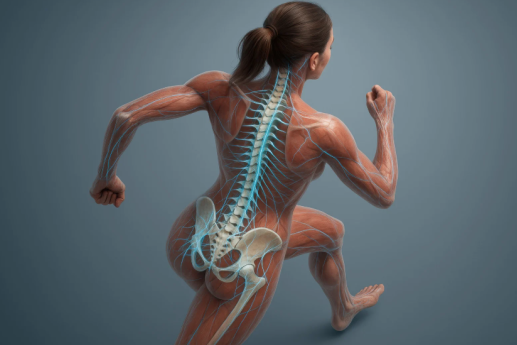
Stabilizer muscles include deep muscle groups, often little known, but crucial for motor control and posture. These include the multifidus, transverse abdominis, pelvic floor, and deep spinal muscles. These muscles don’t create large, visible movements, but act with precision to keep the body’s axis in balance, supporting joints during every daily or athletic movement.
When the body is under stress—such as during a jump, run, or weight lift—it’s these muscles that prevent collapses and misalignments. Training them means creating a solid foundation on which to build strength, power, and agility, reducing the risk of compensatory overloads and recurring pain.
The core beyond abs: structure and function
The term “core” is often simplified as meaning the abs, but it actually refers to a complex, three-dimensional system. It includes anterior, posterior, lateral, and deep muscles that work together to stabilize the torso. Beyond the rectus abdominis and obliques, it involves the diaphragm, transverse abdominis, and deep lumbar muscles.
This structure enables the optimal transmission of forces between the upper and lower body. A dysfunctional or weak core can compromise movement mechanics, create compensations, and increase the risk of injury. Understanding the integrated function of the core is the first step toward developing real and useful strength.
The role of stabilizer muscles in injury prevention
Back and shoulders: the critical areas to protect
Among the body’s most injury-prone areas, the spine and shoulder girdle require special attention. Stabilizer muscles act like a kind of “shock absorber system” that reduces stress on the joints. The multifidus, for instance, plays a key role in maintaining lumbar stability, while scapular muscles help protect the shoulders and neck.
Insufficient or unbalanced activation of these muscles can lead to overload pathologies, hernias, inflammation, and functional limitations. Targeted work on these areas helps to drastically reduce painful episodes and improve the body’s resilience to mechanical stress.
Posture and balance: how hidden muscles make the difference
Posture is the result of continuous interaction between agonist, antagonist, and stabilizer muscles. When deep muscles are weak or inactive, posture becomes compromised and the body adopts compensatory strategies that increase injury risk. Stabilizer muscles help maintain both static and dynamic balance, especially in unstable conditions or sudden directional changes.
Training these muscles isn’t just about correcting alignment—it’s also about enhancing body awareness and neuromuscular control. This brings benefits both in daily life and in athletic performance, where the ability to respond efficiently is often decisive.
Functional strength and real performance: beyond aesthetics
What is functional strength and how is it developed
Functional strength is the ability to generate useful muscular tension in real-world contexts: in sports, work, or daily life. Unlike hypertrophic strength, aimed at increasing muscle volume, functional strength prioritizes efficiency, control, and the ability to transfer force across muscle chains. Stabilizer muscles play a key role here, ensuring body integrity under load and in motion.
Building functional strength means training the body as an integrated unit, improving both intra- and inter-muscular coordination. This approach leads to tangible benefits in reaction speed, agility, postural endurance, and the capacity to handle complex or unexpected movements.
Stability as the foundation of high performance
In high-performance sports, every millimeter of instability can result in a loss of effectiveness. The stability offered by deep muscles allows for precise and economical force transmission, avoiding energy loss and improving technical execution. Whether it’s a sprinter accelerating, a weightlifter, or a footballer shooting, internal stability is the prerequisite for maximum external expression.
Training this stability also means strengthening the mind-body connection, developing advanced neuromuscular sensitivity. It’s a quality that separates professionals from amateurs, as it allows control of every movement—even under fatigue or competitive pressure.
How to effectively train stabilizer muscles
Targeted exercises for core, multifidus, and scapular muscles
A good stabilizer muscle training program includes exercises that focus on precision and movement awareness. For the core, movements like planks, dead bugs, bird-dogs, and Pallof presses are excellent tools to stimulate deep muscles without overloading the spine. The multifidus can be activated through low-intensity exercises in a quadruped position or with isometric contractions.
For the scapular region, essential exercises include Y-T-W movements, scapular push-ups, and face pulls. These exercises help strengthen the scapular retractors and depressors, which are crucial for healthy posture and proper shoulder joint support.
Activation and progression principles
Training stabilizer muscles doesn’t require heavy loads, but rather a constant focus on activation quality. It’s important to start with simple exercises in stable conditions, then gradually increase instability, duration, and movement complexity. Using unstable surfaces, tools like the Swiss ball, or asymmetric resistances can amplify the stimulus without compromising safety.
Progression should always follow the principle of neuromuscular priority: first stabilize, then mobilize, and only then add load. This approach ensures not only effectiveness, but also long-term sustainability, minimizing the risk of overload and functional regression.
Conclusion and outlook: rediscovering invisible strength
In a fitness world often focused on appearance, stabilizer muscles represent a form of invisible yet essential strength. Investing in their development not only improves posture and reduces injury risk, but also builds a solid foundation for every athletic and daily movement. It’s a strength you can’t see, but you can feel—in the confidence of movement, precision of action, and resistance to fatigue.
Rediscovering and training these muscles means adopting a smarter, more conscious approach to the body. It’s a choice of quality, functionality, and longevity. For those seeking real performance that goes beyond aesthetics, stabilizer muscles are the true starting point.
Comments (0)