
Trolley
You have no items in your shopping cart

 Budgets
 Dumbers
 Discs
Discs
 Benches
 Racks and Rigs
 Weights Holders
 Isotonic machines
 Calisthenics
 Cardio
 Kettlebells
 Flooring
 Gym Set
 Accessories
 Combat
 ARTI MARZIALI
 CONTAINER GYM
 Tug-Of-War
 Used Gym Equipment
 PILATES MACCHINARI
 GINNASTICA ARTISTICA
 CAMPI DA PADEL
 Prodotti in Pronta Consegna
 Informazioni
 IRONMAN
 Gift Card
- Donatif
- General information
- 0 I like it
- 3852 Views
- 0 comments
READING TIME: 6 MINUTES ➤➤
Pilates for Runners: Run Better with a Strong Core
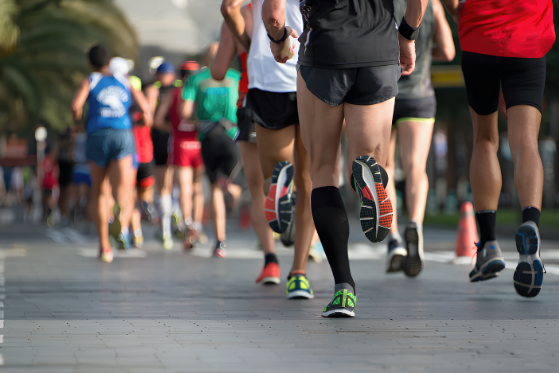
Anyone who runs knows how every detail of running technique can make the difference between a smooth run and an injury. More and more athletes – both amateur and competitive – are discovering how Pilates for runners can become a strategic ally to improve efficiency, endurance, and injury prevention. Integrating Pilates into your routine does not simply mean adding a few extra exercises, but strengthening the very foundations on which every stride is built: core stability, mobility, control, and breathing.
In this article we explore how an integrated program can transform your running experience. From posture to force transfer, from hip mobility to breathing control, every element of Pilates contributes to a run that is more efficient, safe, and high-performing. Let’s discover how and why.
- Why integrate Pilates into your running routine
- Strong core, efficient runner
- Preventing injuries with Pilates
- Joint mobility: focus on hips and ankles
- Breathing and rhythm control
- Designing an effective routine: guidelines for runners
Why integrate Pilates into your running routine
From core stability to movement control
Many runners overlook a fundamental aspect of running: core stability. Pilates works deeply on muscles that are often neglected by traditional training, such as the transverse abdominis, the multifidus, and the pelvic floor muscles. These muscles not only improve posture but also make every movement more stable, precise, and safe. During running, this translates into better control of body alignment and the ability to maintain technique even under fatigue.
Core-focused training helps distribute loads correctly, reducing joint wear and optimizing performance. Integrating Pilates also increases body awareness, which is essential to prevent compensations and incorrect movement patterns that often lead to overload and recurring pain.
The role of Pilates in movement economy
The concept of “movement economy” is central for every runner: running faster while consuming less energy. Pilates emphasizes precision, fluidity, and alignment, all of which help create more efficient movement. A well-balanced body that does not waste energy compensating for stiffness or imbalances moves with greater lightness and speed.
Regular Pilates practice also improves coordination between body segments: torso, pelvis, legs, and arms move in harmony, creating a smoother running pattern. This holistic approach makes Pilates an ideal tool for anyone who wants to run better, longer, and with less fatigue.
Strong core, efficient runner
Deep muscles and dynamic posture
The core is not just about aesthetics. When we refer to the “center of the body,” we are talking about a complex network of deep muscles that stabilize the pelvis, support the spine, and control movement. For runners, having a strong core means stable posture, more secure foot strike, and reduced energy loss with every step.
A dynamic posture, supported by deep Pilates work, allows the body to adapt to changes in pace, terrain, and fatigue. The pelvis stays centered, the spine aligned, and the push-off transfers more efficiently from the foot to the upper body. The result? A smoother run with fewer technical errors.
Force transfer: from center of gravity to stride
One of the key concepts in Pilates is control of the body’s “center.” In running, every effective movement originates from the center of gravity: the core acts as the starting point from which force is generated and transmitted. When this system is well trained, the power produced by muscles is directed more efficiently into the stride, improving propulsion without overloading the extremities.
Specific core training therefore allows for more efficient force transfer, reducing the risk of overload in the knees, ankles, and back. This not only makes runners faster but also more resilient over time. It represents a structural change that deeply improves running quality.
Preventing injuries with Pilates
The most common dysfunctions in runners
Knee pain, plantar fasciitis, iliotibial band syndrome: these are just some of the common issues experienced by regular runners. Most of these problems share a common cause: weak core stability and limited mobility. When the body compensates for central instability, peripheral joints become overloaded, creating ideal conditions for injury.
Pilates helps break this negative cycle. By working on balance, symmetry, and control, it directly addresses the biomechanical causes of injury. The approach is both preventive and corrective, making it ideal for runners who have experienced pain and want to return to running safely.
Active prevention: stability, balance, and symmetry
Unlike many compensatory activities, Pilates does not simply stretch or strengthen isolated muscle groups. Its goal is to build a foundation of dynamic stability: the ability to maintain control and alignment even while moving, under load, and during fatigue.
Regular training improves proprioception – the ability to perceive body position in space – and develops symmetrical muscular action, which is essential to prevent imbalances that can lead to chronic pain. Pilates therefore becomes a form of active prevention, ideal for runners who want to train consistently and safely.
Joint mobility: focus on hips and ankles
Hip freedom improves propulsion
One of the most overlooked areas in a runner’s body is the hip joint. When this area is stiff or lacks mobility, the entire running movement is affected: stride length shortens, propulsion weakens, and stress on the lower back and knees increases. Pilates works specifically on hip and pelvic mobility, freeing movement and restoring stride amplitude.
A pelvis that is both mobile and stable allows proper alignment between the torso and lower limbs. This results in more effective push-off and faster recovery after effort. The combination of mobility and control typical of Pilates exercises becomes a competitive advantage for runners.
The role of the ankle in impact absorption
Every running step generates ground impact that must be absorbed and redistributed by the body. If the ankle is stiff or unstable, this function becomes compromised, increasing the risk of injury and fatigue. Pilates promotes harmonious work between joint mobility and functional strength, improving the joint’s ability to adapt to different terrains and running speeds.
Training the ankle with exercises that combine balance, resistance, and control significantly reduces the risk of trauma. Moreover, improved elasticity at this level enhances the efficiency of foot strike, benefiting the entire kinetic chain. Once again, Pilates proves to be a valuable tool for injury prevention and performance.
Breathing and rhythm control
Diaphragmatic breathing and performance
Breathing is often overlooked in running training programs, yet it is a crucial factor for performance. Pilates places great emphasis on diaphragmatic breathing, a technique that involves the entire rib cage and pelvic floor, improving oxygenation and reducing stress. Proper breathing helps maintain rhythm, manage fatigue, and improve focus during running.
Running with breathing awareness allows athletes to maximize lung capacity and optimize oxygen supply to working muscles. This not only improves training quality but also enhances recovery ability. Integrating Pilates breathing exercises into athletic preparation provides noticeable benefits from the very first sessions.
Connecting breath and technique: the mind–body unit
One of the fundamental principles of Pilates is the conscious control of movement through breathing. Applying this principle to running means creating a smooth connection between breath and action: each step is supported and guided by coordinated breathing, generating a continuous and harmonious flow.
This synergy between breathing and movement improves both mental and physical endurance, helping runners maintain clarity even during demanding efforts. The result is a run that is more centered, efficient, and sustainable over time. Uniting body and mind becomes a true performance advantage.
Designing an effective routine: guidelines for runners
Frequency, duration, and progression of exercises
Integrating Pilates into your running routine does not mean completely changing your training structure, but rather finding a sustainable and functional balance. Two or three weekly sessions of 20–30 minutes are enough to start noticing improvements in stability, breathing, and movement quality. Consistency is the key: small but regular efforts are far more effective than occasional intensive sessions.
Progression should follow clear principles: begin with basic core and breathing exercises, then move on to more complex movements involving hips and ankles, and finally integrate dynamic routines that simulate the running gesture. Each phase should be adapted to the runner’s level, with attention to recovery and movement control.
Example of an integrated weekly plan: running + Pilates
A practical example of integration could include three running sessions and two Pilates sessions scheduled strategically throughout the week. Monday could begin with a Pilates session focused on mobility and breathing, ideal for recovery. Wednesday, after a moderate run, could include a short core stability routine. On Friday, before a longer weekend run, it may be beneficial to focus on exercises for hip and ankle mobility.
This modular approach allows runners to respect the body’s recovery cycles, avoid overload, and build a consistent synergy between strength, flexibility, and technical running mechanics. Over time, Pilates will no longer be just an addition but an essential part of the training routine for every mindful runner.
Comments (0)