
Trolley
You have no items in your shopping cart

 Budgets
 Dumbers
 Discs
Discs
 Benches
 Racks and Rigs
 Weights Holders
 Isotonic machines
 Calisthenics
 Cardio
 Kettlebells
 Flooring
 Gym Set
 Accessories
 Combat
 ARTI MARZIALI
 CONTAINER GYM
 Tug-Of-War
 Used Gym Equipment
 PILATES MACCHINARI
 GINNASTICA ARTISTICA
 CAMPI DA PADEL
 Prodotti in Pronta Consegna
 Informazioni
 IRONMAN
 Gift Card
- Donatif
- General information
- 0 I like it
- 3154 Views
- 0 comments
READING TIME: 7 MINUTES ➤➤
Pilates as preparation for weight training: core and mobility for stronger lifts
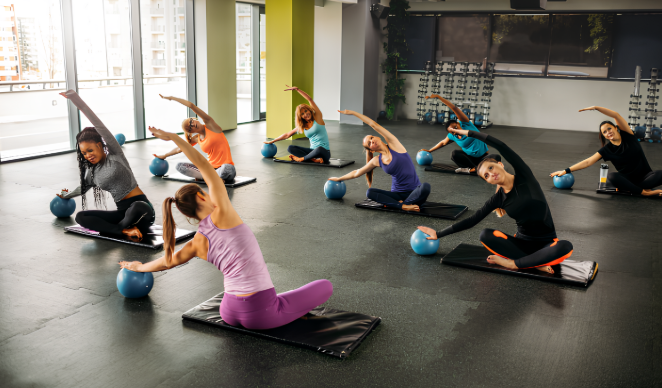
In the world of weight training, people often talk about loads, progressions, and technique. But one element is frequently underestimated: movement quality. In this context, Pilates is emerging as a strategic complementary discipline, capable of providing motor control, mobility, and stability—essential foundations for those who want to excel in exercises such as squats, deadlifts, and presses.
Far from being just a relaxation or stretching practice, modern Pilates proves to be a powerful and highly technical tool for those who train in the weight room with performance goals. Integrating Pilates into weight training means preparing the body to move better under load, reducing the risk of injuries and improving the efficiency of fundamental movement patterns.
- Why integrate Pilates into weight training
- The role of mobility in preparing for fundamental lifts
- Core training with Pilates: stability and performance
- Injury prevention: less stress, more awareness
- Conclusions: effectiveness and sustainability of integration
Why integrate Pilates into weight training
A bridge between motor control and strength
Pilates is based on principles such as precision, control, and movement awareness. When applied to weight training, these principles become valuable resources for optimizing exercise technique. While bodybuilding and powerlifting focus on the expression of strength, Pilates works on its preparation: it teaches the body to move in a coherent, symmetrical, and efficient way.
Often, people who lift weights develop imbalances or compensatory movements that over time can lead to overload and pain. By working on deep stabilizing muscles and kinetic chains, Pilates helps rebuild a solid foundation for loading safely and effectively. It is therefore not an alternative, but rather a technical and preventive complement.
Cross-benefits for powerlifters and bodybuilders
Regardless of the goal—maximum strength or hypertrophy—the body must be able to manage increasing loads with precision and safety. Pilates develops exactly that ability to feel and correct movement that is often missing in traditional strength programs. Improving proprioception, breathing, and core activation results in greater stability under the barbell and better load management during the most critical phases of each lift.
For recreational athletes in particular, this integration represents a competitive advantage: it allows them to progress longer without injuries, maintaining high training quality and consistency throughout strength cycles. It is a strategic investment in long-term athletic longevity.
The role of mobility in preparing for fundamental lifts
Squat: mobile hips for a controlled descent
The squat is one of the most complete and technically demanding exercises. To perform it effectively, the body must possess good joint mobility, particularly in the hips, ankles, and thoracic spine. A limitation in any of these segments can compromise overall alignment, making the lift less efficient and potentially more risky.
Through targeted exercises, Pilates helps mobilize stiff joints and release compensatory movement patterns. Attention to breathing and core control also improves the ability to reach greater squat depth while keeping the back stable and the load evenly distributed. This not only enhances performance but also helps prevent lower back pain and joint overload.
Deadlift and press: freeing the shoulders and spine
In the deadlift and in overhead press variations, spinal freedom and scapulo-humeral mobility play a crucial role. Limitations in thoracic mobility or tight hamstrings can hinder proper execution, forcing the body to adopt harmful compensatory strategies.
Pilates offers exercises that break down complex movements into controlled and progressive segments, restoring mobility without sacrificing stability. This approach is particularly useful in preparing the body for the positions required in major compound lifts, ensuring smoother and safer execution both in the concentric and eccentric phases.
Core training with Pilates: stability and performance
The core as a transmitter of force
The concept of the core in Pilates goes far beyond visible abdominal muscles. It includes a network of deep muscles that stabilize the spine, pelvis, and rib cage during movement. In the weight room, a strong and responsive core allows athletes to effectively transfer force from the legs to the upper body, minimizing energy leaks and reducing the risk of failure under load.
During exercises such as squats or deadlifts, the core maintains the structural integrity of the body. Pilates teaches how to activate it precisely and functionally, developing the awareness needed to manage intra-abdominal pressure and protect the spine. This results in stronger execution and a greater ability to generate force safely.
Pilates exercises to improve control under load
In Pilates, core training occurs through a combination of slow, controlled movements coordinated with breathing. Exercises such as the “single leg stretch,” “roll up,” or “teaser” challenge the practitioner’s ability to stabilize the spine while moving the limbs—an essential principle that directly reflects the mechanics of weightlifting exercises.
Incorporating these techniques into warm-ups or active recovery sessions allows athletes to develop greater awareness of their postural alignment, especially during critical phases of lifts, such as the bottom position of the squat or the start of the deadlift. This often invisible work can make the difference between an efficient movement and a preventable injury.
Injury prevention: less stress, more awareness
Posture, alignment, and technique before load
One of the most critical aspects of weight training is managing postural alignment under load. Technical errors repeated over time, even with moderate weights, can create microtraumas that eventually develop into real injuries. Pilates, by focusing on precise and conscious movement, provides an ideal foundation for improving technical efficiency and preventing compensatory patterns.
Through systematic work on spinal control, movement symmetry, and balanced activation of deep musculature, athletes can significantly improve execution quality in fundamental lifts. The goal is not to avoid loading the body, but to make it safer through a body that knows how to manage every phase of movement.
An integrated approach for longer and better training
Prevention is not optional—it is a long-term strategy. Integrating Pilates into a training routine means investing in the sustainability of your gym journey. Improving mobility and stability reduces the likelihood of interruptions caused by pain or musculoskeletal discomfort, supporting consistency and therefore real progress.
Moreover, Pilates teaches athletes to listen to their bodies, recognize signals early, and intervene before minor discomforts become chronic problems. This proactive approach allows recreational powerlifters and bodybuilders to maintain high training volumes without compromising physical integrity, while also increasing confidence in their movements.
Conclusions: effectiveness and sustainability of integration
How to start: practical advice for every level
Integrating Pilates into a training routine does not require a radical change, but rather a conscious decision to introduce quality into the workout structure. One or two weekly sessions focused on core exercises, mobility, and postural control are enough to begin experiencing the first benefits. Ideally, athletes should work with an instructor who understands both Pilates principles and weight training demands.
Beginners should start with bodyweight exercises that build familiarity with breathing, alignment, and coordination. More experienced athletes can use Pilates as a technical refinement and support for heavy lifting, adapting sessions according to weaknesses identified in their compound lifts.
Progressions and transfer to compound lifts
One of the most interesting aspects of Pilates is its transferability to major compound exercises. Improvements in core control, joint mobility, and proprioception translate directly into more effective squats, deadlifts, and presses. This makes Pilates a long-term resource not only for preparation but also for technical progression.
Integrating Pilates and weight training consciously is a decision that pays off over time: it improves movement quality, prevents injuries, and enhances performance. For those who train with determination and want to do so with intelligence and longevity, this combination represents a powerful and often underestimated ally.
Comments (0)