
Trolley
You have no items in your shopping cart

 Budgets
 Dumbers
 Discs
Discs
 Benches
 Racks and Rigs
 Weights Holders
 Isotonic machines
 Calisthenics
 Cardio
 Kettlebells
 Flooring
 Gym Set
 Accessories
 Combat
 ARTI MARZIALI
 CONTAINER GYM
 Tug-Of-War
 Used Gym Equipment
 PILATES MACCHINARI
 GINNASTICA ARTISTICA
 CAMPI DA PADEL
 Prodotti in Pronta Consegna
 Informazioni
 IRONMAN
 Gift Card
- Donatif
- General information
- 0 I like it
- 1925 Views
- 0 comments
READING TIME: 5 MINUTES ➤➤
How to Teach Good Posture to Children and Teens Without Turning It Into an Obsession
Talking about posture with children and teenagers is an act of educational care, but it also carries great responsibility. When discussing topics related to the body, it's easy to unintentionally adopt rigid, corrective, or judgmental messages that may create anxiety, shame, or an unhealthy relationship with movement. Teaching good posture doesn't mean teaching children to "sit up straight" at all times—it means helping the next generation feel comfortable in their own bodies, recognizing their body's signals, limits, and capabilities.
Parents, teachers, and sports coaches all play a fundamental role in presenting posture as a dynamic, natural, and constantly evolving process. The goal is not to raise children who always stand perfectly straight, but children who move better, with greater body awareness and without unnecessary anxiety about getting it "wrong."
- Why it's important to talk about posture from an early age
- Upright, but not rigid
- The role of school and family
- Movement and physical education
- Language and emotions
- Positive role models
Why It's Important to Talk About Posture from an Early Age
Posture in children and teenagers is not a static concept but the result of growth, motor development, daily experiences, and emotional context. Talking about posture from an early age means giving children the tools to understand their bodies—not imposing rigid rules they must constantly follow. During childhood and adolescence, the body changes rapidly, and what appears awkward today may become perfectly functional tomorrow.
When approached with simple language and without creating unnecessary alarm, early postural education helps build a healthy relationship with movement. It teaches children and teenagers that the body should not be constantly controlled, but listened to, respected, and supported throughout everyday activities.
Upright, but Not Rigid: What Healthy Posture Really Means
Healthy posture is not the same as remaining perfectly still or trying to "stand up straight" at all costs. On the contrary, good posture is the one that allows you to move, breathe, and concentrate without unnecessary effort. Constantly telling a child to "stand up straight" risks turning a well-intentioned message into a source of tension.
Teaching posture in a healthy way means explaining that the body is designed to change positions, adapt, and recover. In many cases, excessive rigidity is more harmful than a posture that merely appears imperfect. This approach reduces the risk of developing body-related anxiety and encourages more natural learning.
The Role of School and Family in Everyday Posture
School and home are the two environments where children and teenagers spend most of their time. These are the places where habits are formed—but also where beliefs about the body begin to develop. A shared and consistent approach among parents, teachers, and other caregivers is essential to avoid sending conflicting messages.
When posture is presented as part of overall well-being rather than as a problem to be corrected, it becomes much easier to integrate healthy habits into daily life without attaching negative or punitive meanings to them.
Posture at School and Proper Sitting Habits
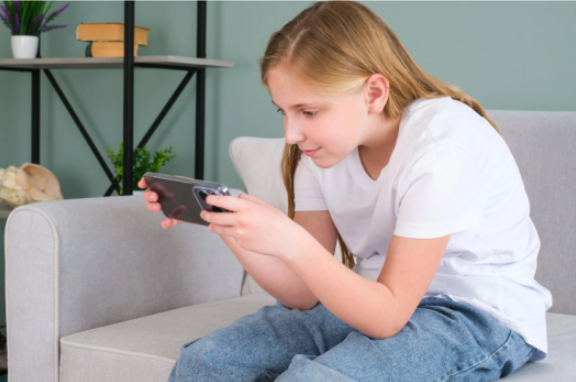
Posture at school is often a concern for parents and teachers, especially because children spend long hours sitting. Talking about proper sitting posture does not mean expecting children to remain motionless, but helping them change positions regularly, keep their feet supported, and recognize when it's time to get up and move.
Encouraging regular breaks, small movements, and moments of body awareness helps reduce fatigue while also improving concentration. In this way, posture becomes an ally of learning rather than a restriction.
Heavy School Backpacks and Load Management
The issue of heavy school backpacks is often discussed in alarmist terms, yet it can be approached in a more constructive way. Teaching children how to distribute the weight properly, adjust the shoulder straps, and recognize their own physical limits is far more effective than creating fear about possible damage.
When children learn practical ways to care for their bodies, they develop independence and responsibility without viewing every load they carry as a constant threat.
Movement, Play, and Physical Education
Movement is the most important tool for postural education. Through play and physical activity, children naturally experience different body positions while developing coordination and motor control without consciously thinking about it. Physical education should never feel like a corrective lesson, but rather an opportunity to explore movement.
A body that enjoys moving learns to organize itself more efficiently in space. This approach reduces the need for constant verbal corrections and promotes lasting learning through experience.
Language, Emotions, and Body Image
The words adults use have a profound influence on children's body image. Poorly chosen comments about posture can easily be interpreted as judgments about a child's personal worth. Using empathetic, descriptive, and non-judgmental language helps protect children's self-esteem and identity.
Talking about comfort, body awareness, and well-being instead of focusing on mistakes encourages a healthier relationship with the body. In this way, posture becomes something to listen to—not something to constantly control.
Positive Role Models and Learning Through Observation
Children and teenagers learn primarily by watching others. Adults who move naturally, respect their own physical limits, and don't treat their bodies as problems become positive role models without needing lengthy explanations.
Showing that posture is something everyone—including adults—continues to work on helps normalize the topic and reduces unnecessary pressure. Ultimately, teaching posture means teaching children to develop a healthy relationship with movement and with themselves, supporting their growth without rigidity or obsession.
Comments (0)