
Trolley
You have no items in your shopping cart

 Budgets
 Dumbers
 Discs
Discs
 Benches
 Racks and Rigs
 Weights Holders
 Isotonic machines
 Calisthenics
 Cardio
 Kettlebells
 Flooring
 Gym Set
 Accessories
 Combat
 ARTI MARZIALI
 CONTAINER GYM
 Tug-Of-War
 Used Gym Equipment
 PILATES MACCHINARI
 GINNASTICA ARTISTICA
 CAMPI DA PADEL
 Prodotti in Pronta Consegna
 Informazioni
 IRONMAN
 Gift Card
- Donatif
- General information
- 0 I like it
- 939 Views
- 0 comments
- gym flooring, safety flooring, gym safety, shock-absorbing materials
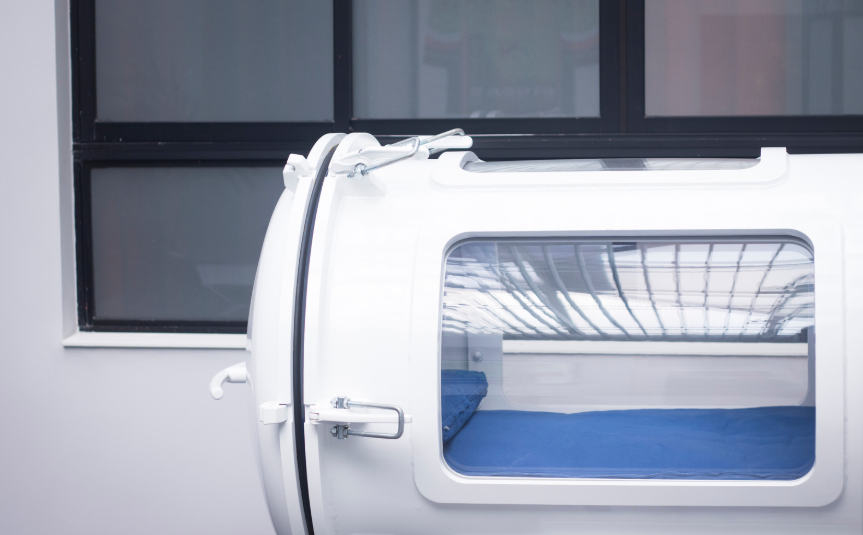
Operating Pressure and ATA: Understanding the Numbers Behind Real Results
When comparing different hyperbaric chamber models, one of the first specifications that catches the eye is the value expressed in ATA (Absolute Atmospheres). Product datasheets frequently mention values such as 1.3 ATA, 1.5 ATA, or 2.0 ATA, often using them as a marketing point without explaining what they actually mean. Understanding this parameter is essential for evaluating the true performance of a hyperbaric chamber and determining which solution best meets your needs.
For performance-oriented athletes, understanding the meaning of operating pressure makes it possible to correctly interpret technical specifications instead of relying solely on marketing claims. A seemingly small difference, such as the gap between 1.3 and 1.5 ATA, can significantly affect the amount of oxygen available to body tissues and influence the physiological processes involved in recovery.
- What the ATA Value Represents
- How Pressure Works
- Differences Between 1.3, 1.5, and 2.0 ATA
- Pressure and Treatment Effectiveness
- How to Read Technical Specifications
What the ATA Value Represents in a Hyperbaric Chamber
ATA stands for Absolute Atmospheres and indicates the total pressure inside the chamber. A value of 1 ATA corresponds to normal atmospheric pressure at sea level. When a chamber operates at 1.3 ATA, the internal pressure is 30% higher than the surrounding environment; at 1.5 ATA, the increase reaches 50%, while at 2.0 ATA, the pressure is twice that of standard atmospheric conditions.
Increasing the pressure allows inhaled oxygen to dissolve into the blood plasma in greater quantities according to well-established physical principles. This mechanism forms the basis of hyperbaric oxygen therapy and explains why the ATA value is one of the most important technical parameters to consider.
How Absolute Atmospheric Pressure Works During Treatment
Higher pressure increases the amount of oxygen that can reach the body's tissues. As the ATA level rises, more oxygen is transported independently of hemoglobin, improving its diffusion into areas requiring greater metabolic support.
It is important to emphasize that pressure is only one of the factors determining the overall effectiveness of a treatment session. Oxygen concentration, treatment duration, chamber build quality, and the correct treatment protocol all contribute to the final outcome.
Why Hyperbaric Chambers Are Available in 1.3, 1.5, and 2.0 ATA Versions
Different models are designed to meet different needs. 1.3 ATA chambers are commonly used in wellness settings and for personal use, while 1.5 ATA chambers provide higher pressure, potentially increasing oxygen availability during treatment. Chambers capable of reaching 2.0 ATA generally belong to the professional category and require more advanced engineering and construction standards.
The choice of operating pressure should not be based solely on the highest number but should also consider the intended application, certifications, and the overall quality of the system.
The Technical Difference Between 1.3 ATA and 1.5 ATA
Numerically, the difference may appear small, but an increase of 0.2 ATA represents a significant rise in the pressure generated inside the chamber. This results in a greater capacity for oxygen to dissolve into body fluids and reach tissues more effectively.
For athletes seeking optimal recovery after intense training sessions, this difference may translate into improved efficiency of the physiological processes involved in tissue regeneration, provided that treatments are performed using appropriate protocols and under professional guidance.
How Oxygen Availability Changes in Body Tissues
Higher pressure promotes greater oxygen dissolution in blood plasma, increasing the amount of oxygen available to cells and tissues. It is not simply a matter of breathing more oxygen but of changing its physical behavior by increasing the surrounding pressure.
This principle explains why the ATA value is one of the most relevant indicators when comparing different hyperbaric chamber models.
The Relationship Between Pressure and Treatment Effectiveness
Higher pressure does not automatically guarantee better results in every situation. Treatment effectiveness depends on the balance between pressure, oxygen concentration, session duration, and the overall quality of the chamber. Evaluating a product solely by the ATA value listed in its specifications can therefore lead to misleading conclusions.
Hyperbaric chambers built to higher engineering standards maintain stable pressure throughout the treatment session, providing more consistent and predictable operating conditions than lower-quality systems.
Why an Increase of 0.2 ATA Can Produce Measurable Differences
From a physical standpoint, even seemingly small pressure variations can alter the partial pressure of oxygen and therefore its ability to diffuse into body tissues. This is why the difference between 1.3 ATA and 1.5 ATA is often considered significant in technical evaluations.
For athletes following demanding training programs, understanding these principles makes it easier to assess the actual technical value of the different hyperbaric chambers available on the market.
Muscle Recovery and Regeneration Time
Greater oxygen availability may support the body's natural physiological recovery processes after intense physical activity. However, recovery always depends on multiple factors, including nutrition, sleep quality, training load, and overall recovery management.
A hyperbaric chamber should therefore be considered one component of a broader performance optimization strategy.
Applications for Performance-Oriented Athletes
Athletes often evaluate operating pressure based on long-term reliability and chamber build quality. A system capable of maintaining the selected pressure with precision offers greater consistency than one subject to pressure fluctuations during operation.
For this reason, it is advisable to carefully examine all technical specifications rather than focusing exclusively on the ATA value highlighted in promotional materials.
How to Properly Interpret the Technical Specifications of a Hyperbaric Chamber
When comparing different models, it is important to evaluate not only the operating pressure but also the construction materials, certifications, control systems, safety features, after-sales support, and overall manufacturing quality. These factors directly affect the chamber's long-term reliability and performance.
A comprehensive technical evaluation helps distinguish genuine performance characteristics from simple marketing claims, leading to a more informed purchasing decision.
Marketing vs. Technical Data: What You Should Really Check
Product specifications should include measurable performance values, technical documentation, and verifiable information. Being cautious of promotional messages based solely on vague promises is the first step toward choosing a hyperbaric chamber that genuinely meets your requirements.
Transparency in technical data is one of the strongest indicators of a manufacturer's reliability.
When Is Higher Pressure Actually Beneficial?
Higher operating pressure can provide advantages in specific applications, but it is not automatically the best choice for every user. The right decision should always be based on the intended use, the chamber's technical characteristics, and guidance from qualified professionals.
Understanding the meaning of ATA values allows you to interpret technical specifications more accurately and choose a hyperbaric chamber based on objective performance criteria rather than marketing slogans.
Comments (0)