
Trolley
You have no items in your shopping cart

 Budgets
 Dumbers
 Discs
Discs
 Benches
 Racks and Rigs
 Weights Holders
 Isotonic machines
 Calisthenics
 Cardio
 Kettlebells
 Flooring
 Gym Set
 Accessories
 Combat
 ARTI MARZIALI
 CONTAINER GYM
 Tug-Of-War
 Used Gym Equipment
 PILATES MACCHINARI
 GINNASTICA ARTISTICA
 CAMPI DA PADEL
 Prodotti in Pronta Consegna
 Informazioni
 IRONMAN
 Gift Card
- Donatif
- General information
- 0 I like it
- 1652 Views
- 0 comments
- stress reduction, improved self-esteem, physical and mental well-being, gym training
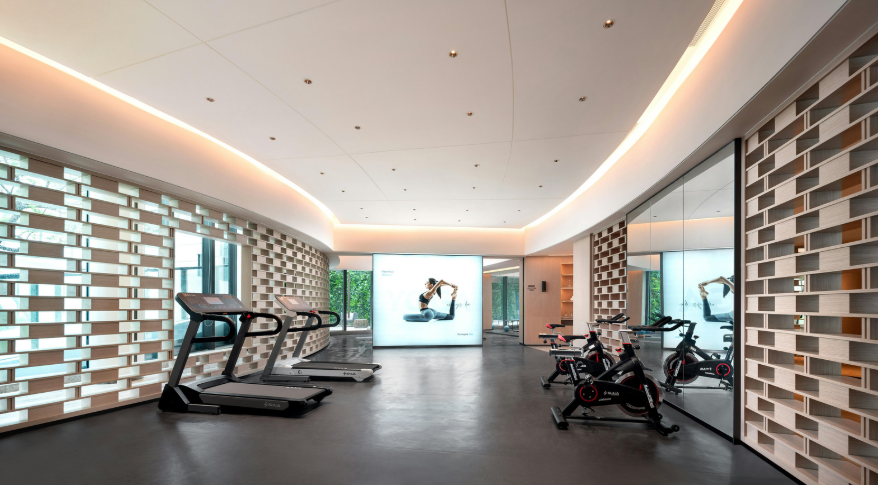
When it makes sense to design gym flooring by zones
When designing a fitness center, one of the most underestimated decisions concerns the flooring. Often, to simplify the decision-making process and reduce initial costs, there is a tendency to choose a single surface for the entire facility. This choice, seemingly practical, can turn into an operational limitation and an economic risk in the medium to long term.
Adopting a zone-based design approach means thinking in a more advanced way, taking into account the real needs of the different areas of the gym. It is not just a technical choice, but a strategic decision that impacts durability, safety, maintenance, and the overall user experience.
- Why choosing a single flooring solution is often a strategic mistake
- Design logic: thinking of the gym as a set of functional areas
- Materials and solutions: how to match surfaces to functions
- Common mistakes in flooring planning
- When to differentiate: practical decision-making criteria
- From product selection to full project design
Why choosing a single flooring solution is often a strategic mistake
Choosing a single surface almost always stems from an oversimplified approach. The idea is to reduce complexity, time, and initial costs, but this decision overlooks the operational differences between the various areas of a fitness center. Each zone is subject to different stresses, requiring specific technical characteristics.
Using a single flooring solution inevitably means accepting compromises. A surface suitable for classes may not be durable enough for the weight area, while a solution designed for heavy loads may be too rigid and uncomfortable for dynamic activities. Over time, this leads to premature wear, corrective interventions, and unexpected costs.
Design logic: thinking of the gym as a set of functional areas
A fitness center is not a uniform space, but a system composed of areas with distinct functions. Adopting a zone-based approach means designing each space according to its actual use, improving both operational performance and the longevity of the investment.
This approach allows each area to be optimized, avoiding waste and ensuring long-term consistency. It does not complicate the project, but rather makes it more coherent and sustainable, reducing the need for future interventions.
Free weights area: specific technical requirements
The weight area is one of the most critical zones in terms of stress. Here, the flooring must withstand heavy loads, impacts, and dropped equipment, while ensuring stability and safety. An inadequate surface can quickly deteriorate or transmit vibrations to the structure.
In this context, solutions such as high-density rubber flooring or dedicated lifting platforms are essential. Using a generic surface exposes the facility to rapid deterioration and early replacement costs.
Functional training area
Functional training zones require a combination of shock absorption, grip, and versatility. Dynamic exercises, multi-directional movements, and the use of mobile equipment impose different requirements compared to the weight area.
A surface that is too rigid can increase the risk of injury, while one that is too soft can compromise stability. The choice must therefore be carefully calibrated, avoiding standardized solutions.
Group class rooms
In group class rooms, user comfort and safety become the priority. Activities such as yoga, pilates, or bodyweight classes require surfaces that enhance floor contact and reduce fatigue.
Materials such as tatami or elastic surfaces help improve the user experience and reduce the risk of micro-injuries. Using flooring designed for other contexts can negatively impact the perceived quality of the service.
Technical areas and accessory spaces
Technical areas, corridors, and accessory spaces also require careful consideration. Here, factors such as ease of cleaning, resistance to wear, and visual continuity with the rest of the facility come into play.
Neglecting these areas creates operational and visual inconsistencies that, over time, affect the overall perception of the fitness center.
Materials and solutions: how to match surfaces to functions
The choice of materials cannot be separated from the function of each area. Every surface has specific characteristics in terms of density, elasticity, resistance, and maintenance. Correctly matching these elements is essential to ensure an effective result.
A proper approach involves a preliminary analysis of the activities performed and the expected stresses. Only in this way is it possible to avoid evaluation errors and build a coherent system in which each area is designed to last over time.
Common mistakes in flooring planning
One of the most frequent mistakes is underestimating the cost of design errors. Saving money in the initial phase can lead to much higher expenses over time, including replacements, extraordinary maintenance, and operational disruptions.
Another common mistake is relying on urgency-driven decisions or unstructured choices. The pressure to open the facility quickly often leads to rushed decisions that do not reflect the actual use of the spaces.
When to differentiate: practical decision-making criteria
Differentiating flooring makes sense when there are distinct uses and different stress levels. It is not an aesthetic choice, but a functional one. If activities across areas are homogeneous, a single solution may be considered, but in most cases this condition does not apply.
Decision criteria should include usage intensity, type of exercises, expected loads, and user expectations. Only by integrating these elements can a well-informed decision be made, reducing the risk of future interventions.
From product selection to full project design
The key step is transforming flooring selection from a product decision into a project decision. This implies a shift in perspective: it is no longer about choosing a material, but about designing a system.
Relying on a structured approach helps protect the investment, ensure operational continuity, and reduce margins of error. In a competitive sector like fitness, this difference can significantly impact the long-term sustainability and success of the facility.
Comments (0)